

Tiny House Cost NZ in 2026: Build a Realistic Budget

The home’s advertised price is only the starting point for working out the tiny house cost nz buyers need to plan for. A quote may cover the home itself, while delivery, site preparation, utility connections and approval checks may sit outside it.
Compact living can look like a simpler, more affordable option, but the total project budget depends on the home and the site. A home on wheels, a transportable cabin and a dwelling placed on foundations can involve different inclusions, delivery arrangements and site requirements. That makes headline prices difficult to compare on their own.
This guide will help you build a more complete budget and identify what to confirm before asking for quotes. We’ll cover the home, delivery, groundworks, services, approval checks and other potential costs, then set out questions to ask suppliers, transport providers and your local council. If you’re comparing factory-made options, including expandable and container homes from Smart Spaces NZ, start by checking what’s included, what’s optional and what depends on your site.
Table of Contents
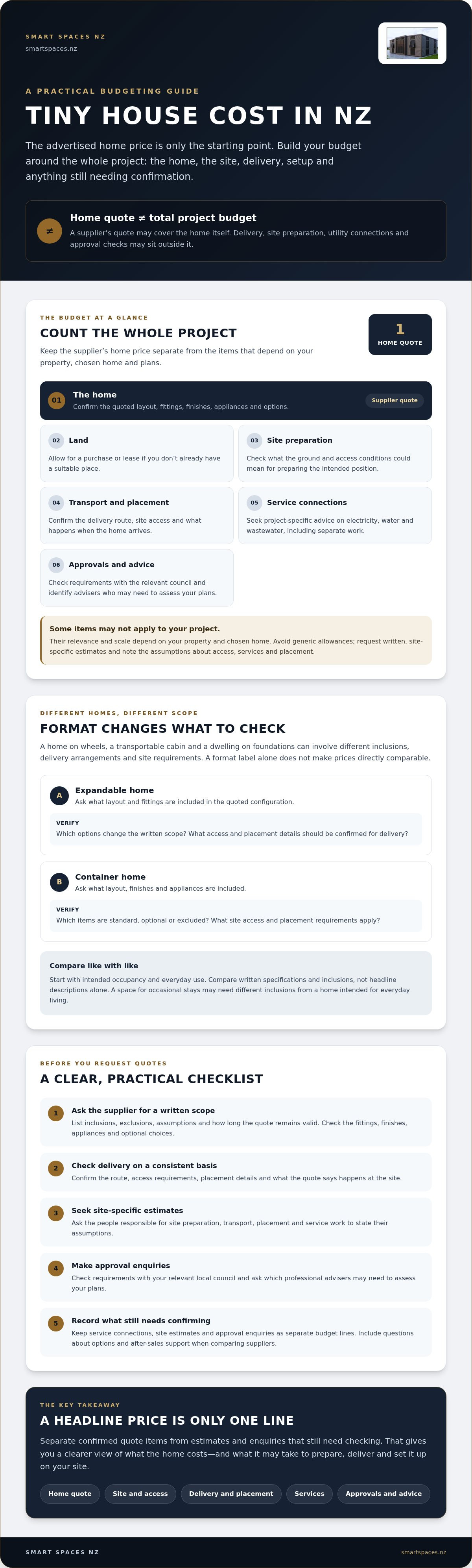
Tiny house cost in NZ: what belongs in your total budget?
Your total project budget should account for the home, site, delivery and setup. The tiny house cost nz buyers need to plan for is more than the figure on a supplier’s quote. The final budget depends on the home format, the property, what the quote includes and which approvals or professional advice may be needed.
The appeal of compact living sits within a broader tiny-house movement, but every New Zealand project has its own practical requirements. A home that suits one site may need different transport arrangements, preparation or service connections on another. Treat the supplier’s written quote as one budget line, then seek site-specific estimates for anything outside its stated scope.
What does a tiny-house quote need to clarify?
First, check whether the quote covers the home only or includes other items or work. Ask for a written list of inclusions, then compare the fittings, finishes, appliances and options with how you plan to use the home. A space for occasional stays may call for different inclusions from a home intended for everyday living.
Ask the supplier to state exclusions, assumptions and how long the quote remains valid. For factory-direct expandable and container homes, including the two-bedroom options sold by Smart Spaces NZ, clarify which choices are included, which are optional and what delivery arrangements the quote describes. Don’t assume a broad label such as “complete” means the same thing across suppliers.
Which project costs sit outside the home purchase?
Keep these categories separate from the supplier’s home price, even if some won’t apply to your project:
Land: Account for a purchase or lease if you don’t already have a suitable place for the home.
Site preparation: Ask what may be needed to prepare the intended position, based on the property’s ground and access conditions.
Transport and placement: Confirm the delivery route, access requirements and what happens when the home reaches the site.
Service connections: Seek project-specific advice about electricity, water and wastewater, including whether separate work is required.
Approvals and professional advice: Check requirements with the relevant council and ask which advisers may need to assess your plans.
The relevance and scale of each item depend on your property and chosen home, so avoid filling gaps with generic allowances. Request written estimates from the people responsible for each part, and note their assumptions about access, services and placement.
A headline home price tells you what the home may cost, not what it takes to prepare, deliver and set it up on your site. Separating confirmed quote items from estimates that still need checking gives you a clearer project budget.
How tiny-home format and inclusions change the NZ budget
Once you’ve separated the home quote from the wider project budget, compare homes by what they provide and how they suit your household. Expandable and container homes are different formats, but the label alone won’t tell you whether a particular layout, fit-out or delivery arrangement works for your plans. For more context, see this guide to two-bedroom expandable homes and the guide to two-bedroom container homes.
Start with intended occupancy and everyday use. Think through how the rooms need to function, which fittings matter and whether the quoted configuration matches those needs. Then compare written specifications and inclusions instead of assuming that homes in the same category have the same scope.
Compare formats with the same questions
Use the same checklist for each supplier and record the answers in writing. This makes it easier to spot differences before weighing up the quotes.
Check inclusions before comparing prices
Ask each supplier to identify standard inclusions, optional choices and excluded work. If you’re considering customisable options, request an updated written scope showing what changes and how those choices affect the quote. Check that each quote describes delivery on the same basis instead of assuming transport is included.
A fair comparison starts with matching quote scopes. A lower headline price may cover fewer inclusions or rely on different assumptions, so compare what each supplier has allowed for before deciding whether one home is genuinely less costly.
Smart Spaces NZ sells two-bedroom expandable and container homes factory-direct, with customisable options. If these formats suit your plans, review Smart Spaces NZ’s expandable and container home options and ask the supplier to clarify current inclusions, delivery arrangements and available choices in writing.
What can make a tiny-house project cost more than expected?
A home quote can be clear while leaving important project questions unanswered. Access, ground conditions, transport logistics and placement affect what needs to be arranged at the site. Service connections and approval checks may also require separate enquiries. These factors can make the tiny house cost nz buyers plan for different from the price shown for the home alone.
Check the property before you commit. Is there a suitable route for delivery and enough room to position the home? Could the ground need preparation, or might access work be required? Don’t try to settle these questions from a brochure. Ask the transport provider and relevant site professionals to assess your property and explain their scope in writing.
How do land and site conditions affect the budget?
If you don’t already have a suitable property, land purchase or lease is a separate consideration. If you do have a site, investigate access, ground preparation and any work needed to make the intended position suitable. Smart Spaces NZ sells factory-direct expandable and container homes. It doesn’t provide land procurement or on-site custom construction, so arrange site-specific advice separately.
What should buyers check about delivery and connections?
Before accepting a quote, ask what its delivery arrangements assume and where the supplier’s responsibility ends. Confirm the intended delivery route, site access requirements, who coordinates placement and whether any part of delivery or setup is excluded. A transport provider can assess the property and clarify what their service covers.
Keep service enquiries separate from the home quote. Ask the relevant providers to assess what may be needed for:
Electricity: Whether a connection or other electrical work is required for your intended setup.
Water: How the home could be supplied and what site-specific work may apply.
Wastewater: What disposal arrangements are suitable for the property and intended use.
Other services: Whether additional connections or related work need separate planning.
Approvals and compliance also need checking for your particular home, site and intended use. Don’t assume that the same rule or consent pathway applies in every situation. Ask the relevant council and qualified advisers to confirm current requirements before making decisions or relying on an estimate. For further background, read this NZ tiny-home regulations guide, then verify the guidance for your project with the appropriate authorities.
Record these answers as separate budget lines, noting the source and assumptions beside each estimate. This makes it easier to identify and resolve an unexpected site requirement before it becomes a last-minute addition to your plans.
How to build a realistic tiny-house budget before you buy
A sound budget starts with your plans, not a supplier’s headline figure. Work through the steps below before requesting quotes. Clear information helps suppliers and advisers respond to your actual project and makes it easier to see what still needs confirmation.
Define your needs. Note how you’ll use the home, who’ll live in it, your preferred layout and the fittings or options that matter most.
Assess the site. Record the property details, delivery access limits, intended placement and services available. Ask relevant authorities or qualified advisers about requirements for your specific site and plans.
List the budget lines. Keep the home quote separate from delivery, site estimates, service connections, professional advice and approval enquiries. Mark each item as confirmed, estimated or still to be checked.
Gather comparable quotes. Give each supplier the same brief and ask for written inclusions, exclusions, assumptions, delivery scope and optional choices.
Review contingencies. Identify uncertainties that could change the plan, then seek advice or estimates before committing. Note who confirmed each item and when.
This process turns the broad question of tiny house cost nz into a practical checklist. For example, a supplier can clarify delivery assumptions more accurately if you share useful access and placement details. A council or adviser also needs information about your actual proposal to provide relevant guidance.
What should you gather before requesting quotes?
Prepare a short project brief with your intended use, preferred layout, site details, access constraints and required services. Add questions about standard inclusions, customisable options, delivery arrangements and after-sales support. For site-specific consent or compliance queries, contact the relevant authority or a qualified adviser rather than relying on a general assumption.
How can you compare quotes without missing exclusions?
Use the same checklist for every supplier, then compare the scope line by line. If one quote includes an item another excludes, record the difference rather than treating the totals as like for like. Ask for clarification wherever assumptions, optional items or delivery responsibilities are unclear, and keep the response with the quote.
Keep finance terms separate from product pricing. If you’re considering finance, confirm the current terms directly with the supplier or finance provider and review them separately from the home’s written scope.
Once your brief is ready, explore prefabricated home options as you refine what may suit your plans. If you’re considering Smart Spaces NZ’s two-bedroom expandable or container homes, ask about current inclusions, options and delivery arrangements so you can compare the written scope against your budget checklist.
Choosing a tiny-house supplier in NZ: from budget to next steps
Once you’ve mapped your budget and checked the site, make supplier conversations specific. Share your intended use, preferred layout and known site constraints, then ask how the home and quote fit those details. A factory-direct supplier can discuss its product scope and quote with you directly, but that doesn’t automatically mean the overall project will cost less. Compare what’s included and what you’ll need to arrange separately.
What should you ask a factory-direct home supplier?
Ask for a written breakdown covering the home configuration, inclusions, exclusions, customisable options, delivery arrangements and buyer responsibilities. Confirm which format suits your intended use and whether the proposed configuration aligns with the site information you’ve gathered. If finance solutions are available, ask how they work, then verify the current terms directly with the provider rather than treating finance as part of the home price.
Which documents should you review before deciding?
Before making a decision, have the written supplier quote, delivery details, site estimates and relevant approval advice together, with assumptions and exclusions clearly recorded. This gives you a practical basis for checking what’s confirmed, what still needs attention and whether you’re comparing equivalent scopes. Keep updated versions as options or site information change.
Smart Spaces NZ sells two-bedroom expandable homes and two-bedroom container homes factory-direct. The family-owned business has over 40 years of industry experience and emphasises craftsmanship, delivery and after-sales support. Use your checklist to ask about the current product scope, delivery arrangements, customisation and available support after purchase. Confirm the details relevant to your plans directly with the supplier.
With a clear brief in hand, you can have a more useful conversation about the tiny house cost nz for your project without relying on a headline figure alone. Discuss your tiny-home plans with Smart Spaces NZ.
Turn your budget into a confident next step
A realistic tiny house cost nz budget looks beyond the home itself. Keep supplier pricing separate from delivery, site work, service connections and approval enquiries, then check that quotes share the same inclusions and assumptions. Your site, intended use and chosen home format all shape the questions to resolve before you commit.
With a clear checklist, you can make decisions based on the full scope rather than a headline figure. Smart Spaces NZ is a family-owned and operated business with over 40 years of industry experience, selling expandable and container homes factory-direct. Customisable options and finance solutions are available. Confirm current product inclusions, delivery arrangements and finance terms directly with the supplier or provider.
Talk through your tiny-home plans with Smart Spaces NZ and ask about the options that may suit your needs. A careful start can help you plan with greater clarity and confidence.
Frequently Asked Questions
How much does a tiny house cost in NZ?
There isn’t one figure that describes every tiny-home project. Your total depends on the home you choose, its confirmed inclusions, site conditions, delivery needs, service connections and any applicable approvals. Ask suppliers for written quotes, then request separate estimates for site-specific work. Keep those figures in distinct budget lines and compare quotes with matching scopes. This gives you a clearer picture of the full project budget than relying on a headline home price alone.
What affects the cost of a tiny house in New Zealand?
The main factors are the home’s format, layout and specifications, plus any optional choices. Transport, site access, ground preparation, service connections and applicable approval requirements can also affect the overall budget. Some items may be included in a supplier’s quote while others are excluded. Ask for a written breakdown of inclusions and exclusions, and confirm site work with relevant providers. Check approval questions with the appropriate authority or qualified advisers for your circumstances.
Does a tiny-house price include land in NZ?
Don’t assume land is included in a home quote. Ask the supplier to state exactly what the quoted scope covers, and plan for land separately unless the written offer clearly includes it. Smart Spaces NZ doesn’t provide land procurement services. Before committing to a property or home, check whether the site suits your plans, including access and services, and ask the relevant authority about requirements that may apply to your project.
What extra costs should I budget for when buying a tiny house?
Investigate whether your project needs transport, access or ground preparation, placement, utility connections, professional advice or approvals. The work required varies with the property and home, and some items may already be included in a supplier’s quote. Request a written scope, then seek site-specific estimates from the relevant providers. Keep unconfirmed items visible in your budget so you can follow them up before deciding.
Do I need council consent for a tiny house in NZ?
Whether approvals or consent apply depends on your home, its intended use and its location on the site, so don’t rely on a general article as a decision for your property. Describe your specific plans to the relevant authority and check current official guidance before buying or placing the home. You can also seek advice from qualified professionals. Confirm the requirements that apply to your circumstances rather than assuming one pathway covers every project.
Is an expandable home or container home cheaper in NZ?
There’s no reliable universal answer without comparing the homes and their quote scopes on the same basis. Layout, specifications, inclusions, optional choices, delivery arrangements and site assumptions can all differ. Ask each supplier to clarify exclusions and compare like for like, then add separate estimates for site-specific work. Smart Spaces NZ sells two-bedroom expandable homes and two-bedroom container homes, so ask about the current scope and options for the format you’re considering.



Comments