

Affordable Prefab Homes NZ: The 2026 First Home Buyer’s Guide

What if getting onto the property ladder didn’t mean taking on a large mortgage for a traditionally built home? If repayments feel daunting and saving a deposit is difficult, affordable prefab homes nz offer another way to think about home ownership: choose a factory-direct home, then plan separately for the land and site costs.
This guide explains how to weigh that option in 2026, including what eligible buyers should know about the First Home Loan’s 5% deposit option and KiwiSaver first-home withdrawals. It also covers council consent questions and extra project costs that can affect a prefab build, so you can plan with fewer surprises.
We’ll look at the practical trade-offs of expandable and container homes, and how Smart Spaces NZ’s factory-direct approach and more than 40 years of family-owned experience can help you compare options. Whether you’re looking for a permanent home or a more manageable path to ownership, these are the key steps to consider before making your move.
Table of Contents
Navigating the NZ First Home Buyer Market in 2026
For first-home buyers, the challenge isn’t only saving a deposit. It’s finding a home whose price, borrowing requirements and ongoing costs fit real life. A traditional build can mean a large loan before you’ve accounted for land, site preparation and other project expenses. Rethinking the type of home you buy may be a more practical first step than waiting for a conventional build to feel affordable.
Right-sized living can be a deliberate choice. A well-planned two-bedroom home may suit a couple, a small household or someone who wants space to work from home, without paying for rooms they don’t need. To assess whether it’s right for you, consider the whole setup, including where the home will sit and what’s needed to make that site suitable.
The Problem with Traditional Construction
Traditional construction can expose buyers to labour availability, material cost changes and delays during a long building process. Borrowing for a more expensive home can also put pressure on affordability. Lenders assess whether repayments fit your income and expenses, and a larger loan generally means more debt to service. A smaller home may help keep the borrowing requirement more manageable while still giving you a place to settle.
Interest rates affect repayments and, in turn, how much a lender may be willing to let you borrow. Even if you expect rates to change, plan around a loan you can manage now rather than a hoped-for reduction. Check what your budget can sustain after regular bills and a financial buffer. The goal isn’t simply to buy sooner; it’s to avoid stretching so far that home ownership becomes a constant source of stress.
The Rise of Modular and Prefab Thinking
Prefab construction shifts much of the home-building process into a factory, where components are made before the home is delivered to its site. The broad idea of a prefabricated building covers several approaches, including modular homes. For buyers, factory production offers an alternative to coordinating every stage of a conventional build and may reduce time spent waiting for construction to progress.
A relocatable or transportable home can also separate the decision about the home from the decision about land. That flexibility may suit buyers who have a suitable site or land arrangement in mind, but it doesn’t remove site costs or permission requirements. Treat the home and its location as parts of one plan, and allow time to find out what the site will require.
This is where the affordable prefab homes nz option deserves a closer look. Smart Spaces NZ sells factory-direct two-bedroom expandable and container homes, without middle-man fees, drawing on more than 40 years of family-owned industry experience. Buyers can compare two home formats and consider how a compact layout might work as a long-term home. The key is to choose a home that fits your needs, rather than treating a smaller home as only a temporary step on the property ladder.
Government Grants and Financial Leg-ups for Modular Homes
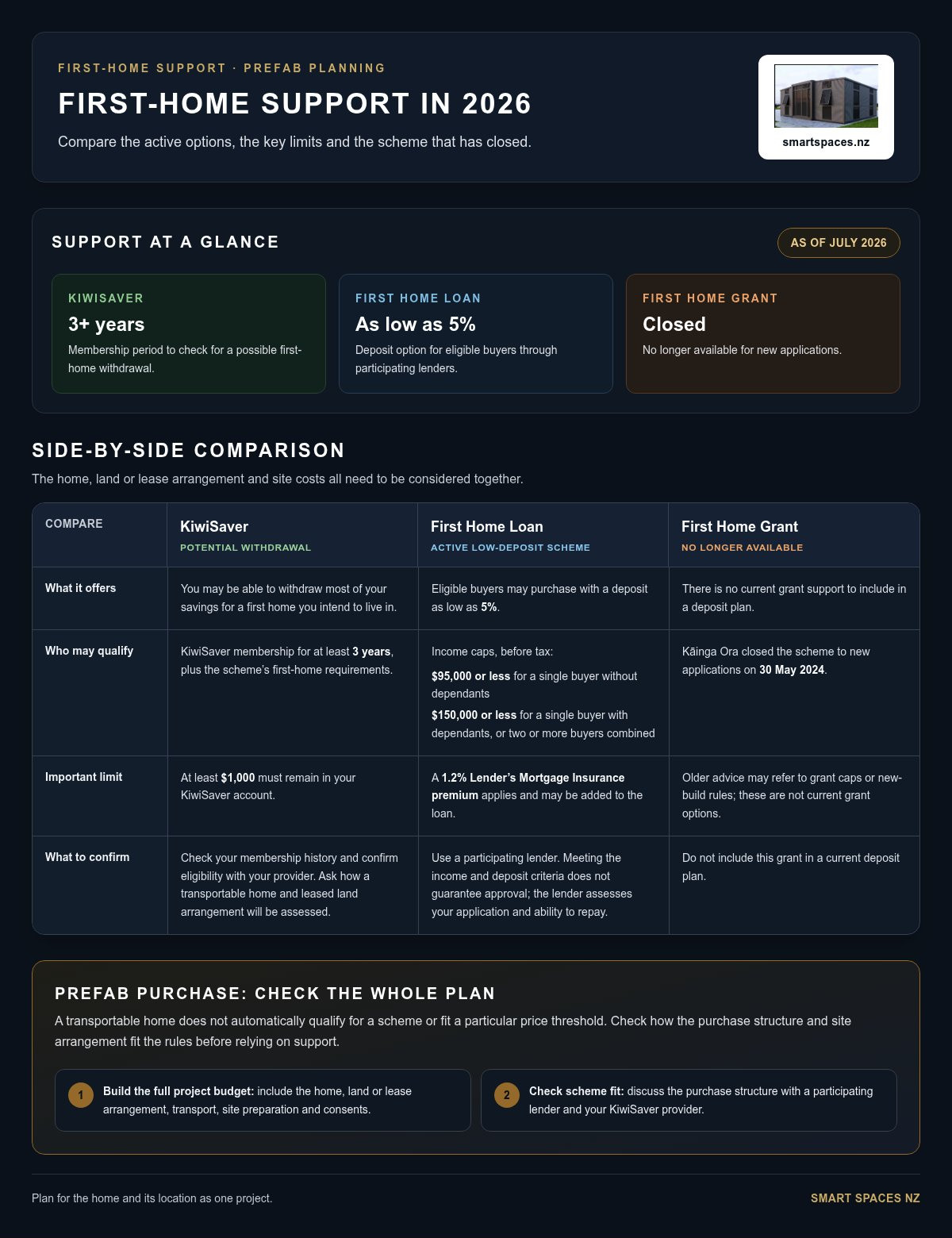
Government support can make the numbers more workable, but it doesn’t remove the need to check how a transportable home and its site fit the rules. First separate the support that’s available from schemes that have ended. Then consider how your deposit, home purchase and land arrangement fit together.
KiwiSaver and the First Home Withdrawal
If you’ve been a KiwiSaver member for at least three years, you may be eligible to withdraw most of your savings for a first home you intend to live in. You must leave at least $1,000 in your account, and applications are made through your KiwiSaver provider. Check your membership history early so you know whether you meet the qualifying period before relying on the funds.
A transportable home raises a practical question: the withdrawal must be for a qualifying first home, so consider how the purchase and site arrangement will be assessed, particularly if the land is leased. Confirm the scheme requirements with your KiwiSaver provider before including the withdrawal in your deposit plan. The New Zealand Government website is also a useful starting point for official first-home information.
The First Home Loan is a government-backed low-deposit scheme that allows eligible buyers to purchase with a deposit as low as 5% through participating lenders.
As of July 2026, income caps are $95,000 or less before tax for a single buyer without dependants, and $150,000 or less for a single buyer with dependants or two or more buyers combined. A 1.2% Lender’s Mortgage Insurance premium applies and may be added to the loan. Meeting the income and deposit criteria doesn’t guarantee approval: the lender still assesses your application and ability to repay.
Combining Support with a Prefab Purchase
One important correction for 2026: the First Home Grant is no longer available. Kāinga Ora closed it to new applications on 30 May 2024, so there are no current grant caps or new-build grant eligibility rules to apply to a prefab purchase. Be wary of older advice that includes the grant in a deposit plan. Focus instead on the active First Home Loan and KiwiSaver withdrawal, if you qualify.
Factory-direct housing may offer a lower-cost starting point than a traditional build, but don’t assume a home automatically qualifies for a loan scheme or fits a particular price threshold. Work out the full project budget, including the home, land or lease arrangement, transport, site preparation and consents. Then discuss the purchase structure with a participating lender and your KiwiSaver provider before committing funds.
For a clearer picture of prefab options and what to consider, explore The Ultimate Guide to Prefab Homes in NZ. If you’re comparing factory-direct options, Smart Spaces NZ’s two-bedroom expandable and container homes provide a practical place to start your research.
Prefab vs. Traditional Construction: A Side-by-Side Comparison
Choosing a home type can matter as much as choosing a loan. Traditional construction is a familiar route, but it can involve coordinating work across an extended on-site build. Prefabrication moves much of the home’s construction into a factory before delivery. That changes where the work happens and how the purchase is organised. How soon the home may be ready still depends on the home, delivery and site requirements.
For a fair comparison, look beyond the base price. Factory-direct purchasing avoids middle-man fees, while both a traditional build and a prefab home can involve additional project costs. Compare the complete cost of getting a suitable home onto a suitable site, rather than assuming the lowest starting figure is the cheapest finished option.
The Expandable Home Advantage
A two-bedroom expandable home is a factory-direct housing option designed around two bedrooms and an expandable format. It may suit a couple wanting an extra room for work or visitors, or a small family looking for a practical home without paying for space they won’t use. Its transportable design can also offer more flexibility than a home built entirely on its final site, subject to delivery and site requirements.
Factory production changes the build sequence: work on the home takes place before it reaches the property, rather than relying on every stage happening at the site. This can reduce time spent waiting for on-site construction to progress, but it doesn’t guarantee a particular move-in date. The guide to 2 Bedroom Expandable Homes in NZ explains this option in more detail.
Container Homes: Modern, Industrial and Affordable
A two-bedroom container home offers another factory-direct alternative, with a design associated with container-based structures. Smart Spaces NZ’s homes are made with durability and craftsmanship in mind, making this option worth considering if you value a solid, practical design. Suitability for a particular site and its conditions is still part of the decision, so assess the home alongside its intended location.
For first-home buyers, the appeal is not simply an industrial look. A factory-direct approach can make the purchase more straightforward, while a two-bedroom layout provides defined space for everyday living. Explore the ultimate guide to 2 Bedroom Container Homes in NZ to understand this format and its considerations.
Compare the Build, Not Just the Build Price
Factory conditions can make production more controlled than work exposed to changing conditions at a site. That doesn’t mean every prefab home is automatically better built, or that a traditional home can’t be finished to a high standard. Instead, compare what each option delivers, how construction is organised and what’s included in the overall purchase.
Transportability offers flexibility if your circumstances or site plans change, but moving a home involves more than shifting furniture. Transport, access, permissions and a suitable destination all matter. Treat relocatability as a useful option, not an automatic guarantee. For buyers considering affordable prefab homes nz, the practical difference is a factory-direct home, a more contained construction process and a right-sized layout. Don’t assume a lower upfront price tells the whole story.
Solving the Land and Council Consent Puzzle for Transportable Assets
A transportable home still needs a suitable place to go. Before choosing a section, a long-term lease or a family backyard, check whether the site can accommodate the home and what approvals and preparation it will require. Land affects more than the purchase price: access, services, foundations and council requirements all contribute to whether the plan is workable.
Land Options for First Home Buyers
Buying a smaller section gives you a site you own, while leasing land may reduce the need to purchase the land itself. A family member’s property may also be a possible backyard option, but family permission alone doesn’t make the placement suitable. Agree on the arrangement clearly and establish how the home will be accessed and connected to the site.
Before committing, assess whether the proposed spot is ready for the home. Consider vehicle access for delivery, the foundations required, and the availability of services such as power, water and wastewater connections. These details can change the project budget and affect what information the council needs. Include site preparation, transport and consent costs in your planning instead of looking at the home price in isolation.
Consent, Classification and Council Requirements
In New Zealand, new homes, including prefabricated and transportable homes, must comply with the Building Code and require building consent. The process generally involves consent for construction of the home in the factory, obtained by the manufacturer, and a local building consent for placing it on the specific site. The local council assesses the site application and may pause processing if it requests further information.
Don’t assume that adding wheels makes a home a vehicle or removes building requirements. Classification depends on the facts of the particular setup, so clarify how the home will be used and placed with the relevant council before treating a vehicle exemption as an option. Modular construction may make the home’s design and factory-built scope clearer, but it doesn’t automatically make site approval simpler or remove local requirements.
As a planning guide, building consent fees for home construction are typically around $5,500, while relocation consent can range from $2,000 to $4,000. Buyers should also budget an additional $50,000 to $70,000 for site works, consents and transport beyond the base price. These are broad project allowances, not a quote for a specific property. The local council must process a building consent application within 20 working days, though that period can be paused while it waits for further information.
Good preparation matters. Gather the home’s plans and relevant construction documents, identify the proposed site, and understand its access and service needs before lodging an application. A draughtsperson familiar with local council requirements can help prepare the consent information and reduce avoidable back-and-forth. For a plain-English overview of the rules, see NZ Tiny Home Regulations and Consents.
Once you’ve mapped out the site and approval steps, explore Smart Spaces NZ’s two-bedroom transportable homes as you compare options for your first home.
Why Smart Spaces NZ is the Fair Dinkum Choice for First Home Buyers
Choosing your first home is a big decision, so straightforward information matters. Smart Spaces NZ brings more than 40 years of family-owned industry experience to its factory-direct expandable and container homes. For buyers weighing up an alternative to a traditional build, that combination offers a practical starting point: established experience, a choice of home types and pricing without middle-man fees.
Factory-direct value doesn’t mean every part of a home project is covered in the purchase price. It means buying directly, without middle-man fees. You’ll still need to consider the home alongside delivery, site preparation, consents and any services or foundations your chosen site requires. Looking at the full picture helps you compare options on a like-for-like basis and plan your budget with your eyes open.
Factory-Direct Value and Practical Quality
Smart Spaces NZ offers two-bedroom expandable and container homes, with factory-direct pricing and delivery across New Zealand. The company focuses on durability and craftsmanship. For a first-home buyer, the value lies in considering a right-sized home that meets your needs, rather than taking on extra space or cost simply because that’s the conventional route.
Before making a decision, map out what your project needs beyond the home itself. Site access, transport, foundations, connections and local approvals can all affect the overall plan. Understanding the full scope early helps you assess the factory-direct price in context.
A Clearer Way to Get Started
Start by thinking about how you’ll use the home. A two-bedroom expandable layout may suit buyers who want an extra room, while a two-bedroom container home offers a different style of transportable living. From there, consider the site, delivery and the steps needed to prepare it. Smart Spaces NZ also offers finance solutions, which you can factor into your planning as you work out what you can comfortably afford.
A useful first-home checklist includes:
Decide which home format and layout best fit your household.
Set out your budget for the home, site preparation, transport and consent-related costs.
Consider how any finance solution fits your overall budget and borrowing plans.
Plan for delivery to a suitable site, including access and preparation.
This sequence helps turn a broad idea into a grounded plan. It also makes it easier to compare factory-direct housing with other options without focusing on the home price alone. If you’re exploring affordable prefab homes nz, Smart Spaces NZ’s family-owned experience and choice of expandable and container homes give you a practical place to begin.
Take the next step by exploring Smart Spaces NZ’s first-home options and considering which home type fits your plans.
Take the Next Step Towards a Home of Your Own
Your first home doesn’t have to follow the usual script. Start with what matters to you: the space you need, the kind of site that could work and the level of commitment that feels comfortable. With a clearer picture of those priorities, affordable prefab homes nz become a practical path to explore, one decision at a time.
You don’t need every detail sorted before you begin. Bring your questions and plans, then consider which option fits your household and budget. A considered first step can make the bigger goal feel more achievable.
Frequently Asked Questions
Can I use my KiwiSaver to buy an expandable or container home in NZ?
Possibly, if the purchase qualifies as a first home you intend to live in and you meet the withdrawal rules. You generally need to have been a KiwiSaver member for at least three years and leave at least $1,000 in your account. Before making an offer, ask your KiwiSaver provider how your purchase structure will be assessed, particularly if the home will sit on leased land rather than land you own.
Do I need a building consent for a 2 bedroom expandable home?
Yes, a new expandable home generally needs building consent, like other new homes in New Zealand. The process can involve consent for the home’s factory construction and a separate local consent for placing it on the chosen site. A home design may be ready, for example, but the council still needs information about the actual property and placement. Allow time to prepare site-specific documents and respond to council requests.
Is it cheaper to buy a container home than to build a traditional house?
It can be, but compare the complete project rather than the home price alone. A factory-direct container home avoids middle-man fees, while a traditional build has a different construction and purchasing process. Add the costs associated with your site, transport, preparation and approvals to your comparison. If one option appears cheaper at first glance, check that both budgets cover the same essentials before deciding which better suits your finances.
What is the First Home Loan and can I use it for a prefab?
The First Home Loan is a Kāinga Ora-backed scheme, offered through participating lenders, that may let eligible buyers purchase with a deposit as low as 5%. A prefab purchase may be possible, but approval depends on lender assessment and whether the home and purchase arrangement meet the scheme’s requirements. Discuss how the loan would apply if your home purchase and land arrangement are separate. Eligibility doesn’t guarantee loan approval.
Where can I put my tiny home if I do not own land yet?
You could explore leasing a suitable site or placing the home on a family member’s property, subject to the arrangement and site requirements. Get clear agreement about the length and terms of any lease, access, services and what happens if circumstances change. A backyard location isn’t automatically suitable just because there’s space: council requirements, delivery access and the practical needs of the home all matter.
How long does it take to deliver a Smart Spaces NZ home once ordered?
Delivery timing can depend on the home, transport arrangements and whether the site is ready. Your overall move-in timing may also be affected by site preparation and any required approvals. If you’re working towards a particular date, plan backwards from those steps rather than treating manufacturing time as the whole timeline.
Are expandable homes warm enough for the New Zealand winter?
That depends on the home’s specifications and how it’s set up on site. Before choosing among affordable prefab homes nz, look closely at details that affect comfort, including insulation, windows, ventilation and heating provisions. Also consider the site’s exposure to wind and damp. Review the relevant specifications for the home you’re considering, then think about how you’ll heat and ventilate it through a typical winter.
What kind of foundations do I need for a transportable home?
There isn’t one foundation solution that suits every transportable home or site. The ground, slope, drainage, home design and local requirements all influence what’s appropriate. A level, firm-looking section isn’t enough to determine the foundation type on its own. Have the site requirements assessed as part of planning, and make sure the proposed foundation approach aligns with the home documentation and the information required for council consent.



Comments