

Resale Value of Modular Homes in NZ: A 2026 Investor’s Guide

Updated: Oct 4
What if the biggest risk to your property portfolio isn't the building method, but the paperwork you leave behind? For years, many Kiwi investors have worried that the resale value of modular homes nz might mimic a car's depreciation rather than a traditional home's steady growth. It's a completely natural concern, especially when you're trying to navigate the uncertainty of council consents or the long-term durability of a steel-framed container home versus an expandable unit.
You deserve the freedom of a faster, more efficient build without the fear of a financial dead end. The good news is that the 2026 market has reached a turning point where quality factory-built homes are being recognised as genuine real estate assets. This guide will show you exactly how to protect your investment and ensure your property holds its value for decades to come. We'll explore the impact of the 2026 building reforms, explain why "permanence" is your best friend during a valuation, and provide a clear checklist to help you maximise your return on investment with a Smart Spaces build.
Table of Contents
Understanding the Resale Value of Modular Homes in NZ
If you're weighing up the financial viability of a prefab, you've likely asked if it will actually hold its price over the long term. The old idea that these buildings lose value like a second-hand caravan is a myth that doesn't hold water in the current market. In 2026, a modular home is a structural asset, not a temporary shelter. Because these units utilise advanced modular construction techniques, they offer a level of precision and durability that often exceeds traditional site-built timber frames. When you opt for a factory-direct model, you're cutting out the middle-man margins that usually inflate a property's price. This means you start with more equity in your pocket from the day the keys are handed over, which is the first step in protecting the resale value of modular homes nz.
Asset vs. Chattel: The Critical Distinction
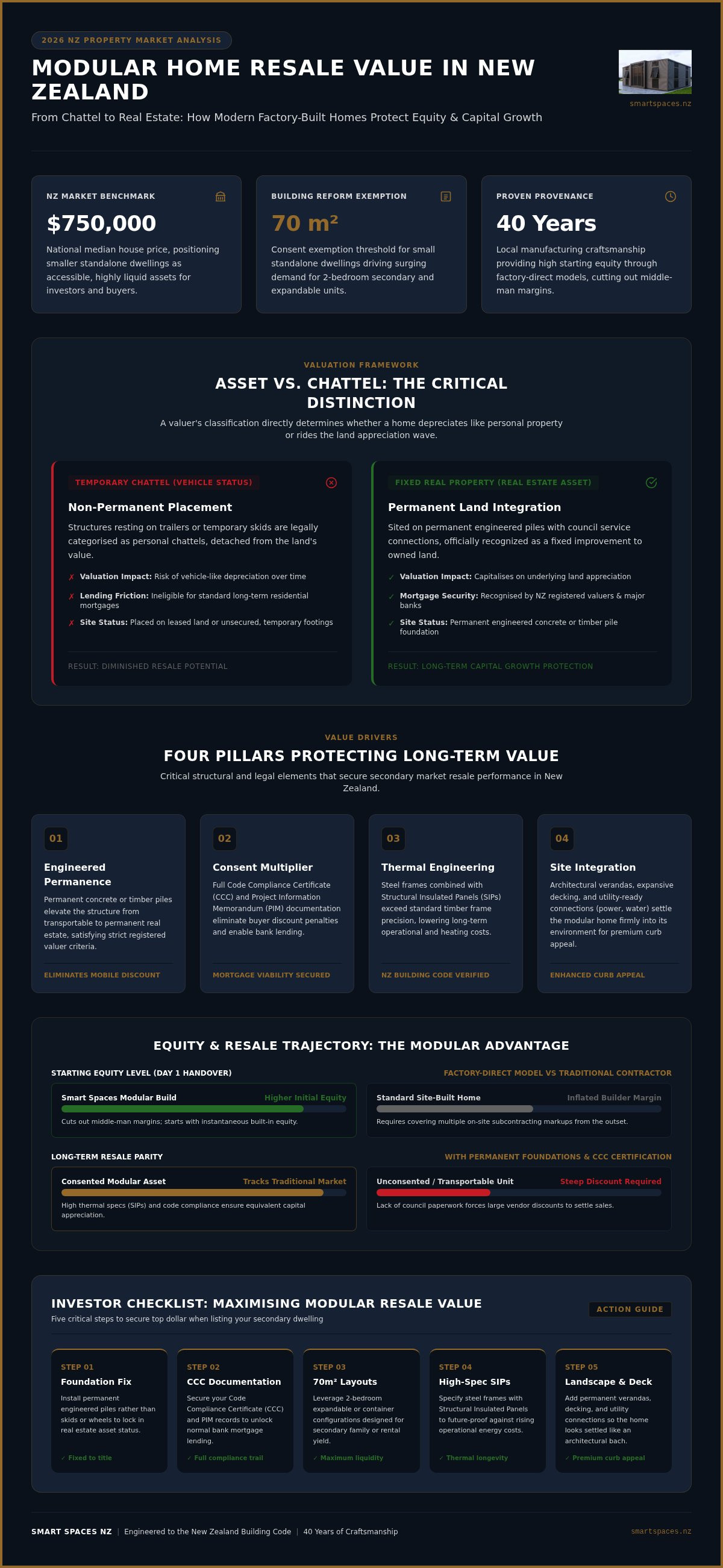
Whether a building is classified as a "chattel" or "real property" depends entirely on its permanence. If a unit stays on a temporary trailer or skids, the law often views it as personal property, which can lose value over time. However, if you site your 2-bedroom container home on permanent engineered piles and connect it to council services, it becomes a fixed improvement to the land. This transition is vital for your bank and future buyers. A permanent home with a clear compliance trail, including Project Information Memorandum (PIM) records, is valued by registered NZ valuers as a permanent fixture. This allows the structure to ride the wave of land appreciation rather than sinking like a depreciating asset.
The 2026 NZ Housing Market Context
The New Zealand housing landscape has shifted dramatically following the 2025 reforms for small standalone dwellings. With the 70 square metre consent exemption now in full swing, there's a surge in demand for high-quality secondary dwellings that can provide rental income or house extended family. Investors are increasingly looking for 2-bedroom expandable homes to maximise their land's potential without the headache of full subdivision. This high demand makes these units incredibly liquid; they're easier to sell because they fit the budget of a much larger pool of buyers in a market where the national median price sits at $750,000. Every Smart Spaces build is engineered to meet the NZ Building Code to ensure structural longevity and high thermal performance for decades of comfortable living.
Primary Factors Influencing Your Modular Home’s Future Price
Understanding the split between land and structure is the secret to gauging the resale value of modular homes nz. While the building itself is a high-quality asset, its appreciation is often tied to how it interacts with the earth beneath it. If you own the land where the home sits, you capture the capital growth of the location. A 2-bedroom container home on a leased patch of dirt behaves differently in the market than one permanently fixed to a title you own. To a valuer, a home on permanent concrete or timber piles is a house; one on wheels is often just a vehicle. This sense of permanence provides the security future buyers need to offer top dollar.
Build quality and energy efficiency are the next pillars of value. In 2026, buyers are savvy about thermal performance. If your home features steel frames and high-spec insulation like Structural Insulated Panels (SIPs), it stands out against older, draughtier housing stock. Strict adherence to New Zealand Building Code compliance ensures your home isn't just durable but also cheaper to run. These features aren't just "nice-to-haves" anymore. They're financial safeguards that preserve your home's worth as energy costs rise.
The "Consent" Multiplier
A Code Compliance Certificate (CCC) is your most valuable piece of paper. Without it, you'll struggle to find a buyer who can secure a standard mortgage. Navigating nz tiny home regulations is essential for anyone looking to build a secondary dwelling that adds real value. An unconsented structure is a liability that often requires a substantial price discount to shift. By ensuring your build follows the rules from day one, you protect yourself from future regulatory tightening and ensure a smooth sale. You might want to check out our range of fully compliant designs to see how we handle these details.
Location and Site Integration
Curb appeal isn't reserved for traditional mansions. A modular home that looks like a well-integrated bach or a sleek modern unit will always fetch a higher price. Investing in quality decking, verandas, and professional landscaping helps the structure "settle" into its environment. Utility-ready sites with permanent power and water connections also boost buyer confidence. Interestingly, 2-bedroom expandable homes often see higher demand because their footprint feels familiar to buyers used to traditional layouts. When a home feels like a permanent part of the landscape, the market responds accordingly.
Modular vs. Traditional Builds: An Appreciation Comparison
The financial success of any property investment often comes down to the "Price-to-Build" versus "Price-to-Sell" ratio. In the traditional sector, Kiwi homeowners frequently face "scope creep" and fluctuating material costs that can blow out budgets by 20% or more before the roof is even on. Modular homes flip this script. By utilising fixed factory pricing, you lock in your costs from day one, which protects your initial equity. When you eventually list the property, the "New Build" premium remains a powerful drawcard. Modern buyers are willing to pay more for a home that is efficient, healthy, and ready to move into immediately, rather than a draughty 1970s bungalow that requires a six-figure renovation.
Maintenance is another area where the resale value of modular homes nz shines. Traditional timber-frame homes require constant vigilance against rot, moisture, and paint degradation. In contrast, modular units built with galvanised steel or high-performance panels are designed for extreme durability with minimal upkeep. This lower "cost of ownership" is a significant selling point during buyer due diligence. A home that looks as good in year ten as it did on day one will always command a higher market price and attract more competitive offers.
Capital Gains in the Prefab Sector
The speed of construction is a hidden driver of your total return on investment. Because prefab homes NZ wide can be completed 30% to 50% faster than site-built projects, you reduce your holding costs and bridge loan interest significantly. This "time-saving" translates directly into profit. When comparing a 2 bedroom container home NZ investors have found that these units often enjoy a shorter time on the market. While the national median days to sell currently sits at 51 days, high-quality modular units in the affordable "missing middle" price bracket often move much faster due to their accessibility for first-home buyers and downsizers. If you are structuring finance for an investment build or entering the property market, exploring specialist lending guidance through mortgagesuite.co.nz can help ensure your loan aligns with your long-term goals.
Bank Lending and Valuation Impact
By September 2026, the pathway to financing a modular build has become much smoother. Major lenders now offer dedicated prebuilt home loans with LVRs as high as 90%, provided the manufacturer is part of the New Zealand BuiltReady scheme. This certification allows councils to process applications in just 10 working days, as the factory modules are legally deemed to comply with the Building Code. This regulatory certainty makes professional valuations straightforward. Valuers no longer treat these as "experimental" builds; they see them as high-spec, compliant dwellings that provide reliable collateral for the bank and a secure asset for the future owner.
How to Maximise the Resale Value of Your Modular Home
If you want to secure the best possible price, you need to treat your modular home like the high-end asset it is. Maximising the resale value of modular homes nz starts long before you list the property. It begins with a meticulous paper trail. In a market where buyers are increasingly cautious, having a complete file of Building Code compliance certificates, manufacturer warranties, and maintenance logs is your biggest advantage. This transparency builds immediate trust, especially when you can prove the building has been well-maintained and professionally sited since its installation.
Versatility is another major driver of liquidity. A 2-bedroom layout is currently the "sweet spot" in the New Zealand market because it appeals to the widest range of buyers, from young couples to retirees looking to downsize. While you're at it, ensure your home retains its transportable potential. Even if you plan to sell the land and house together, keeping the option to relocate the unit provides a safety net for buyers who might want to move it to a different site. This flexibility ensures your asset remains valuable even if the underlying land use changes. For investors who also manage broader property portfolios or monitor overseas residential opportunities, you can check out 富盛地產|有巢氏太平中山富盛店 for professional real estate brokerage and transaction services.
Upgrades that Pay for Themselves
By 2026, the standard for "quality" has shifted significantly. Buyers now expect high-performance living, so investing in solar readiness or off-grid capabilities can boost your asking price—a trend seen worldwide in sustainable projects like The ARK that champion regenerative, self-sufficient living. Closer to home, focus your budget on the kitchen and bathroom finishes; these are the emotional heart of the home where premium joinery and modern fixtures offer the best return. Adding a large timber deck or a veranda does more than just add floor space. It visually anchors the home, giving it that permanent bach feel that Kiwis love and are willing to pay a premium for.
Preparing for the Sale
When it's time to go to market, don't rely on grainy smartphone photos. Professional photography that captures the light, the modern lines, and the site integration is essential for factory-built homes. Your marketing should highlight the Smart Spaces heritage, leaning on our 40 years of family-owned craftsmanship to reassure buyers of the build's longevity. Position the home as a versatile dwelling that could serve as a high-yield rental, a home office, or a primary residence. If you're ready to start a project designed for long-term growth, browse our 2-bedroom home designs today.
Why Smart Spaces NZ Homes are Built for Long-Term Value
When you invest in a property, you're looking for a partner who has stood the test of time. With over 40 years of family-owned experience, we've seen every shift in the New Zealand housing market. This heritage isn't just a number; it's a badge of reliability that carries weight with local valuers and future buyers alike. Because we operate as a factory-direct business, you aren't paying for middle-man margins or retail markups. This lean approach protects the resale value of modular homes nz by ensuring you start with a higher equity position from the moment your unit is delivered.
Our builds are engineered specifically for the harsh Kiwi climate. We use high-spec galvanised steel frames and durable container units that resist the salt, wind, and rain that can quickly age a standard timber-built home. This structural integrity is backed by our dedicated after-sales support. We don't just drop off a building and disappear. We provide the guidance and support needed to keep your home in top condition, ensuring it remains a premium asset when the time comes to move it on.
The Expandable Advantage
One of our most popular options for investors is the 2 bedroom expandable home NZ wide. These units strike a perfect balance between transportable convenience and the permanent aesthetic that buyers crave. Unlike some lightweight prefabs, our expandable designs provide a traditional house-like footprint that feels spacious and solid. In the secondary market, Smart Spaces units are known for holding their value because they look and feel like a standard home, making them a top-tier choice for high-yield rentals or secondary dwellings.
Direct Investment, Direct Returns
Choosing to buy factory-direct is a strategic move that shields your capital. You're investing in the build quality rather than a salesperson's commission. To help you get your project off the ground, we offer finance solutions designed to get you onto your own land faster. This accessibility, combined with our 40-year track record of craftsmanship, makes a Smart Spaces build a visionary choice for the 2026 market. If you're ready to secure your financial future with a high-spec build, you can enquire about our high-value modular homes today.
Secure Your Financial Future with Smart Modular Design
Protecting your investment in 2026 comes down to choosing quality from the start. We've explored how permanent foundations and full compliance act as the ultimate safeguards for the resale value of modular homes nz. By opting for a factory-direct model, you're not just buying a home; you're building immediate equity that site-built projects often struggle to match. It's about combining the flexibility of modern design with the structural integrity required to ride the wave of the property market.
With over 40 years of family-owned experience, we're here to ensure your project is a long-term success. Whether you're adding a high-yield rental or building your first home, our finance solutions and high-spec steel frames provide the perfect foundation. It's time to stop worrying about depreciation and start envisioning the freedom you've been working for. View our range of high-resale modular homes and get a factory-direct quote to see how easy it is to get started. You've got the vision, and we've got the tools to make it a reality.
Frequently Asked Questions
Do modular homes depreciate like cars in New Zealand?
Modern modular homes don't lose value like vehicles. When a unit is permanently fixed to engineered foundations and connected to services, it's classified as real property. This allows the resale value of modular homes nz to appreciate alongside the land. The old myth of depreciation only applies to temporary structures or those lacking a clear compliance trail under the New Zealand Building Code.
Can I get a mortgage for a modular home in 2026?
You can certainly secure a mortgage for a modular build in the current market. Major banks now offer streamlined prebuilt home loans with LVRs as high as 90%. Because we are part of the BuiltReady scheme, councils process applications within 10 working days, as factory modules are legally deemed compliant. This regulatory certainty makes it much easier for lenders to approve your finance and value the asset.
Is it harder to sell a modular home than a traditional one?
It's often faster to sell a modern modular home than an older traditional house. There's a massive demand for the "missing middle" housing sector, particularly for 2-bedroom units that are warm, dry, and efficient. While the national median time to sell is 51 days, high-quality prefabs often move quickly because they don't require the expensive renovations usually associated with older Kiwi bungalows.
Does a container home hold its value better than an expandable home?
Both styles hold their value well, but they appeal to different buyers. Steel-framed 2-bedroom container homes are prized for their extreme durability and industrial aesthetic. Alternatively, expandable homes often fetch a premium because their footprint and roofline look more like a traditional house. Both benefit from our 40 years of family-owned craftsmanship, ensuring they remain high-value assets regardless of the specific design you choose.
How much does council consent affect the resale price?
A Code Compliance Certificate (CCC) is a massive value multiplier. While the 2025 reforms allow for some 70 square metre exemptions, having a verifiable compliance trail is essential for a smooth sale. Buyers need this paperwork to secure insurance and standard mortgages. Without it, you'll likely have to offer a significant discount, as the building may be viewed as a liability rather than a permanent asset.
Can I sell my modular home without the land it sits on?
Yes, this is one of the unique benefits of modular construction. You can sell the dwelling as a transportable asset to be moved to a new site. While the total resale value of modular homes nz is typically higher when sold with land, the ability to relocate the unit provides a flexible exit strategy. This is particularly useful if the land use changes or if you're upgrading your primary residence.
What maintenance is required to keep modular home value high?
Modular homes require significantly less upkeep than traditional timber builds. Because we use high-spec materials like galvanised steel and durable panels, you don't have to worry about the rot or moisture issues common in older homes. To keep the value high, you should keep the exterior clean, maintain your double glazing seals, and keep a meticulous log of any work carried out by Licensed Building Practitioners.
Are modular homes considered permanent structures by NZ councils?
Councils classify modular homes as permanent structures as soon as they are fixed to the ground. Once your home is placed on permanent piles and connected to council services, it falls under the Building Act 2004. This classification is vital for your long-term investment, as it ensures the home is treated as a fixed improvement to the land rather than a temporary shelter or a chattel.



Comments