

Permanent Marquee Structures NZ: 2026 Buying Guide

Updated: Oct 3
A marquee that looks right on paper can still be wrong for the site. If you’re comparing permanent marquee structures NZ buyers can use for repeated or long-term needs, assess the ground, exposure and intended use before choosing a style. New Zealand weather conditions, anchoring options and how long the structure will stay installed can all affect suitability, so a confident decision needs more than a good-looking frame.
A durable structure that fits your plans can be useful for a business, venue or other regular use. However, a long-term installation may raise council and building questions, and different frame styles may suit different site layouts. Checking the details early can help you avoid costly surprises.
This 2026 buying guide explains how to assess site suitability, compare A-Frame, Hip-End Frame and Pole & Peg marquees, and confirm the technical documents, anchoring requirements and compliance questions to raise with suppliers. It also covers what to ask about delivery, installation and ongoing support. Smart Spaces NZ sells marquee structures factory-direct and brings more than 40 years of family-owned industry experience, giving you a practical starting point for comparing options and planning your purchase.
Table of Contents
What Does “Permanent Marquee Structure” Mean for New Zealand Buyers?
For buying purposes, a permanent marquee is a structure you intend to keep in place or use repeatedly over the long term. The word “permanent” alone doesn’t determine its legal or consent status. A supplier may use “permanent” to describe a marquee intended for ongoing ownership, but requirements for a particular installation depend on its design, site and intended use.
Marquees can provide cover for events and other outdoor activities, with designs and materials varying by size and purpose. For general context, Marquee tents describes larger tents and their common uses. For your buying decision, focus on how often you’ll use the structure and what conditions it will face.
When does a long-term marquee make sense?
A marquee may suit a venue that hosts recurring events, a business with a regular outdoor function, or a site that needs covered space on an ongoing basis. Before choosing, consider how frequently it will be occupied, what activities it needs to accommodate, and whether it will stay exposed through different seasons. If your venue also requires sound, lighting, or screens for recurring functions, check out LivewireAV for event production services.
Occasional and ongoing use call for different planning. A structure brought out for one occasion has a different ownership pattern from one expected to stay installed through changing weather. The longer or more often you plan to use it, the more carefully you’ll want to check site conditions, performance information, anchoring and maintenance needs. Ownership also means planning for care and expected service life, not just the immediate event.
Smart Spaces NZ sells A-Frame, Hip-End Frame and Pole & Peg marquees for buyers considering ongoing ownership. The right option depends on your intended use and site, so confirm the relevant details before deciding.
Is a permanent marquee the same as a permanent building?
No. “Permanent marquee” can describe how a buyer plans to use a structure, but it isn’t, by itself, a legal classification. Marketing language doesn’t establish whether a proposal is treated as a building or what approvals may apply.
Requirements can depend on the specific structure, where it will be installed and how it will be used. Before committing, describe your proposal to the relevant council or a qualified adviser and ask what requirements apply. Keep the advice in writing alongside the supplier’s information. This gives you a clearer basis for comparing options without relying on assumptions about what “permanent” means.
Which Marquee Structure Suits Your Long-Term Use and Site?
Choose for the job the marquee needs to do, not just its silhouette. It needs to fit the usable ground area, allow people and equipment to move safely, and suit how you plan to operate the space. Smart Spaces NZ sells A-Frame, Hip-End Frame and Pole & Peg marquees. These names identify different styles, but don’t assume one is stronger, quicker to install or better suited to your site without evidence for the specific configuration.
A-Frame, Hip-End Frame or Pole & Peg: what should you compare?
Ask the supplier to compare each option against the same site plan and intended use. Confirm available configurations and dimensions, entrance placement, access around the structure and installation requirements. For broader product-selection context, see this commercial marquees buying guide. You can also consult the Advanced Textiles Association New Zealand as an industry reference.
Match the structure to your venue and operating plan
Before asking for a recommendation, sketch the site. Mark the usable ground area, entrances, paths that need to stay clear and nearby obstacles. Consider whether storage, event layouts or access needs could change over time—if you are equipping a school, camp, or church venue with active outdoor zones alongside covered shelters, visit 9 Square in the Air for multi-player games suited to group spaces. A marquee that fits today’s arrangement may be less practical if the way you use the space changes.
Separate your must-haves, such as the space required for your activities, from preferences such as appearance or optional configuration choices. This makes supplier comparisons clearer and keeps the decision focused on how you’ll use the structure. If you’re considering permanent marquee structures nz, share the intended site and operating plan with Smart Spaces NZ, then confirm the details relevant to your choice. You can review marquee options as part of that comparison.
How to Assess Durability, Weather Exposure and Ongoing Ownership
“Weather-resistant” is a useful starting point, not proof that a marquee suits every New Zealand site. Exposure, ground conditions, the proposed configuration and anchoring all matter. Ask for information that applies to your intended installation, especially if the marquee will stay in place or be used regularly.
Buying checklist: Treat a product description as an introduction. Verify written performance specifications, site assumptions and care requirements for the exact configuration you’re considering.
What performance details should you verify before buying?
Ask the supplier for written details on the quoted structure rather than relying on general claims or specifications for another model. Clarify:
Frame and covering: What materials are used, and what care or inspection do they need in your conditions?
Dimensions and configuration: Do the measurements and layout match your planned use and available site area?
Wind performance and anchoring: What wind performance is documented for this configuration, and what anchoring method is required for your site?
Ground and preparation: What ground conditions and site preparation does the specification assume?
Drainage: How should rainwater run off, and are there site or setup considerations for managing water around the structure?
Be specific about the site’s exposure and ground surface when asking these questions. A performance figure without its assumptions may not show whether the proposed setup is suitable. Request the supporting documentation and check that it relates to the exact structure being quoted.
What does long-term marquee maintenance involve?
Ongoing ownership means allowing time to inspect and care for the structure. Ask for the manufacturer’s guidance on cleaning, inspection, storage and repairs. Find out what components to inspect and whether frequent use or exposure to the elements changes the recommended checks.
Clarify how to spot wear in the covering, seams, frame connections and anchoring components, and what to do if you find a problem. If any parts need to be stored between uses, confirm how to prepare them. Ask whether replacement components are available and what after-sales support the supplier provides. Don’t assume these are included.
Smart Spaces NZ describes its marquees as durable and weather-resistant, but those descriptions aren’t a substitute for site-specific evidence. Before choosing among permanent marquee structures NZ buyers are comparing, ask for the documentation, maintenance expectations and support relevant to your intended installation. That gives you a sounder basis for planning ongoing use without assuming a particular lifespan.
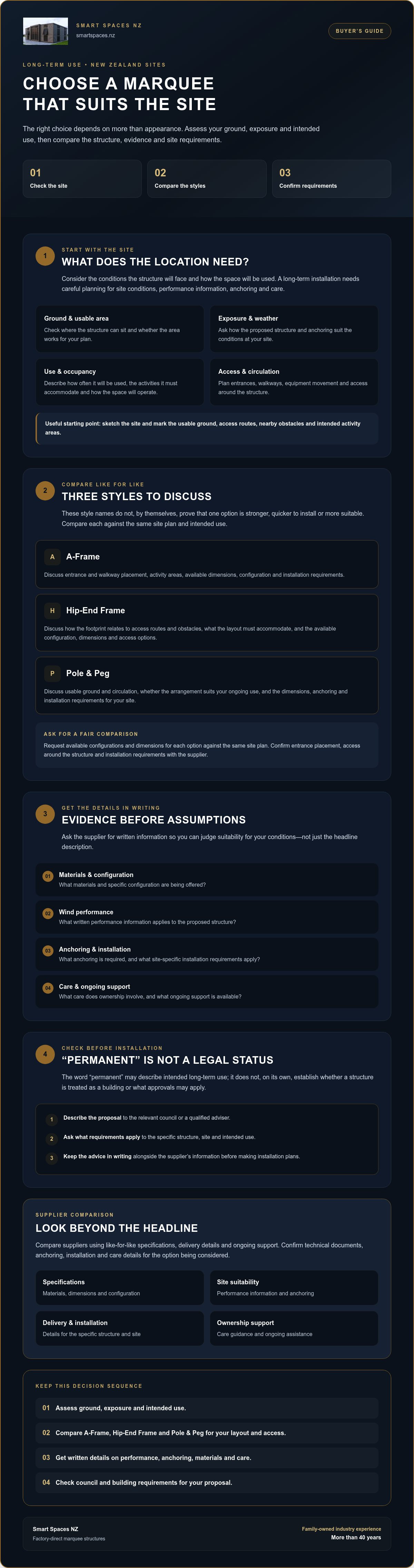
What New Zealand Site and Compliance Checks Come Before Installation?
Before buying, consider the proposed use, site and applicable requirements together. A marquee’s intended use, design and location can all affect what needs checking, so don’t assume a structure is automatically exempt from approvals. For broader commercial planning, see this marquee structures investment guide.
Which site details should you gather first?
Ground surface, slope and drainage, along with the proposed footprint.
Access routes, nearby structures and any obstacles around the installation area.
How the space will be used, including expected occupancy and access needs.
Exposure to local weather conditions, and the assumptions that any proposed design relies on.
Ask a suitably qualified person to assess site-specific anchoring and installation needs. Give the supplier the same site information when comparing options, then ask them to confirm which assumptions and specifications apply to the proposed configuration. A general product description won’t tell you whether the structure and anchoring suit your particular ground and exposure.
Who can confirm council and workplace requirements?
Check with the relevant council whether your proposed structure and use trigger approvals or other requirements. If people will work in or around the marquee, or the installation raises specific safety considerations, seek advice from appropriately qualified building or health-and-safety professionals. Confirm current guidance directly rather than relying on broad statements about marquees.
MBIE, the Building Act 2004 and the New Zealand Building Code are useful reference points for understanding the regulatory framework, but naming them doesn’t determine the status of a particular proposal. Ask the council or a qualified adviser how the rules apply to your structure, site and use.
For permanent marquee structures NZ buyers are considering, use this pre-purchase sequence:
Define the use: Describe activities, occupancy and how often the space will be used.
Assess the site: Record ground, access, drainage, obstacles and weather exposure.
Confirm specifications: Get written details for the exact configuration, including anchoring and relevant site assumptions.
Check requirements: Ask the council and qualified advisers what applies to this proposal.
Document advice: Keep specifications, assumptions and responses together before committing.
Share your intended use and site details with Smart Spaces NZ to discuss its marquee options and clarify what product information you’ll need to verify for your installation.
How to Choose a Marquee Supplier and Take the Next Step
A clear quote makes it easier to compare suppliers and avoid choosing on a headline description alone. Ask each supplier to quote the same style, dimensions, configuration and included components. Then check that the written details match your site and intended use. A description such as “commercial grade” doesn’t establish what’s included or how the proposed structure is specified.
Questions to ask before accepting a quote
Use this checklist to make supplier conversations more useful:
Structure: Which style and dimensions are quoted, and what components are included?
Specifications: Can you receive written performance information for this exact configuration, including relevant wind and anchoring details?
Site assumptions: What ground conditions, preparation and exposure does the recommendation assume? What could change if those assumptions don’t match your site?
Delivery and installation: What delivery arrangements apply, and who is responsible for installation? Confirm what is included rather than assuming.
Ownership support: Where can you find maintenance guidance, and what after-sales support and replacement-part arrangements are available?
Purchase terms: What do the quote and terms say about inclusions, exclusions, payment and any conditions?
Compare like with like. If a quote covers a different configuration, components or site assumptions, ask the supplier to clarify before weighing it against another. Keep written answers with the quote so you can distinguish confirmed details from anything that still needs checking.
Explore Smart Spaces NZ marquee options
Smart Spaces NZ sells A-Frame, Hip-End Frame and Pole & Peg marquees through a factory-direct model. The family-owned business brings more than 40 years of industry experience, useful context when discussing your requirements. Each structure’s specifications and suitability still need to be confirmed for your site.
If you’re comparing permanent marquee structures NZ, bring your intended use, site details and must-have requirements into the conversation. Ask which available style and configuration may fit, then verify the written specifications, delivery arrangements and support terms before deciding.
Discuss your marquee requirements with Smart Spaces NZ, including how you plan to use the space and the site conditions the proposed structure needs to suit.
Make Your Marquee Investment with Confidence
A long-term marquee decision starts with the site and how you’ll use the space. Before choosing a style, check the usable area, access and exposure, then ask for written specifications and anchoring details for the exact configuration. Confirm what council or other requirements may apply to your proposal rather than assuming the word “permanent” settles the question.
Comparing permanent marquee structures nz options is easier when you assess like for like: dimensions, included components, site assumptions, delivery arrangements and ongoing support. These details help you weigh an offer against your actual plans, not just a headline description.
Smart Spaces NZ sells A-Frame, Hip-End Frame and Pole & Peg marquees factory-direct. The family-owned business brings over 40 years of industry experience, offering useful context as you explore options while you verify each structure’s suitability for your site.
Ready to discuss your intended use and site? Talk with Smart Spaces NZ about a marquee for your site and take the next step towards a well-informed choice.
Frequently Asked Questions
What is a permanent marquee structure?
A permanent marquee structure is generally a marquee bought for long-term ownership or repeated use, rather than for a one-off occasion. The term describes the buyer’s intended use, not an automatic legal building classification. For permanent marquee structures NZ buyers are considering, suitability depends on the proposed configuration, site, exposure and operating needs. Check the relevant specifications and requirements for your installation instead of relying on the word “permanent” alone.
Can a marquee be left up all year in New Zealand?
Possibly, but don’t assume every marquee is suitable to remain installed all year. Weather exposure, site conditions, configuration and anchoring all need consideration. Ask the supplier for written performance details and installation requirements for your specific site, and clarify what inspection and maintenance are needed during ongoing use. Confirm any relevant council or building requirements before installation. A product description alone can’t establish that a particular structure is appropriate for year-round use.
Do permanent marquee structures need council consent in New Zealand?
Some proposals may need council approval or need to meet other building requirements, but there isn’t one answer for every marquee. Requirements can depend on the structure, site and intended use. Before purchasing or installing, describe your specific proposal to the relevant council and ask what applies. You can also seek advice from a qualified building professional where appropriate. Don’t treat a supplier’s “permanent” or “temporary” description as confirmation of consent status.
How do I choose between an A-Frame, Hip-End Frame and Pole & Peg marquee?
Choose by matching the quoted configuration to your site plan and how you’ll use the space. Smart Spaces NZ sells A-Frame, Hip-End Frame and Pole & Peg marquees, but don’t assume a style is inherently better for your needs without comparing its documented details. Map the footprint, entrances, circulation and nearby obstacles, then ask the supplier to confirm dimensions, configuration, access options and installation requirements for each option.
What should I check about wind performance and anchoring before buying a marquee?
Request written wind-performance information and anchoring instructions for the exact configuration you’re considering. Ask what site conditions, ground surface and installation assumptions those details rely on, then have a suitably qualified person assess site-specific anchoring needs. Performance information depends on the structure being installed and anchored as specified, so confirm who is responsible for installation and what the guidance requires. Don’t rely on a general “weather-resistant” claim as proof of site suitability.
How do I maintain a marquee structure for long-term use?
Follow the manufacturer’s guidance for cleaning, inspections, storage and repairs. Ask what to check on the frame, covering, seams and connections, and whether frequent use or weather exposure changes the recommended inspection routine. Clarify how components should be stored if they’re removed, and ask about replacement parts and after-sales support before purchasing. Regular care can help you identify wear early, but maintenance guidance and expected service life should be confirmed for the specific structure.
Can Smart Spaces NZ supply a marquee for ongoing commercial use?
Yes. Smart Spaces NZ sells commercial-grade marquees intended for long-term ownership, including A-Frame, Hip-End Frame and Pole & Peg styles. The business sells factory-direct and has over 40 years of family-owned industry experience. Its range may be relevant to buyers planning ongoing use, but suitability still depends on your site and intended operation. Ask for written specifications, anchoring details and the applicable delivery and support terms before deciding.



Comments