

Off-grid tiny homes in NZ: power, water & wastewater 2026

Updated: 9 hours ago
What if the biggest off-grid decision isn’t the solar system, but how your home, site and daily habits fit together? That’s the practical question behind off grid tiny homes nz. A compact home still needs reliable plans for power, water and wastewater, especially when weather or site conditions change.
Wanting more independence from public services is understandable, but each system needs to work reliably and be manageable day to day. Plan electricity generation and storage, water collection and supply, and wastewater management as connected parts of the same setup. Each must suit your household’s needs and the land you’re building on.
This guide covers the main system choices, the site details to assess and the planning questions to research before choosing a home format. Building and planning requirements can depend on the home, its services and its location. Whether you’re considering an expandable home or a container home, a clear plan helps you make grounded decisions before committing to the next step.
Table of Contents
Off-grid tiny homes in NZ: what does living off-grid really involve?
Off-grid living means reducing or removing reliance on mains services, not choosing one special feature for your home. You might generate your own electricity but use a mains water connection, or collect rainwater while relying on another service for wastewater. Each system can have a different level of independence.
That flexibility can support a simpler, more self-reliant way of living. It also brings everyday responsibilities: monitoring supplies, using resources thoughtfully and maintaining equipment. The broad idea of Off-the-grid living includes managing essential services such as power, water and waste. The right approach depends on the household and its site.
What services does an off-grid tiny home need to manage?
Treat each service as its own planning question. Being disconnected from one mains connection doesn’t automatically remove the need to provide or manage the others.
Electricity: Where will power come from, and how will you manage household use?
Water supply: What will provide water for drinking, cooking, washing and cleaning?
Wastewater: How will wastewater be collected, treated and dealt with?
Rubbish: How will household waste be sorted, stored and removed?
Communications: What phone or internet access do you need, and how will you maintain it at the site?
This checklist turns the broad idea of off grid tiny homes nz into practical decisions. A home can be independent for electricity yet connected for water, for example. Record what’s available at the site, what you’ll need to supply yourself and how each system will fit into daily routines.
Who might find off-grid tiny-home living suitable?
Fit depends less on a label and more on how you live. Consider how many people will use the home, how often it’ll be occupied, which appliances are part of your normal routine and how much time you’re willing to spend monitoring supplies or system performance.
Occasional use and full-time living create different patterns of demand. A home used for short stays may sit empty between visits, while a full-time household needs services to support everyday routines. Neither is automatically easier to plan. Before choosing a home or system, write down your must-haves, likely occupancy and the tasks you’re comfortable managing. This gives the next planning decisions a sound starting point.
Off-grid tiny-home power in NZ: plan generation, storage and daily use
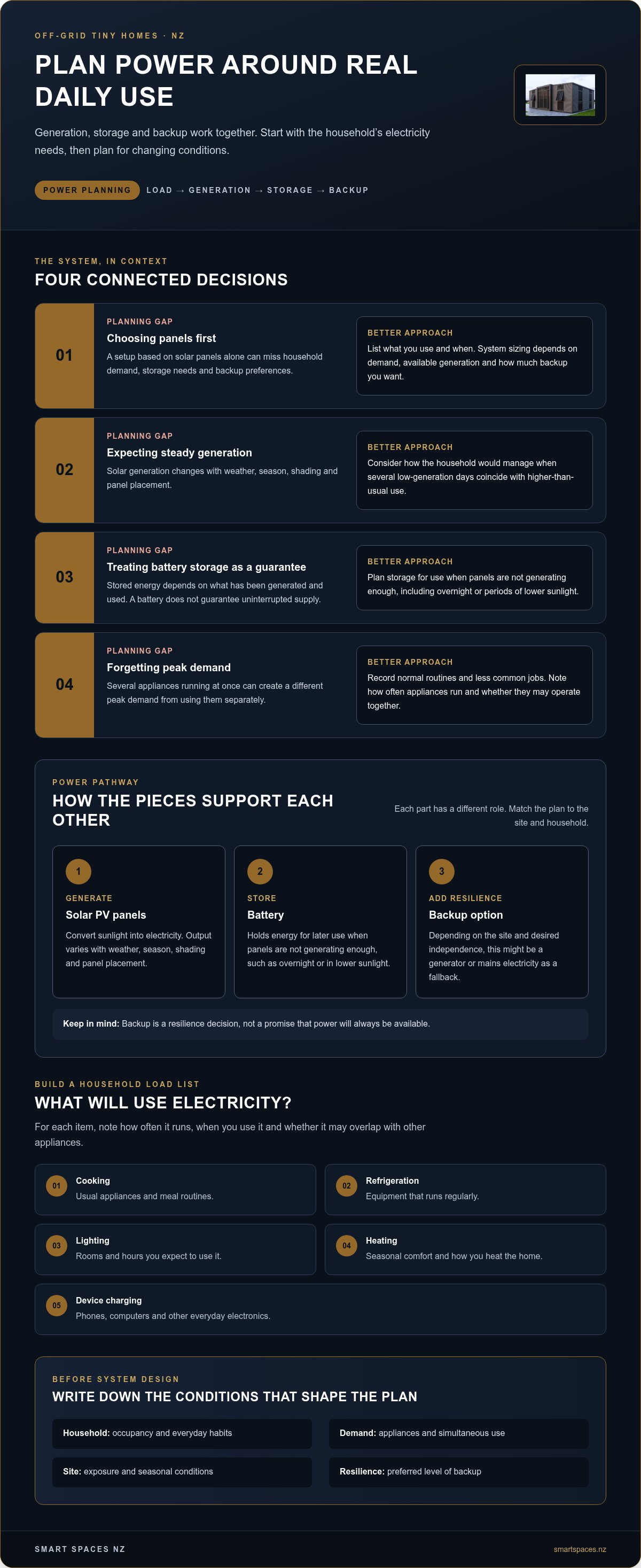
A dependable power plan starts with how your household uses electricity, not with choosing solar panels alone. Generation supplies power, batteries store energy for later, and a backup option can help manage periods when generation or stored energy falls short. Your total electricity use is your load, shaped by the appliances you run and when you run them.
System sizing depends on household demand, available generation and how much backup you want. There’s no single setup for every off-grid home. Occupancy, seasonal conditions, site exposure and everyday habits all affect the balance. For homes with restricted roof area, exploring high-efficiency solar solutions from specialists like Nippon Energy can help maximise power generation from available space.
How do solar panels and batteries support off-grid power?
Solar photovoltaic panels convert sunlight into electricity. A battery stores energy for use when panels aren’t generating enough, such as overnight or during periods of lower sunlight. Neither guarantees an uninterrupted supply: generation changes with weather, season, shading and panel placement, while stored energy depends on what’s been generated and used. When researching equipment options and hardware configurations, check out SM Solar for specialised components.
Backup can be another part of the plan. Depending on the site and the level of independence you want, this might involve a generator or a connection to mains electricity as a fallback. Treat backup as a resilience decision, not a promise that power will always be available. For off grid tiny homes nz, consider how your household would manage if several low-generation days coincide with higher-than-usual use.
Which everyday power demands should you plan around?
List the appliances you expect to use, how often they’ll run and whether several might operate at once. Include:
Cooking: note your usual appliances and meal routines.
Refrigeration: account for equipment that runs regularly.
Lighting: consider the rooms and hours you’ll use it.
Heating: think through seasonal comfort and the way you heat the home.
Device charging: include phones, computers and other everyday electronics.
A couple using a home occasionally may have a different pattern from a household living there full-time. Simultaneous use matters, too: cooking while heating the home and charging devices can create a different peak demand from running each appliance at separate times. Write down your normal routine and the less common jobs you still need to support. This gives you a more useful starting point for discussing system design and backup than a rough guess based on floor area alone.
Once you’ve mapped your power needs, compare the home format as part of the wider project. Explore expandable and container home options alongside your site and system planning.
Water and wastewater for off-grid tiny homes: compare the practical choices
Water planning has two sides: bringing usable water into the home, then safely managing what leaves it. Water supply planning is about sourcing, storing and making water safe to use; wastewater management is about treating and disposing of used water responsibly. These are connected but separate systems, each with its own site requirements.
How can a tiny home manage water without a mains connection?
Collected rainwater and delivered water are two possible sources, each with its own dependencies. A rainwater setup relies on suitable roof catchment, rainfall, storage and a way to keep the collection system working. Delivered supply relies on access for deliveries and a plan for storing water between them. Either option needs to fit your household’s use and the conditions at the site.
For rainwater, think through each stage rather than focusing on the tank alone:
Collection: assess the roof area, gutters and exposure to debris.
Storage: plan how you’ll hold water and monitor available supply.
Filtration or treatment: consider what’s needed for the intended use, especially drinking.
Routine checks: include cleaning and maintenance in your ongoing plan.
Rainfall can vary through the year, so a source that appears adequate in wetter conditions may not meet demand during a drier spell. Household size, bathing and laundry habits, and water-efficient appliances also affect how quickly stored water is used. Don’t assume a tank or filtration method alone makes water safe to drink. If rainwater is intended for potable use, understand the applicable requirements and how the supply will be managed. For remote properties or extended dry spells, reviewing tactical innovations developed for disaster relief water supply can also highlight useful contingency options for securing drinking water.
What should you know about wastewater and greywater?
Blackwater is wastewater from toilets. Greywater comes from other domestic uses, such as showers, bathroom basins, laundry and kitchen sinks. They differ in source and composition, so a plan for one doesn’t automatically cover the other.
Treatment and disposal choices depend on site conditions, intended use and applicable national and local requirements. Consider the available land, access and where wastewater can be managed appropriately before settling on a home or system. Off-grid status doesn’t remove those obligations. For the wider compliance picture, read the NZ tiny home regulations and consents guide.
For off grid tiny homes nz, put water source, storage, drinking-water safety and wastewater planning on the same site checklist. That way, you can see how the systems work together before making decisions about the home format.
Before choosing an off-grid tiny home in NZ, assess the site and rules
A sound plan starts with the land and how you’ll use it. Off-grid power and water don’t automatically remove building, land-use or wastewater requirements, and a small or relocatable home isn’t automatically exempt. What applies can depend on the home, its intended use, its connections and the property’s location.
Work through the decisions in order. This helps reveal practical constraints before you settle on a home format or system.
Intended use: Will the home be occupied full-time, used occasionally or serve another purpose?
Site access: Can vehicles reach the site and deliver the home and system components? Note tight turns, slopes and other constraints.
Exposure: Consider sun access for solar generation, roof catchment for rainwater and exposure to wind or surrounding features.
Services: Record which mains connections are available and which services need another solution.
Systems: Allow space for equipment, storage and safe placement, with clear access for operation and maintenance.
Applicable rules: Identify the building, land-use and service-related requirements that may apply to the project.
What site conditions affect off-grid planning?
Access is more than a delivery-day question. Systems may need inspection, cleaning or servicing later, so plan routes and working space around them. Check where panels could receive sun, whether the roof can collect rainwater effectively, and where tanks or wastewater components could be positioned. Conditions vary from site to site, so assess the actual property rather than relying on a general assumption about New Zealand conditions.
Which New Zealand rules should you research?
Building requirements relate to the home and its construction or use. Land-use rules concern what activities and structures are permitted on a property, while service-related requirements can apply to water supply and wastewater systems. These questions are distinct, and meeting one set of requirements doesn’t necessarily settle the others.
Check current guidance from the Ministry of Business, Innovation and Employment (MBIE) and the relevant local council for your project and location. Don’t assume a home on wheels, a small footprint or off-grid services creates a blanket exemption. For a starting point, use the NZ tiny home regulations and consents guide alongside your own site research.
Once you’ve mapped access, exposure, service needs and the rules to investigate, compare home formats against those findings. Explore expandable and container homes as options within your wider off-grid project plan.
Choose a tiny-home format that fits your off-grid plan
Your home and your off-grid systems need to work together, but they’re separate project decisions. The home format shapes how you’ll use the space and plan access; power, water and wastewater arrangements need to suit the household and site. Set out those needs first, then compare home options against them.
How do expandable and container homes fit into the decision?
Expandable homes and container homes are two housing formats to consider. Compare them in light of your intended use, preferred layout and how the home will fit the site. Think about delivery access early, too, and how you’ll plan for service connections or independent systems around the chosen location. Don’t assume a particular format automatically includes the off-grid equipment you need.
Smart Spaces NZ sells factory-direct expandable and container homes across New Zealand. To place these options in the wider context of factory-built housing, explore this prefab homes guide for NZ.
What should your off-grid planning checklist include?
Use a written checklist to connect household routines with the site and the home you’re considering. For off grid tiny homes nz, record:
Household needs: who’ll live there, how often and what daily routines the home must support.
Power: the appliances you expect to use, likely demand and the backup approach you’re considering.
Water: the intended source, storage plan, drinking-water safety and ongoing checks.
Wastewater: the likely approach and the site conditions that could affect treatment and disposal.
Site practicalities: access for delivery, exposure, space for systems and room for maintenance.
Rules to research: building, land-use and service-related requirements relevant to the project and location.
Note your assumptions beside each item, then mark what still needs site-specific assessment or confirmation from current official guidance and local rules. This gives you a clearer basis for comparing layouts and access needs without treating the home itself as a complete off-grid solution.
Once your plan is taking shape, compare it with the available home formats. Explore expandable homes in NZ and container homes in NZ as possible housing options for your wider project.
Plan your off-grid home one decision at a time
A practical off-grid plan starts with your household’s routines and the site, then brings power, water and wastewater choices together. Work out what you’ll use each day, how the site can support those systems and which current building, land-use and service requirements apply. The right home format is part of that plan, but it doesn’t replace the need to plan off-grid equipment separately.
For anyone considering off grid tiny homes nz, careful preparation can make the next decisions clearer. Note your needs and assumptions, identify questions that require site-specific research, then compare home options against your intended use, layout and access.
Smart Spaces NZ is a family-owned business with over 40 years of industry experience, selling expandable and container homes factory-direct across New Zealand. Explore expandable and container home options from Smart Spaces NZ as you shape your wider project plan.
With a grounded plan in hand, you can take the next step with confidence and build towards a home that suits the way you want to live.
Frequently Asked Questions
Can you live off-grid in a tiny home in New Zealand?
Yes, off-grid tiny-home living is possible in New Zealand, but a workable setup depends on the site, household needs and systems for power, water and wastewater. A small home isn’t automatically self-sufficient or exempt from requirements. Before planning for full-time living, consider daily routines, how each service will work and what maintenance it will need. People exploring off grid tiny homes nz should also check current rules for their specific project.
Is it legal to live off-grid in a tiny home in NZ?
There isn’t a single yes-or-no answer for every tiny-home project. Living independently from mains services doesn’t, by itself, remove building, land-use or wastewater requirements. What applies may depend on the home, its intended use and the site. Check current New Zealand government guidance and relevant local council requirements before making decisions, rather than assuming that a particular home format or level of independence is automatically exempt.
How does power work in an off-grid tiny home?
Off-grid power planning usually brings together electricity generation, storage and household demand. Solar panels can generate electricity, while batteries store energy for later use; a backup arrangement may help provide resilience when generation or stored power is limited. The right mix depends on appliance choices, occupancy, site and seasonal conditions, as well as how much backup you want. Don’t assume one system size or configuration will suit every household.
How do off-grid tiny homes get water and manage wastewater?
Water may come from a planned source such as collected rainwater or delivered supply, with storage and any treatment considered as separate parts of the setup. Wastewater needs its own suitable treatment and disposal plan. The practical options depend on household use, site conditions and applicable rules. Securing a water source doesn’t resolve wastewater management or compliance, so assess both systems as distinct parts of the project.
Do off-grid tiny homes in NZ need consent?
Being off-grid doesn’t automatically exempt a tiny home from consent or other requirements. The rules that apply can depend on the project, the home’s intended use and the site, and building, land-use and service matters may need separate consideration. Check current official New Zealand guidance and relevant local requirements for your circumstances before proceeding. Don’t rely on a general rule based only on a home being small or relocatable.
What should I consider before choosing an off-grid tiny home?
Start with who’ll live there, how often the home will be occupied and what daily routines and appliances it needs to support. Then assess site access, exposure, power generation and storage, water supply, wastewater arrangements and maintenance needs. Research applicable requirements before settling on a home format or system. A written checklist helps connect household needs to site conditions and makes assumptions or questions requiring further assessment easier to identify.
Can an expandable or container home be used for off-grid living?
An expandable or container home can be considered as a home format within an off-grid project, but the power, water and wastewater systems are separate planning decisions. Whether a proposed setup suits depends on its intended use, the site and the systems planned around it. Compare layout and access needs with your site plan, and don’t assume off-grid equipment is automatically part of the home. Check relevant requirements for your circumstances.



Comments