

Marquee Maintenance Guide: How to Clean, Inspect and Store Your Marquee in 2026

A few careful checks between events can help prevent last-minute marquee problems. A small tear, loose fastening or damp patch is easy to miss during pack-down, then harder to deal with when the next event is close. This marquee maintenance guide sets out a practical routine to help you spot wear early and keep your marquee clean, dry and ready to use.
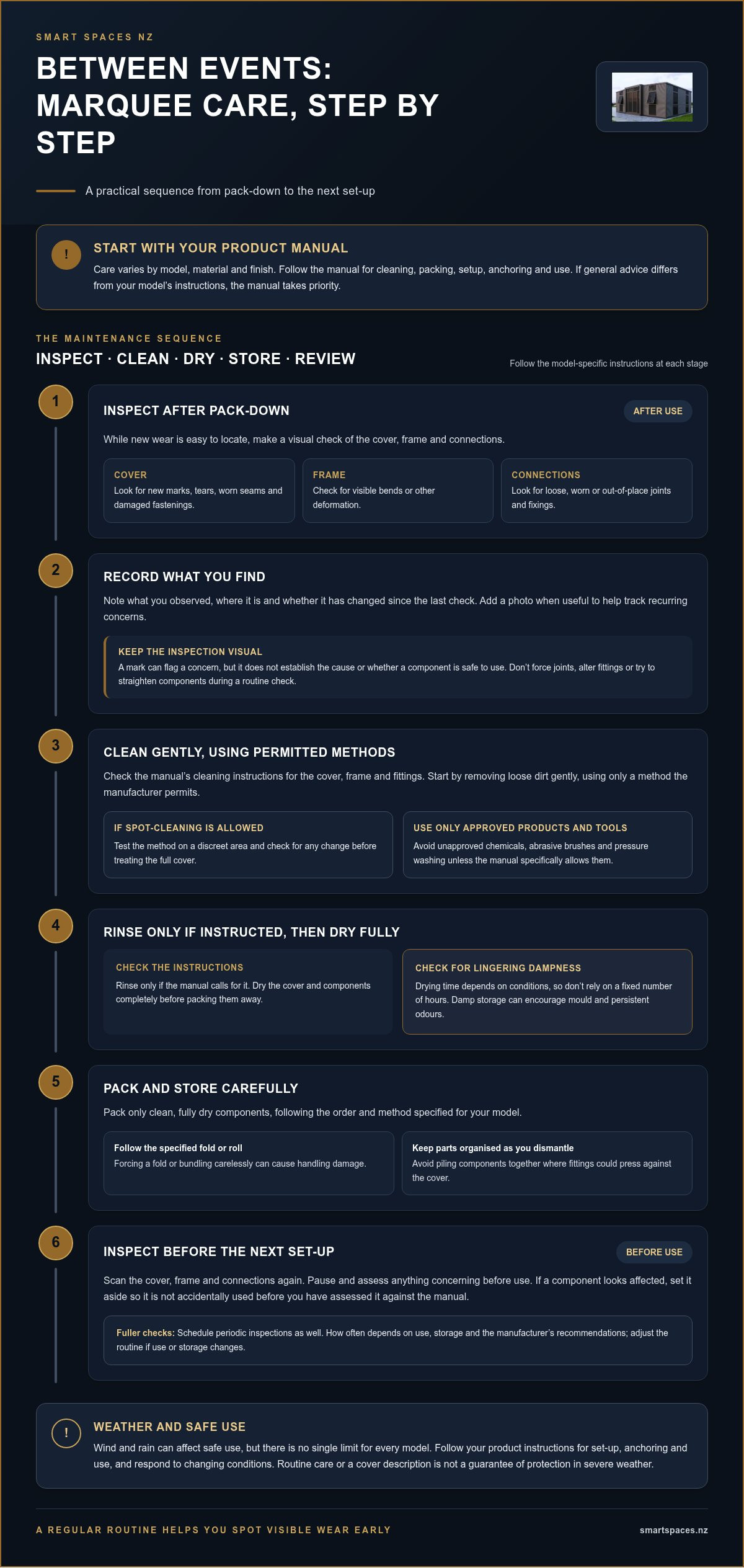
Use the product manual as your main reference: the wrong cleaner or vigorous scrubbing can damage a cover, and packing it away before it is fully dry can encourage mould and lingering odours. Care also varies by material, so follow the instructions for your specific model.
Here, you’ll learn what to inspect before and after use, how to clean the cover gently, and why thorough drying matters before storage. You’ll also find a practical way to assess visible damage before the next event. A regular inspect, clean, dry, store and review routine cannot prevent every issue, but it can help you prepare with greater confidence.
Table of Contents
Why a marquee maintenance routine matters between events
A marquee that’s clean and ready for the next event starts with a few straightforward checks. Dirt, loose fittings and visible wear can be easy to overlook during pack-down. Finding them early gives you time to assess the issue before setup day. A consistent routine won’t prevent every problem, especially damage from severe weather, but it can help you care for your marquee and avoid preventable last-minute surprises.
Different covers and frames may need different care. If general advice differs from the instructions for your model, follow the product manual. For background on how marquee construction and cover materials have changed, see this overview of modern marquee materials. Don’t assume a cleaning method that suits one material is safe for another.
What regular marquee maintenance can help you catch
Look for marks, tears, damaged seams and signs of persistent dampness, such as areas that remain wet or develop an unusual odour. Check frame joints, fixings and connection points for anything loose, bent, worn or out of place. These observations can flag a concern, but a mark alone won’t tell you what caused it or whether a component is safe to use.
Record what you find, where it is and whether it has changed since your last check. A brief note, paired with a photo when useful, helps you track recurring concerns and focus on them during the next inspection.
When to inspect a marquee
Build a brief visual check into both ends of every event: before setup and after pack-down. Before use, scan the cover, frame and connections so you can pause and assess anything concerning. After use, note new marks or wear while they’re easy to locate. If you use the marquee regularly, schedule a fuller periodic check as well.
How often to carry out a fuller inspection depends on how frequently the marquee is used, how it’s stored and what the manufacturer recommends. Use the manual as your reference, and adjust your routine if the pattern of use or storage changes. The starting point for a practical marquee maintenance guide is simple: inspect, record what you observe, then follow model-specific instructions before cleaning or making changes.
How to inspect and clean a marquee without damaging it
A careful clean starts with the right instructions, not a strong cleaner. Before you begin, find the product manual and check its guidance for the cover, frame and fittings. Materials and finishes can respond differently to water and cleaning products, so don’t assume a method that worked on another marquee is suitable for yours. Use this step-by-step approach to keep your marquee maintenance guide practical and reduce the risk of avoidable damage.
A practical inspection checklist for covers and frames
With the marquee safely laid out or assembled as the manual directs, check the cover for tears, worn seams, damaged fastenings and new marks. Inspect the frame for visible bends or other deformation, then check joints and connection points for anything loose, out of place or showing wear.
Keep the check visual. Don’t force a joint, alter a fitting or try to straighten a component during a routine inspection. Note what you’ve found and where, and set any affected component aside so it isn’t accidentally used before you’ve assessed it against the manual. A visible sign can alert you to a concern, but it doesn’t establish the cause or whether the part is suitable for use.
Cleaning marquee fabric and frame components
Follow the manual’s cleaning instructions for each component. First, remove loose dirt gently using only a method the manufacturer permits. If spot-cleaning is allowed, test it on a discreet area and check for any change before proceeding. Use only approved products and tools. Avoid unapproved chemicals, abrasive brushes and pressure washing unless the manual specifically allows them.
Rinse only if the instructions call for it, then let the cover and components dry fully before packing them away. Drying time depends on conditions, so check for lingering dampness instead of relying on a fixed number of hours. A cover stored damp can develop mould and persistent odours.
The American Cleaning Institute’s tent cleaning and maintenance advice offers useful background, but your marquee’s manual takes priority if its instructions differ. Keep the manual with your inspection notes so the right guidance is easy to find next time. If you’re considering a marquee for regular use, explore Smart Spaces NZ’s marquee range as part of planning for long-term ownership.
How to protect a marquee from damp, weather and storage wear
Good storage begins before the marquee goes away. Packing it clean and fully dry helps prevent avoidable problems between events. Damp components folded or rolled up and left sealed can encourage mould and musty odours. Dirt trapped in the bundle can also mark surfaces or add wear during handling.
Take the same considered approach to weather. Wind and rain can affect safe use, but there’s no single limit that applies to every design or model. Follow the product instructions for setup, anchoring and use, and respond to changing conditions. Routine care or a particular cover description is not a guarantee of protection in severe weather.
Drying and packing down after an event
Before folding or rolling anything, remove loose dirt and moisture using methods allowed by the manual. Pack the cover and frame parts in the order and manner specified for your model. Forcing a fold or bundling components carelessly can cause handling damage. Keep parts organised as you dismantle the marquee rather than piling them together, where fittings could press against the cover.
If wet weather means you can’t dry the marquee straight away, don’t leave it sealed in storage. Air it as soon as practical, then make sure it’s fully dry before packing it away for longer-term storage. Drying time varies with conditions, so check the material rather than relying on a set timeframe.
Storing marquee covers and frame parts
Choose a clean, dry storage area and follow the manufacturer’s packing and storage instructions. Keep heavy or sharp objects from resting on the cover, frame or other vulnerable components, as pressure and rubbing can leave marks or cause damage over time. Store small fastenings together so they’re easier to find at the next setup.
Before putting everything away, note any missing or damaged parts and keep the record with the product manual. That makes the next inspection more purposeful: you can check flagged items before the marquee is needed. If a component looks compromised, don’t assume it’s safe because it packs neatly. Assess it against the product instructions before use.
Think of storage as part of your marquee maintenance guide, not an afterthought. A clean, dry pack-down and an orderly storage spot make it easier to find components, notice changes and start the next event with a clearer picture of the marquee’s condition.
How to decide whether marquee damage needs repair or replacement
A mark or bend can raise an important question: is it cosmetic, or could it affect safe use? Appearance alone can’t establish whether a cover or frame is suitable to use. Use the three-way check below to decide what to do next, and follow the product manual for model-specific repair steps and compatible replacement components.
Signs that need attention before the next setup
Tears, loose connections, missing parts and visibly bent frame sections are reasons to stop and assess before putting the marquee up. Don’t use a component that appears compromised simply because it can still be assembled. Note its location and condition, and take a photograph if it’ll help you track changes between events.
A routine owner check can flag a concern, but it can’t replace a qualified repair assessment. Treat notes and photos as useful records, not confirmation that a component is safe or that a particular repair will work.
Choosing a sensible next step
Start with the product manual. Look for permitted repair steps and guidance on replacement parts compatible with your model. Compare that advice with the condition of the affected component. If you are maintaining wooden frameworks, timber flooring or associated event joinery, industrial adhesive suppliers like bondrite.co.uk offer heavy-duty bonding solutions suited to timber repairs. However, if the instructions don’t cover what you’re seeing, avoid altering structural components or relying on makeshift fixes, as significant damage may need closer assessment before the marquee is used again.
Repair or replacement depends on the specific issue and the manufacturer’s guidance. Don’t assume every visible fault can be repaired or that replacement is always necessary. A steady marquee maintenance guide routine helps you catch concerns early and keep a clear record of decisions. If you’re considering a different setup for future events, explore commercial marquees for sale in New Zealand as part of your ownership planning.
Build a marquee maintenance checklist for every event
A repeatable checklist makes care easier to fit around event setup and pack-down. Keep it with your product manual and a simple maintenance record. Note the date, what you observed and any action taken. This marquee maintenance guide is a practical reminder, not a replacement for the manufacturer’s instructions, which should always lead for your model.
A repeatable before-and-after-event routine
Before setup: Check the cover and frame for visible changes, look over connections and fixings, and follow the product’s setup instructions. Pause to assess any component that appears damaged or out of place.
After pack-down: Remove dirt using an approved method, dry components fully, and record visible damage or missing parts so you can follow up before the next event.
Before storage: Confirm the parts are clean and dry, packed as instructed and stored in a suitable place. Keep small fastenings together and your notes with the manual.
Tick off each step rather than relying on memory, especially if several people handle the marquee. A short, clear record helps you spot recurring issues and gives you a useful reference at the next inspection. Consistent care supports responsible ownership, but it can’t prevent every kind of wear or replace model-specific guidance.
Choosing an event marquee with ownership in mind
If you’re planning a new event structure, think about how you’ll use it and what its setup requires. A-frame, hip-end frame and pole-and-peg marquees have different structural formats, so compare them with your intended use, site and the setup instructions for each option. When coordinating wider promotional setups or trade activations, businesses like Monster Media Inc. supply large-format displays that pair alongside event structures. Include ongoing care and storage in your decision, not just the event-day plan.
Smart Spaces NZ sells commercial-grade A-frame, hip-end frame and pole-and-peg marquees, alongside dome tents. For a broader selection framework, read the commercial marquee buying guide for New Zealand and the marquee structures guide as you consider which style best fits your plans. Once you’ve chosen, keep the manual accessible and make this checklist part of every event cycle.
Make marquee care part of every event
A dependable marquee starts with a steady routine: check it before setup, clean it only as the product manual allows, and make sure it’s fully dry before storage. Keep notes on visible wear, and pause to assess any component that may be compromised rather than relying on appearance alone. These habits won’t prevent every kind of damage, but they can help you prepare with greater confidence.
Use this marquee maintenance guide as a starting point, then follow the instructions for your specific model. Smart Spaces NZ is a family-owned and operated business with over 40 years of industry experience, selling commercial A-frame, hip-end frame and pole-and-peg marquees.
Explore marquee options from Smart Spaces NZ and choose a structure to suit your plans. Include sensible care and the right setup for your needs in every event plan.
Frequently Asked Questions
How often should you maintain a marquee?
Check your marquee before setup and again after pack-down, then carry out a fuller periodic inspection if it’s used regularly. The right frequency depends on how often it’s erected, how it’s stored and the manufacturer’s guidance. Look over the cover, frame, joints and fixings, and record anything that’s changed. This routine makes the marquee maintenance guide practical for real event schedules without replacing model-specific instructions.
Can you leave a marquee up in the rain or wind?
Whether a marquee can remain up in rain or wind depends on its model and the conditions, so follow the product instructions for setup and use. Don’t assume every structure has the same weather limits or that a cover’s description guarantees protection. Check the forecast and watch for changing conditions during an event. If conditions fall outside the manufacturer’s guidance, prioritise safety and follow the instructions for what to do next.
How do you clean a marquee cover?
Start with the product manual, because safe cleaning methods vary by cover material. Remove loose dirt gently, then use only cleaning products and tools the manufacturer permits. Test an approved method on a discreet area first, and rinse only if the instructions say to. Avoid unapproved chemicals, abrasive tools and pressure washing. Once cleaned, let the cover dry fully before packing it away to reduce the risk of mould and lingering odours.
What happens if you pack away a marquee while it is damp?
Packing away a damp marquee can trap moisture, creating conditions for mould and persistent musty odours. Moisture may also remain hidden in folds or between packed components. If you can’t dry it straight after an event, avoid sealing it away for long-term storage. Air it as soon as practical, following the manual’s instructions, and check that it’s fully dry before packing it away properly.
Can you repair a torn marquee cover yourself?
You can attempt a repair only if the product manual allows it and explains a suitable method for that cover. Don’t assume a patch, adhesive or stitching method will be compatible, as an unsuitable fix could affect the material or its use. If the tear’s extent or repair method is unclear, pause before using the cover. Record the damage and follow the manufacturer’s guidance on assessment, repair or replacement.
How should you store a marquee between events?
Store the marquee clean and fully dry, following the manufacturer’s packing instructions for your model. Choose a clean, dry storage area, and avoid placing heavy or sharp items on the cover or vulnerable components. Keep small fastenings together so they’re easier to find at the next setup. Before storage, note missing or damaged parts and keep those notes with the product manual for the next inspection.
Does a commercial marquee need different maintenance from a garden marquee?
The same basics apply, but inspection frequency should reflect how the marquee is used and what its manual recommends. A commercial marquee used regularly may need more frequent checks than one erected occasionally, particularly after handling or pack-down. Don’t assume its cover or frame needs the same care as a garden marquee: follow the instructions for the specific model, materials and components, and record any wear you notice.



Comments