

Investing in Marquee Structures: The New Zealand Guide to Commercial Excellence

Updated: Aug 15
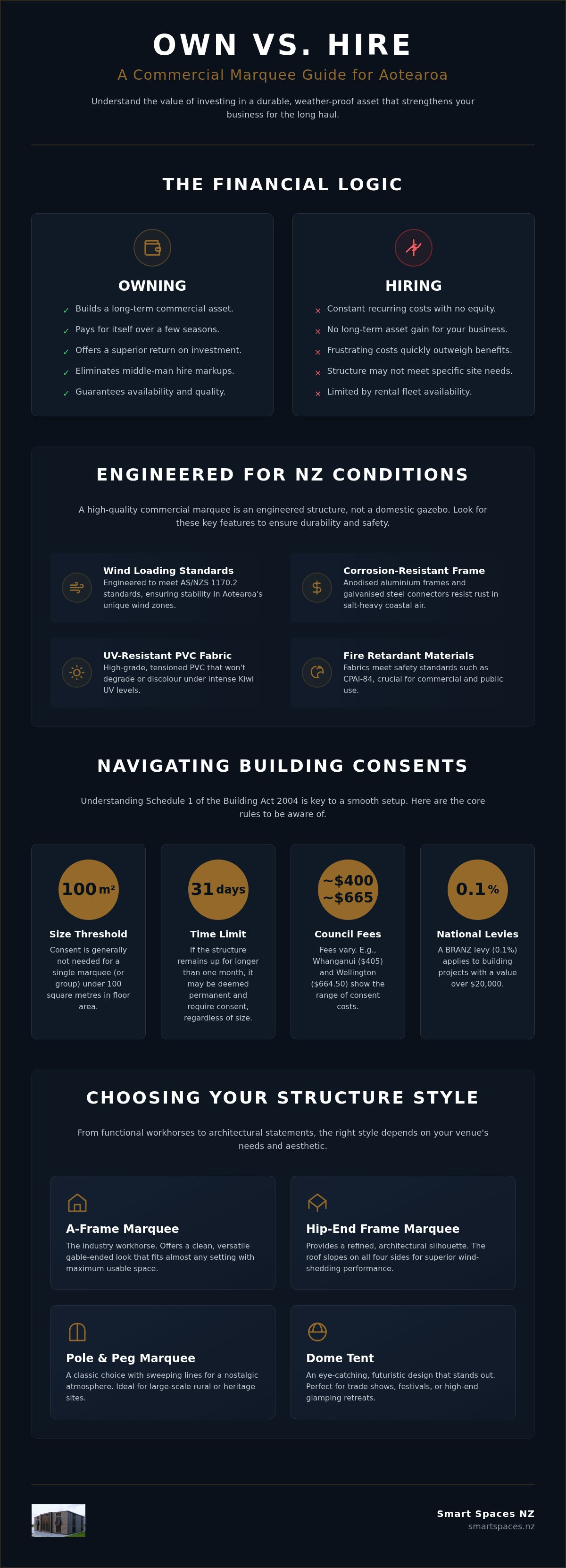
Why keep pouring money into a rental fleet when you could own a weather-resistant asset that pays for itself in just a few seasons? If you've spent any time organising events in Aotearoa, you'll know that the recurring costs of hiring can quickly outweigh the benefits. It's frustrating to pay top dollar for a setup that might not even meet the specific wind loading standards your local site demands. When you invest in high-quality marquee structures New Zealand conditions won't rattle, you're not just buying a tent; you're securing a long-term commercial space that offers genuine freedom and a better return on your investment.
We understand that the transition from hire to ownership can feel daunting, especially when you're trying to navigate council consent fees like Whanganui's $405 charge or Wellington's $664.50 activity fee. You want a space that's safe, compliant, and built to last. This guide will help you choose a durable structure that meets NZ safety standards while cutting through the confusion of the Building Act 2004, including that 100 square metre consent threshold. We'll explore how factory-direct ownership eliminates middle-man markups and provides you with a versatile, weather-proof asset that strengthens your business for the long haul.
Table of Contents
What defines high-quality marquee structures in New Zealand?
When you're looking to upgrade your venue or expand your hospitality floor space, the difference between a domestic gazebo and a commercial marquee is night and day. A flimsy pop-up from a local hardware store might look the part for a backyard barbecue, but it won't stand up to a brisk southerly or a heavy dump of rain. Investing in marquee structures New Zealand businesses can rely on means looking for engineering that meets AS/NZS 1170.2 standards for wind loading. High-quality structures are built with anodised aluminium frames and galvanised steel connectors; these materials provide the backbone needed to resist corrosion in our salt-heavy coastal air. If the frame isn't rigid and the PVC isn't heavy-duty, you aren't buying an asset, you're buying a headache.
The "temporary" label often used in marketing can be quite misleading for Kiwi venue owners. In the eyes of the law, a structure is only temporary if it meets very specific time and size criteria. For a professional operation, you need a structure that feels permanent to your guests but remains flexible for your business needs. This requires high-grade materials that won't degrade under our intense UV levels, ensuring your investment looks as professional in year five as it did on day one. For venue owners who are also interested in permanent modular office or retail units, you can discover MARTIM Salas Comerciais and their range of professional commercial rooms.
The evolution of outdoor event structures
We've come a long way from the heavy, damp canvas tents of the past. Modern modular systems have transformed how we think about outdoor spaces. Today, the industry has shifted towards sophisticated types of large tents that utilise tensioned PVC fabrics. These materials are far superior because they offer advanced fire retardancy, often meeting the CPAI-84 standard, and are much easier to keep clean. Whether you're looking at A-frame or hip-end styles, these modern structures allow hospitality venues to create semi-permanent dining or event spaces that feel like a seamless extension of their main building.
Understanding New Zealand building consent exemptions
Navigating the Building Act 2004 is often the biggest hurdle for business owners. Under MBIE Schedule 1, you can often avoid the need for a formal building consent if your marquee, or a group of marquees, is under 100 square metres in floor area. However, there is a catch that catches many people out: the "one-month" rule. If your structure stays up for longer than 31 days, the council generally considers it a permanent fixture regardless of its size.
If you do cross that 100 square metre threshold or plan to keep the structure up for the whole season, you'll need to factor in council fees. These vary across the country; for instance, Whanganui District Council charges a fixed fee of $405 for a temporary marquee consent, while Wellington City Council sits around $664.50. Don't forget the national levies either; projects over $20,000 attract a 0.1% BRANZ levy. Understanding these rules early ensures your project stays on the right side of the law without any nasty surprises during your peak season.
Comparing common marquee styles for commercial use
Selecting the right design for your venue isn't just a matter of aesthetics; it's a strategic decision that affects your operational efficiency and guest experience. In the diverse landscape of marquee structures New Zealand venue owners choose from, each style serves a distinct purpose. Whether you're running a vineyard in Central Otago or a coastal wedding venue in Northland, the shape of your structure dictates how it handles the elements and how much usable floor space you actually get. A-Frame Marquees are the undisputed workhorse of the industry, offering a clean, gable-ended look that fits almost any setting. If you need something with a bit more architectural flair, Hip-End Frame Marquees provide a refined silhouette while offering superior wind shedding by sloping the roof on all four sides.
For those managing large-scale rural events or heritage sites, Pole & Peg Marquees remain a favourite for their classic, sweeping lines and nostalgic atmosphere. However, if your brand is focused on innovation or boutique experiences, Dome Tents are becoming a popular alternative. These eye-catching structures provide a futuristic feel that stands out at trade shows or high-end glamping retreats. If you're weighing up which style fits your specific site layout, looking through a range of commercial marquee structures can help clarify the best fit for your long-term goals.
A-Frame and Hip-End: The modular advantage
The beauty of modern frame systems lies in their modularity. Unlike a fixed building, these structures allow you to start with a modest footprint and expand as your business grows. You can simply add extra bays to your A-Frame or Hip-End setup to increase capacity for larger bookings. Because these are "clear-span" designs, they don't require internal support poles. This gives you a completely open interior, allowing for flexible floor plans, unobstructed sightlines, and easier setup for dance floors or dining tables. For those looking to elevate their events with professional audio and lighting, LivewireAV provides the production expertise needed to make the most of these versatile spaces. For owners, maintenance is straightforward; if a single PVC panel is damaged, you can replace that specific component rather than the entire roof.
Traditional Pole & Peg vs. Modern Frames
Choosing between a traditional pole tent and a modern frame structure usually comes down to the ground you're working with and the weather you expect. Pole & Peg Marquees rely on tension and deep anchoring, making them ideal for soft grass and large open fields where you have plenty of room for guy ropes. They offer that iconic "big top" height that many clients love for rustic weddings. Modern frame marquees, however, are far more versatile for tight spaces or hard surfaces like concrete. In high-wind coastal areas, a frame structure is often the safer bet. It doesn't rely on fabric tension for its structural integrity, providing a more rigid and reliable shelter when the wind starts to howl.
The financial logic: Buying vs. Renting marquee structures
Hiring an event space might seem like the low-risk path at first glance, but for a growing business, it often becomes a bottomless cost-sink. When you look at the numbers, the "break-even" point for ownership is surprisingly close. If you are hiring a professional setup three or four times a year, you have likely already spent enough to own the asset outright. For example, hiring a heavy-duty pagoda marquee in the current market can cost upwards of $600 per day. Over a single busy summer season, those invoices stack up quickly, leaving you with nothing to show for the expenditure once the event is over. By investing in marquee structures New Zealand businesses can keep on-site, you transform a recurring expense into a tangible commercial asset.
The hidden costs of hiring often go overlooked until the final invoice arrives. You aren't just paying for the fabric and frame; you are paying for delivery logistics, specialised setup labour, and damage waivers. There's also the significant risk of availability. In 2026, with the New Zealand business events sector projected to generate over $170 million in deals, securing a high-quality rental during peak periods is becoming increasingly difficult. Ownership grants you total control. You don't have to worry about a rental company being fully booked or delivering a tired, weathered unit that doesn't reflect your brand's standards. Plus, a well-maintained structure built from galvanised steel and high-grade PVC holds its value remarkably well, offering excellent resale potential if your needs change.
ROI for venue owners and hospitality
For a restaurant or vineyard, the return on investment is measured in "covers." Every extra table you can host under a weather-protected space represents direct revenue growth. Having your own structure allows for permanent customisation that rentals can't offer. You can install bespoke lighting, high-end internal linings, or even permanent branding on the PVC to turn the structure into a 24/7 billboard for your venue. From a financial perspective, these structures are typically treated as depreciable business assets, providing tax benefits that a simple hire receipt cannot match. It's a practical way to increase your venue capacity year-round without the massive capital outlay and red tape of a permanent building extension. For businesses considering more comprehensive structural upgrades, A1 Precision Solutions provides complete turnkey solutions for commercial and industrial facilities.
Factory-direct benefits with Smart Spaces
Choosing to buy factory-direct is the smartest way to reduce that initial investment hurdle. By bypassing the middle-man, you aren't paying for a retailer's showroom overheads or a distributor's markup. We bring 40 years of family-owned industry expertise to the table, ensuring that the structure you receive is fit for our local conditions. Dealing directly with the source also means you have a reliable line for after-sales support. If a freak storm damages a single component, you can source genuine spare parts right here in NZ rather than waiting on international shipping or dealing with a faceless overseas vendor. It is about straightforward dealings and the peace of mind that comes from a partner who stands firmly behind their craftsmanship.
Selection guide: Choosing for New Zealand weather
Aotearoa's weather is notoriously fickle, swinging from brilliant sunshine to a biting southerly in the space of an afternoon. When you are investing in marquee structures New Zealand conditions will inevitably test, you cannot afford to guess the specifications. The first step is identifying your site's specific wind zone. A structure that performs perfectly in a sheltered Waikato gully might struggle on a coastal ridge in Taranaki. High-quality commercial marquees should be engineered to handle these gusts, ensuring the frame remains rigid and the fabric stays tensioned. If you don't know your wind load rating, you are essentially flying blind, which is why we always recommend checking the engineering certificates before you commit to a purchase.
The NZ sun is equally brutal. Our high UV levels can degrade inferior plastics in months, leading to brittle, yellowing covers that eventually crack and leak. Look for heavy-duty PVC fabrics that are specifically treated for UV resistance and anti-fungal properties. This treatment prevents the unsightly "black spotting" that often plagues marquees kept in damp or shaded areas. Effective waterproofing also requires smart drainage design. Ensure your chosen structure features high-tension roof panels that prevent water from pooling, alongside a robust guttering system for modular setups where two or more units are joined. If you're ready to secure a structure that stands up to the elements, explore our range of weather-resistant marquee structures today.
Material matters: Aluminium vs. Steel
For most commercial applications in New Zealand, anodised aluminium is the industry standard for the main frame. It is lightweight enough for transport and setup, yet remarkably strong. Most importantly, it won't rust. This is vital for any venue near the coast where salt spray is a constant factor. While the main beams are aluminium, the structural connectors should be made from hot-dipped galvanised steel. This combination provides the perfect balance: the aluminium keeps the overall weight manageable, while the steel connectors offer the heavy-duty strength needed at the joints where the most pressure occurs during high winds.
Fabric technology and fire safety
The thickness of your PVC is measured in GSM (grams per square metre), and for commercial use, you should be looking for a high rating that suggests durability without being impossible to handle. Beyond just weight, fire safety is a non-negotiable requirement for public events. Ensure your marquee fabric meets the CPAI-84 standard for fire retardancy. This isn't just about safety; it is often a requirement for insurance and council permits. To keep your investment looking its best, choose a fabric with a smooth, lacquered finish. This makes cleaning much easier, allowing you to wash away dust and bird droppings with a simple hose-down, keeping your venue looking professional for every guest.
Securing your investment: Installation and maintenance
Once you've made the decision to move from hiring to ownership, the focus shifts to protecting that asset. A successful installation starts long before the first pole is lifted. Planning your site is critical; you need to ensure the ground is as level as possible to avoid putting uneven stress on the frame. If you're setting up on a slight slope, you'll need to account for packing or adjustable base plates. Don't forget about access requirements either. Ensure there's a clear path for vehicles to drop off the components and enough clearance around the perimeter for your team to work safely. When it comes to marquee structures New Zealand businesses manage themselves, a bit of foresight during the site prep phase prevents a lot of frustration during the actual build.
The setup process itself offers a choice: DIY or professional installation. One of the biggest benefits of owning your structure is the ability to train your own team to handle the assembly, which saves on recurring labour costs. Most modular frame marquees are designed for straightforward assembly with basic tools. However, if you're dealing with a particularly large setup or a high-exposure site, bringing in a professional team for the initial install can be a wise move. They'll ensure the anchoring is perfect and show your staff the ropes. Whether you're using weight plates on concrete or earth anchors in a paddock, getting the tension right the first time is the secret to weather resistance.
Long-term care for commercial marquees
Ownership means you're in charge of the maintenance schedule, and a little bit of regular care goes a long way. When cleaning your PVC, avoid harsh chemical cleaners that can strip away the UV-resistant coatings. A mild detergent, a soft brush, and plenty of fresh water are usually all you need. After one of our famous Kiwi storms, make it a habit to inspect the joints and tensioning systems. High winds can cause slight shifts that, if left unchecked, might lead to unnecessary wear on the fabric. If you're using the structure for public-facing events, organising a regular safety audit is a smart way to ensure everything remains compliant with your insurance requirements and local safety standards.
Next steps with Smart Spaces NZ
Taking the leap into marquee ownership is a significant milestone for any venue or event business. We're here to make that process as smooth as possible. Every site is unique, so we're happy to provide a tailored quote that reflects your specific space and wind zone requirements. If the initial outlay is a concern, we can also discuss finance options to help spread the investment cost over time, making it easier to get your new event space up and running sooner. We've spent 40 years helping Kiwis create better spaces, and we'd love to help you do the same.
Ready to transform your venue? View our range of commercial marquees for sale and find the perfect fit for your business.
Building your venue's future with confidence
Owning your event space is a strategic move that turns a recurring rental headache into a powerful commercial asset. You've seen how the right engineering handles our local wind zones and how factory-direct pricing makes the transition from hiring to ownership more accessible than ever. Whether you're opting for the modular flexibility of an A-frame or the elegant lines of a hip-end design, the focus remains on durability and long-term ROI. By choosing weather-resistant commercial designs backed by 40 years of local expertise, you're ensuring your business is ready for whatever the Kiwi sky throws at it.
Beyond physical infrastructure, a truly resilient business requires a robust digital foundation to support its growth. For companies looking to modernise their operations, Unisphere Solutions offers strategic IT leadership and digital transformation services.
It's time to stop worrying about availability risks and setup fees. With straightforward maintenance and a clear understanding of NZ building standards, you can focus on what really matters: growing your venue and hosting unforgettable events. If you're ready to take control of your floor space and invest in high-quality marquee structures New Zealand venues trust for excellence, we're here to guide you through every step of the process.
Invest in your own marquee structure today and start building a more flexible, profitable future for your business. We look forward to helping you find the perfect fit.
Frequently Asked Questions
Do I need a building consent for a marquee in New Zealand?
You only need a building consent if the structure, or a group of them, exceeds 100 square metres in floor area or stays up for more than one month. These thresholds are set by the Building Act 2004 and MBIE Schedule 1. If you cross these limits, you'll need to apply through your local council. When planning marquee structures New Zealand wide, always check your local council's specific fee structure, as costs can range from $405 in Whanganui to over $600 in Wellington.
How long can a marquee structure stay up in NZ?
A marquee can typically stay in place for up to 31 days without requiring a building consent, provided it meets size exemptions. Once you hit that one-month mark, the council generally classifies it as a permanent structure rather than a temporary one. If you intend to use your marquee as a semi-permanent venue extension for a full season, it's best to factor in the consent process early to ensure your setup remains legal and insured.
What is the difference between a marquee and a tent?
In the commercial event industry, a marquee is defined as a large, engineered structure designed for professional gatherings, whereas "tent" is a broader term that includes lightweight camping gear. Marquees are built with heavy-duty frames or tensioned poles to provide a clear-span interior without the clutter of small support poles. They are designed for durability and public safety, whereas domestic tents aren't built to withstand the rigours of commercial use or strict fire safety standards.
Are Smart Spaces marquees wind-rated for coastal areas?
Yes, the marquee structures New Zealand businesses buy from us are engineered with local conditions in mind. High-quality commercial marquees should meet AS/NZS 1170.2 standards for wind loading to ensure they stay secure during coastal gusts. By using anodised aluminium frames and hot-dipped galvanised steel connectors, these structures provide the rigidity needed for exposed sites. Always ensure you use the correct anchoring system, such as heavy-duty earth augers or weight plates, for your specific terrain.
How much does it cost to buy a commercial marquee versus hiring one?
Buying a marquee is an upfront investment that usually pays for itself after just three or four professional hires. While hiring might seem cheaper for a one-off event, the recurring costs of delivery, labour, and damage waivers quickly add up. Ownership allows you to turn a recurring expense into a depreciable business asset. If you run multiple events each year, owning your structure provides a significantly higher return on investment and gives you total control over availability.
Can I customise the colour or branding of my marquee structure?
Absolutely. Ownership allows you to integrate permanent branding directly onto the PVC or via external displays. For high-quality visual solutions, Signarama provides custom commercial signage that can help your venue stand out and maintain a consistent brand identity across all your event infrastructure.
What maintenance is required for a commercial-grade marquee?
Routine maintenance involves cleaning the PVC with a mild detergent and inspecting the frame tension after extreme weather. It's important to wash away salt spray and dust to protect the UV-resistant coatings. You should also check the galvanised steel connectors for any signs of wear and ensure all bolts are tightened. If you're storing the structure during the off-season, always ensure the PVC is completely dry before packing it away to prevent any fungal growth or staining.
Do you offer finance for marquee purchases in NZ?
Yes, finance options are available to help businesses spread the cost of their investment. This is a practical way to secure a high-quality commercial asset without a massive initial hit to your cash flow. By financing the structure, you can get your new event space up and running immediately, allowing the extra revenue from your events to help cover the repayments. It's a popular choice for hospitality venues looking to expand their capacity quickly and efficiently.



Comments