

Eco-Friendly Homes NZ: The 2026 Guide to Sustainable & Affordable Living

Updated: Sep 27
What if you could bypass the $5,650 average cost of building consents while securing a home that's warmer, drier, and kinder to the planet? For many New Zealanders, the dream of living sustainably often feels out of reach due to the high cost of traditional construction and the confusing maze of building regulations. You likely want a home that reduces your environmental footprint and slashes your monthly power bills, but you shouldn't have to pay a massive architectural premium to get it. Whether you're looking to house extended family or simply want to escape the trap of high energy costs, the path to a sustainable future is now clearer than ever.
We know that finding genuine eco-friendly homes nz can feel overwhelming when energy prices are rising and building materials are more expensive than ever. This guide is here to simplify that journey, showing you how to achieve a low-impact, high-quality lifestyle without the usual stress. We'll walk you through the 2026 "granny flat" law changes effective from 15 January, the benefits of smart modular footprints, and the practical ways you can use low-interest green loans to create a healthy, affordable sanctuary for your family.
Table of Contents
What Defines Eco-Friendly Homes in New Zealand?
In New Zealand, a truly sustainable home isn't just about having solar panels on the roof. It's a holistic approach that balances energy efficiency, material longevity, and a reduced physical footprint. Under the latest H1 Building Code requirements, genuine eco-friendly homes nz must meet strict thermal performance standards. This ensures every new build provides a baseline of comfort that previous generations simply didn't have. Real sustainability starts with the very first shovel in the ground, or better yet, in a controlled factory environment where construction waste is significantly minimised.
The "Small Footprint" Philosophy
Reducing your total square metreage is the most powerful lever you have for environmental change. A smaller home requires fewer raw materials to build and consumes far less energy to heat or cool throughout its life. Modern designs prove that compact living doesn't mean sacrificing comfort. If you choose a smart 2-bedroom layout that uses space intelligently, then you're already ahead of the curve. It's about prioritising quality over quantity, ensuring every room serves a clear purpose while keeping your long-term maintenance costs manageable.
Energy Efficiency and Thermal Performance
Insulation is the silent engine of a sustainable home. High R-values in the walls, floor, and ceiling are essential for trapping warmth during those crisp Kiwi winters. When you combine this with high-quality double glazing and airtight construction, you create a thermal envelope that works for you. Many of these concepts are inspired by Passive House principles, which focus on using the sun's natural energy to maintain a steady indoor temperature. By orienting your home to capture the winter sun and providing natural cross-ventilation for summer, you reduce the need for expensive mechanical heating systems.
A healthy home is a dry home. By focusing on moisture control and steady ventilation, you prevent the dampness that often plagues older New Zealand houses. This creates a sanctuary that isn't just better for the planet, but better for your family's health. Choosing durable materials that stand up to our unique coastal environment ensures your eco-friendly homes nz remain efficient for decades to come, rather than requiring constant repairs or replacement. It's a straightforward, no-nonsense approach to building that values longevity as much as it values the environment.
The Environmental Benefits of Modular and Prefab Designs
Choosing a modular build is a vote for precision. Unlike traditional construction sites where timber offcuts and packaging often end up in a skip, a factory-controlled environment allows for meticulous waste management. When materials are cut to exact specifications indoors, any remaining pieces can be organised and reused for the next unit. This streamlined approach significantly slashes the volume of debris that typically clogs New Zealand landfills. It's a cleaner, more honest way to build that respects the raw materials we use.
Precision engineering also means a tighter building envelope. In a factory, every joint is fitted with millimetre accuracy, ensuring better seals and fewer thermal bridges where heat might escape. By building in a weather-protected space, we can ensure every component meets the rigorous H1 Energy Efficiency requirements without the risk of rain or wind compromising the materials during the assembly phase. This level of consistency is hard to replicate on a windy, exposed hillside. Once a high-performance design is perfected, those same eco-friendly homes nz standards are applied to every single unit that leaves the floor.
Sustainable Material Sourcing
Modular builders have the unique advantage of buying in bulk. This doesn't just lower costs; it reduces the carbon footprint associated with multiple small deliveries to remote sites. By consolidating transport, we minimise emissions and packaging waste. Using durable materials like steel and high-grade insulation ensures the home stands the test of time, reducing the need for future repairs. There's also a powerful upcycling story in container-based housing, where retired shipping vessels are given a second life as sturdy, long-lasting residences. This circular approach to building is a cornerstone of modern sustainability.
Efficiency in the Building Process
A factory process is inherently more energy-efficient than a traditional building site. Lighting, power tools, and machinery are all optimised for a steady workflow, consuming less power per square metre of construction. We use "just-in-time" delivery for our components, meaning materials don't sit around getting damaged by the elements or requiring extra protective wrapping. This level of quality control is backed by 40 years of family-owned craftsmanship, ensuring that every home is built with integrity. If you're curious about how these designs fit your property, you can explore our range of expandable and container homes to see the quality firsthand.
The final environmental win happens during delivery. Because the home arrives almost complete, site disruption is kept to an absolute minimum. You won't have months of heavy machinery compacting your soil or damaging local vegetation. This "touch the earth lightly" approach preserves the natural state of your land, allowing your new eco-friendly homes nz to sit comfortably within its environment from day one.
Traditional Builds vs Factory-Direct Eco-Homes
Many Kiwis believe that building a sustainable home requires a massive bank balance and years of patience. This "green premium" often stems from high architectural fees and the bespoke nature of on-site construction. If you build traditionally, you're paying for custom designs, on-site labour that's vulnerable to weather delays, and the retail markups of multiple middle-men. It's a process that can easily blow out both your budget and your timeline. Factory-direct eco-friendly homes nz offer a straightforward alternative by removing these unnecessary layers of cost. By building in a centralised facility, we can pass those savings directly to you, making a low-impact lifestyle accessible rather than just aspirational.
Waiting two years for a house isn't just frustrating; it's a financial burden and an environmental drain. Traditional builds often involve long periods of site disturbance and high transport emissions from various contractors coming and going. Modular units are built in a fraction of the time. This efficiency allows you to settle into your new home sooner, reducing the need for temporary accommodation. These units are also incredibly versatile. Whether you're dealing with a flat backyard or a more challenging rural site, transportable designs provide the flexibility to work with the land rather than fighting against it.
Cost vs. Long-Term Value
If you invest in a factory-direct home, then you're securing decades of lower utility costs. The upfront savings from a modular build allow you to allocate more of your budget toward high-impact extras like solar arrays or rainwater harvesting systems. It's a practical way to future-proof your living situation. Modern, energy-efficient transportable homes also hold their value well on the secondary market. As more people look for eco-friendly homes nz that are cheap to run, these high-performance units become increasingly desirable assets. Organisations like the New Zealand Green Building Council continue to advocate for these higher standards, proving that sustainable choices are also smart financial moves.
Consents and Compliance Made Simple
Navigating the paperwork for a new build is often the most stressful part of the process. Standardised factory designs make this much easier because the plans are already refined to meet and often exceed the New Zealand Building Code. When you explore smaller dwellings, understanding the NZ tiny home regulations is crucial for a smooth project. Because our 2-bedroom units are built to such high standards, they often sail through the compliance process faster than custom on-site builds. It’s a no-nonsense path to a warm, dry home that doesn't require a law degree to understand.
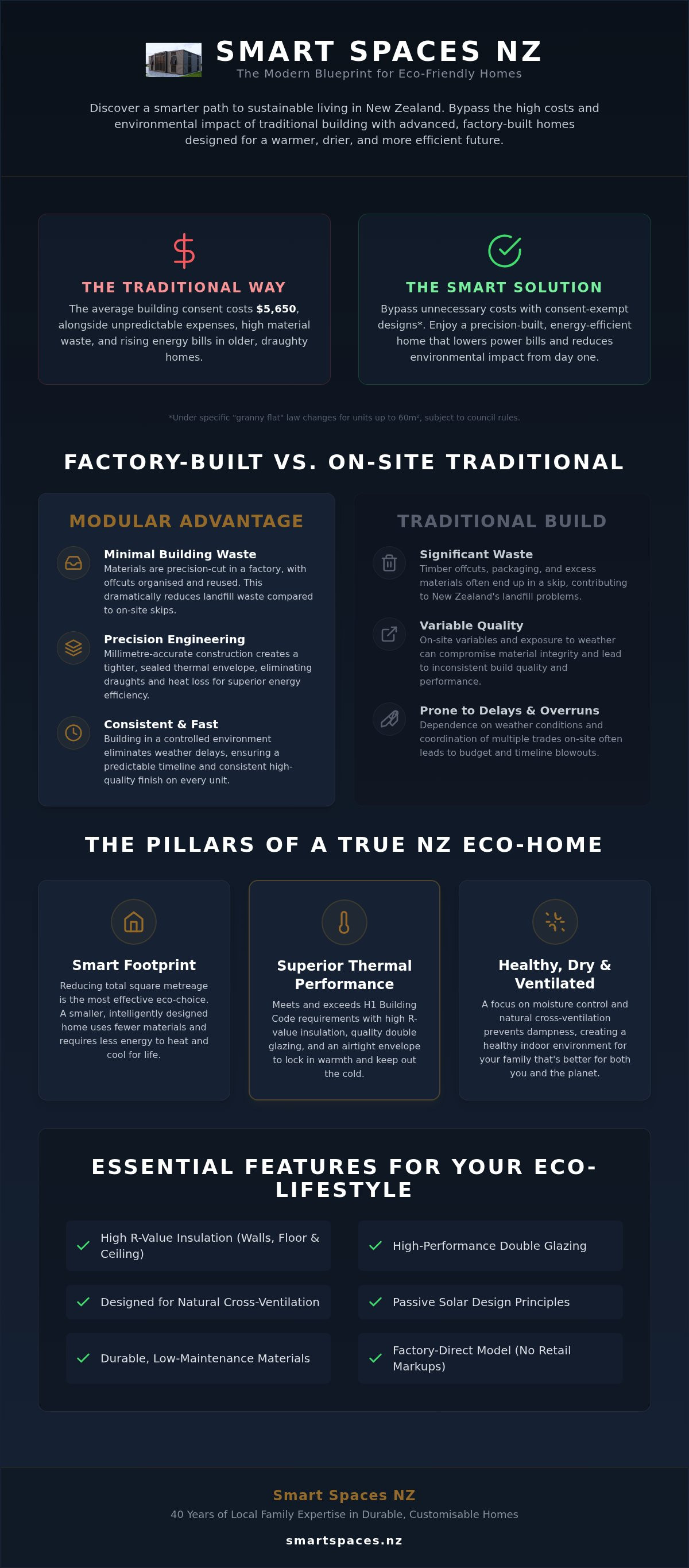
Essential Features for Your Sustainable Kiwi Lifestyle
Maximising natural light is the first step toward true energy independence. By positioning windows to capture the low winter sun and using strategic shading for the summer months, you can significantly reduce your reliance on mechanical heating and cooling. This passive approach is a cornerstone of investing in eco-friendly homes nz, ensuring your living space remains comfortable year-round without a massive power bill. Natural cross-ventilation is equally vital; it flushes out stale air and keeps the home smelling fresh without the need for noisy extraction fans.
In a country with such a diverse climate, your insulation needs to do more than just meet the minimum code. High-performance thermal barriers in the floor, walls, and ceiling act as a protective blanket for your family. If you're planning for the long term, then solar readiness is a non-negotiable feature. Even if you don't install panels immediately, having the wiring and roof reinforcement in place ensures you can easily add a 3kW system later, which can provide approximately 50% of an average home's power usage. Integrating wireless control solutions for lighting and switching from gemwireless.com.au is another smart way to manage your energy footprint. Water conservation is another practical win. Rainwater harvesting tanks and greywater diversion systems allow you to maintain your garden and reduce your impact on local infrastructure.
Living independently of the national grid is a growing desire for many Kiwis, especially those looking at rural or remote blocks. Our 2-bedroom container homes are particularly well-suited for this, as their rugged structure can be easily customised with heavy-duty solar arrays and battery storage. To achieve true self-sufficiency, you might consider a high-quality composting toilet system, which eliminates the need for complex septic tanks and reduces water consumption. For coastal properties, manual desalination tools from QuenchSea can provide an essential backup for clean drinking water. It's a practical, no-nonsense way to enjoy the freedom of the New Zealand landscape while keeping your environmental footprint to an absolute minimum.
A sustainable home must also be a healthy one. This means selecting low-VOC (Volatile Organic Compound) materials and finishes to ensure the air you breathe is free from harmful chemicals. Thermal breaks in your joinery are another essential feature, as they prevent the transfer of cold through window frames, which is the primary cause of internal condensation and mould. By focusing on these details, you create a warm, dry sanctuary that supports your family's health for decades. If you're ready to start planning your build, view our range of sustainable home solutions to see how these features come together in a smart, affordable package.
Creating a high-performance home is about making smart choices early in the design phase. When you prioritise these essential features, you aren't just building a house; you're setting a new standard for modern eco-friendly homes nz that value both the planet and the people living inside them.
Smart Spaces NZ: Your Partner in Affordable Eco-Living
Smart Spaces NZ isn't just another modular home provider. We carry the confidence of 40 years of family-owned experience, providing a level of reliability that only comes from decades of hard work and honest dealings. If you've been searching for eco-friendly homes nz that don't require an architect's salary, then our factory-direct approach is designed specifically for you. By removing the retail markups and middle-man fees common in the building industry, we bring high-quality, low-impact living within reach of everyday Kiwis. Our range of prefab homes NZ is built to last, combining traditional craftsmanship with the efficiency of modern manufacturing.
Whether you're looking for a compact secondary dwelling or a primary residence that treads lightly on the earth, our 2-bedroom units offer the perfect balance of flexibility and performance. Our 2-bedroom expandable homes and container units are customisable, allowing you to tailor the features to suit your specific property and lifestyle needs. This isn't about mass-produced, clinical boxes; it's about providing a smart, durable foundation for your future. We believe that everyone deserves a home that's warm, dry, and affordable to run, and we've refined our process to make that a reality across New Zealand.
Our Commitment to Quality
Building for the New Zealand environment requires a deep understanding of our unique conditions. We focus on creating weather-resistant structures that can handle everything from coastal salt spray to harsh southern winds. The engineering behind each 2 bedroom container home NZ unit is meticulous, ensuring that your home remains a healthy sanctuary for a lifetime. We take a no-nonsense approach to our work, standing firmly behind the quality of every unit that leaves our floor. If you value transparency and straightforward service, then you'll find a reliable partner in our team. We don't just deliver a building; we provide a high-performance solution that meets the latest standards for eco-friendly homes nz.
Starting Your Eco-Home Journey
Taking the first step toward a simpler, more sustainable lifestyle shouldn't be a daunting process. When you enquire about our current range, we'll guide you through the practicalities of both our expandable and container models. We can also help you understand the finance solutions available to make your project move forward. Once your design is finalised, you can expect a streamlined delivery and setup process. We manage the logistics of NZ-wide transport, ensuring your new home arrives safely and is positioned correctly on your site. From the initial conversation to the final handover, we're here to ensure your transition to sustainable living is as smooth and rewarding as possible. It's time to stop dreaming about a better way of life and start building it.
Your Path to a Smarter, Greener Kiwi Lifestyle
Embracing a low-impact lifestyle doesn't require a massive architectural budget or years of construction stress. By choosing a smart, modular footprint, you can enjoy a home that exceeds the latest H1 thermal standards while significantly reducing environmental waste. Transitioning to eco-friendly homes nz is now a practical reality for any Kiwi family looking to lower their power bills and live in a healthier, drier environment. It's about making choices that value both the land and your long-term well-being.
At Smart Spaces NZ, we bring 40 plus years of family-owned industry experience to every build. Our factory-direct pricing ensures you aren't paying for unnecessary middle-man markups, making genuine sustainability truly affordable. Whether you're based in a rural retreat or a suburban backyard, we provide national delivery across New Zealand to bring your vision to life. You don't have to compromise on quality or integrity to achieve your goals.
Explore our range of affordable eco-friendly homes today and take the first step toward a simpler, more rewarding way of living. We're ready to help you create a sanctuary that stands the test of time while respecting the beautiful country we call home.
Frequently Asked Questions
Are eco-friendly homes actually cheaper to live in?
Yes, eco-friendly homes are significantly cheaper to live in because they focus on reducing long-term resource consumption. By meeting or exceeding the latest H1 thermal performance requirements, these dwellings retain heat much better, which slashes your monthly power bills. When you combine high-performance insulation with natural ventilation and efficient footprints, the ongoing savings on heating, cooling, and water usage create a far more affordable lifestyle compared to traditional, less efficient New Zealand houses.
Do I need council consent for an eco-friendly tiny home in NZ?
As of 15 January 2026, new legislation allows for standalone, single-storey dwellings up to 70 square metres to be built without a building consent under specific conditions. You must ensure the work is supervised by a Licensed Building Practitioner and the local council is notified of the project. However, development contributions and other council charges may still apply. For units outside these specific criteria, standard building and resource consents are usually required to ensure compliance.
Can I put an expandable home on any type of land?
You can place an expandable home on most land types across New Zealand, from flat suburban backyards to more rugged rural blocks. The primary requirements are a stable, level foundation and sufficient clearance for our delivery trucks to access the site safely. Because these units are transportable, they offer incredible flexibility for properties where traditional on-site construction would be too difficult or expensive. We provide national support to help you prepare your land correctly.
How well-insulated are container homes for the NZ winter?
Modern 2-bedroom container homes are designed with high-performance insulation that meets or exceeds current H1 energy efficiency standards. We use advanced thermal breaks and premium insulation materials to prevent the steel shell from transferring cold into the living space. This ensures your home remains a warm, dry sanctuary even during the harshest winters. Proper insulation also prevents internal condensation, which is vital for protecting your family's health and the longevity of the structure.
What is the lifespan of a modular eco-friendly home?
A modular home built with high-quality materials like steel and treated timber has a lifespan comparable to a traditional timber-framed house. At Smart Spaces NZ, we use our 40 plus years of experience to select durable, weather-resistant components specifically for our unique climate. Regular maintenance, such as checking seals and cleaning the exterior, ensures your home stays in top condition for decades. These structures are engineered for longevity, providing a reliable and sustainable housing solution.
Can Smart Spaces homes be equipped with solar panels?
Can Smart Spaces homes be equipped with solar panels?
It is entirely possible to live off-grid in one of our 2-bedroom units with the right customisations. To achieve this, you'll need to integrate a combination of solar power, battery storage, rainwater harvesting tanks, and a composting toilet system. These features allow you to bypass national infrastructure entirely while maintaining a high standard of comfort. Our factory-direct models provide a sturdy, efficient base that makes transitioning to an independent, self-sufficient lifestyle much more straightforward and affordable.
What makes factory-built homes more sustainable than site-built ones?
Factory-built homes are more sustainable primarily due to the significant reduction in construction waste. Building in a controlled environment allows for meticulous material management and upcycling opportunities that aren't possible on a traditional site. We buy materials in bulk, which reduces transport emissions and packaging waste. Precision engineering indoors also ensures a tighter thermal envelope, meaning the home uses less energy throughout its life. This streamlined process respects raw materials while delivering high-performance results.



Comments