

Commercial Marquees for Sale NZ: 2026 Commercial Buyer Guide

Updated: Oct 1
What if the marquee you regularly hire could become a business asset instead? If you’re comparing commercial marquees for sale nz, you’re likely weighing recurring hire costs against the need for reliable shelter for events. Choosing well takes more than comparing shapes: consider the frame, fabric, anchoring requirements and any council checks that may apply to your plans.
For organisations that use a marquee across multiple events, buying may offer better long-term value, provided the structure suits the site, weather exposure and intended use. This guide covers the practical decisions involved, from comparing marquee styles to checking specifications and planning for installation.
We’ll compare A-frame, hip-end and pole-and-peg configurations, explain how their layouts differ, and outline questions to raise before you invest. Smart Spaces NZ offers factory-direct commercial structures to customers across New Zealand, backed by more than 40 years of family-owned industry experience. Use the guidance below to identify a practical shelter that fits the way you work, not just your next event.
Commercial marquees for sale NZ: what to compare
Start with how often you’ll use the structure, the layout you need and the conditions at your site. Then compare the specifications and ownership costs of the options that fit. The sections below cover each decision in more detail.
Table of Contents
Commercial Marquee Ownership vs Short-Term Hire: The Financial Equation
Comparing Commercial Marquee Styles: Choosing the Right Structure
Engineering Specifications: Fabric Durability and Weather Resilience
Site Planning and Compliance Checklist for Commercial Shelters
Why Smart Spaces NZ Delivers Superior Commercial Marquee Solutions
Commercial Marquee Ownership vs Short-Term Hire: The Financial Equation
If your venue regularly hosts outdoor functions, hire charges can recur without leaving you with a structure to use next season. Buying shifts the decision from a series of temporary costs to a longer-term investment. The right option depends on how often you’ll use the marquee, the costs of ownership and how much flexibility your operation needs.
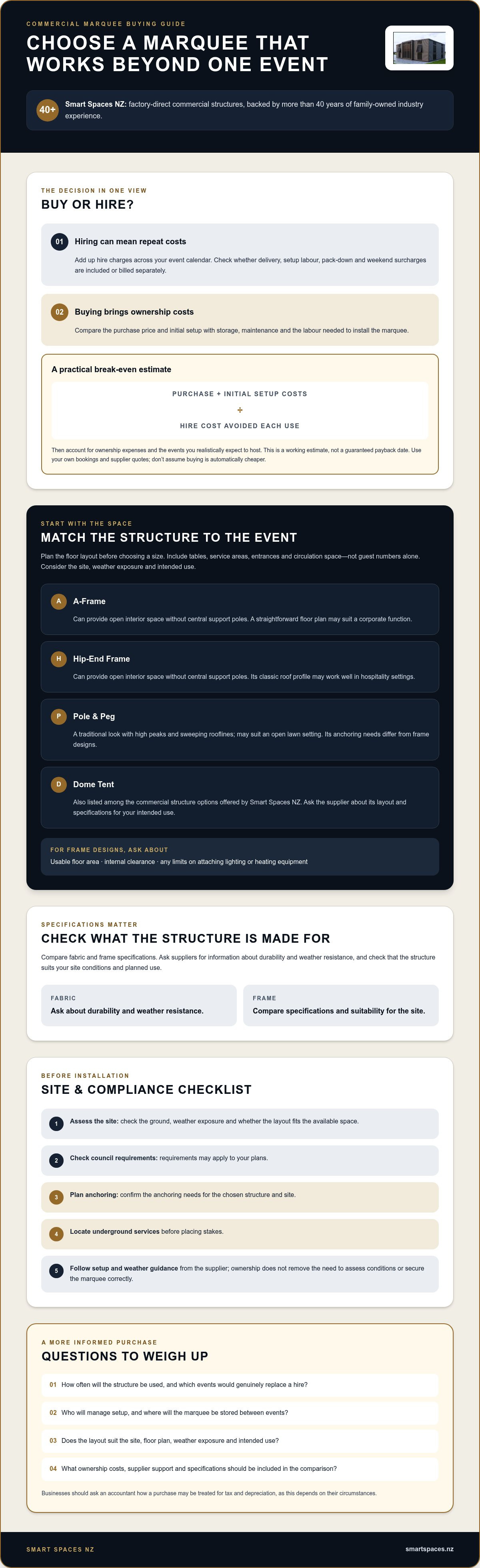
Start by comparing like with like. Add up hire charges across your event calendar, then check each quote for delivery, setup labour, pack-down and any weekend surcharges. Compare those costs with the purchase price and ongoing ownership expenses, including storage, maintenance and the labour needed to install the marquee. Don’t assume buying is automatically cheaper: use your actual bookings and supplier quotes to make the comparison.
For a basic break-even estimate, divide the purchase and initial setup costs by the hire cost you’d avoid each time you use the structure. Then account for ownership expenses and the number of events you realistically expect to host. This gives you a working estimate, not a guaranteed payback date. Businesses should also ask an accountant how a purchase may be treated for tax and depreciation, as this depends on their circumstances.
Calculating Break-Even Timelines for Commercial Venues
Build a seasonal comparison using figures from your own venue. If weddings cluster in one period and corporate bookings in another, include both, but count only events where the owned structure would genuinely replace a hire. Check whether each rental quote includes transport, labour and weekend charges or bills them separately. This makes the comparison more useful and shows how repeat use could affect the costs over time.
Operational Autonomy and Immediate Weather Contingency
Ownership can also give you more control over scheduling. You’re less reliant on a hire company’s peak-season availability, and a structure may be available for planned uses such as outdoor dining, wine tastings or retail expos. That doesn’t remove the need to assess conditions or secure the marquee correctly. Follow the supplier’s setup and weather guidance.
Keeping your own structure can also help maintain a consistent look, rather than relying on the rental inventory available for each event. Before choosing among what is a marquee options, consider how often you’ll use it, who will manage setup and where it can be stored between events.
For businesses comparing commercial marquees for sale nz, Smart Spaces NZ offers A-Frame, Hip-End Frame and Pole & Peg Marquees, as well as Dome Tents. Its factory-direct model avoids middleman fees, and its family-owned industry experience can support an informed purchase. Assess the structure, available support and ownership costs together before deciding whether buying suits your event calendar.
Comparing Commercial Marquee Styles: Choosing the Right Structure
The best marquee is the one that fits your event, site and setup requirements. Begin with a floor plan that includes tables, service areas, entrances and circulation space, rather than planning around guest numbers alone. If you are incorporating mobile catering stations or dessert bars into your event floor plan, click here to explore commercial mobile cart options. A crowded layout can make the space harder to use, while an oversized structure may not suit the available ground or your needs.
For businesses comparing commercial marquees for sale nz, the main options include A-Frame Marquees, Hip-End Frame Marquees, Pole & Peg Marquees and Dome Tents. Each has a different interior layout and appearance, so weigh practical use alongside style.
Clear-Span A-Frame and Hip-End Frame Marquees
A-frame and hip-end frame designs can provide open interior space without central support poles, making it easier to arrange banquet seating or plan clear walkways. An A-frame may suit a corporate function where a straightforward floor plan is useful. A hip-end profile has a classic roof shape that may work well in hospitality settings. Ask the supplier for the usable floor area and internal clearance, and check any limits on attaching lighting or heating equipment.
Pole & Peg Marquees and Dome Tents
Pole & Peg Marquees have a traditional look, with high peaks and sweeping rooflines that can suit open lawn settings. Their anchoring approach may require space beyond the covered area, so check the full footprint against paths, buildings and other event features. Dome Tents have a contemporary shape and can create a distinctive focal point for a brand activation, particularly when paired with high-impact event signage from specialists like Zodiac Event Displays. Confirm the intended capacity and setup requirements rather than assuming a dome will suit every commercial gathering.
A practical style selection framework
Compare options side by side before deciding. Measure the site, check the ground surface and assess floor area, internal clearance, appearance and anchoring needs. Ask suppliers to explain setup requirements, the crew or equipment needed, and whether the structure can be expanded or reconfigured if your needs change. Don’t assume a particular frame profile has specific attachment points or that one style is inherently safer in wind. Request design and engineering information for the actual structure and site. The Temporary works engineering guide offers useful context for considering how temporary structures are designed and coordinated.
Smart Spaces NZ offers these four commercial structure styles factory-direct across New Zealand. Reviewing the commercial marquee styles available can help you narrow down which layout may fit your site and planned use.
Engineering Specifications: Fabric Durability and Weather Resilience
A commercial marquee needs more than a tough-looking cover. New Zealand conditions can expose fabric and frames to strong sun, rain and changing winds, so compare documented material performance and engineering information rather than relying on broad claims such as “heavy duty”. When considering commercial marquees for sale nz, ask how the specifications relate to your intended use, site and setup.
Fabric: weight, weathering and fire performance
PVC is commonly used for commercial marquee covers and is generally more durable and waterproof than lighter polyethylene fabrics. Ask for the PVC weight in grams per square metre (GSM), along with details of tear strength, UV stabilisation and water resistance. GSM helps you compare material weight, but it doesn’t tell the whole story: construction, seams, care and storage also affect service life. For public events, ask whether the fabric has been tested for flame performance and request the relevant documentation. CPAI-84 is a recognised flammability test standard, but don’t assume a fabric meets it without evidence.
Frame and wind performance
Aluminium can offer a strong, relatively light frame, while surface treatments such as anodising can help protect against corrosion. Ask what alloy and finish are used, how the joints and base connections are designed, and how the structure is anchored. A material label alone doesn’t prove wind resilience. Request engineering documentation for the complete marquee, including any stated wind design assumptions and limits. AS/NZS 1170.2 is used to calculate wind actions, but a reference to the standard isn’t a site-specific safety plan.
Comfort, condensation and drainage
Ventilation, shade and water management all matter for guest comfort. Ask what options are available to support airflow and reduce heat build-up, and how the cover handles condensation in cool or humid conditions. Check whether the intended roof and sidewall configuration suits the season and event. At ground level, plan drainage so water doesn’t pool around the perimeter or flow into the occupied area.
Before installation, check the rules that apply to the structure and its use. The Ministry of Business, Innovation & Employment explains consent exemptions and technical requirements for tents and marquees. A qualifying temporary structure under 100 square metres and in place for no more than one month may be exempt from building consent. Check with your local council about your specific plans.
Use a short checklist when comparing options: get the fabric and frame specifications in writing, ask for wind and anchoring information, and confirm care and storage guidance. This gives you a sound basis for comparing structures without mistaking a marketing claim for evidence.
Site Planning and Compliance Checklist for Commercial Shelters
A safe marquee plan starts well before setup. Check the ground, underground services, access routes and intended use of the site, then match the structure’s anchoring and layout to those conditions. For businesses assessing commercial marquees for sale nz, these checks can reveal practical constraints before purchase and help avoid surprises on event day.
Check the site and anchoring requirements
Before placing stakes in the ground, locate underground utilities and confirm where anchoring is safe. Identify the surface as well: turf, compacted soil, gravel and concrete may each require different anchoring methods. Don’t assume stakes, bolts or ballast are interchangeable. Ask the marquee supplier which anchoring system is specified for your structure and site, and have a suitably qualified person confirm its suitability. If the surface can’t be penetrated, ask about an engineered ballast option and the space it requires.
Plan capacity, circulation and access
Guest numbers alone don’t determine the size you need. A seated meal needs room for tables, chairs and service, while a standing reception uses the floor differently. Sketch the layout before settling on dimensions, including buffet tables, stages, audio-visual equipment, entrances and clear circulation routes. Keep access paths and exits unobstructed, and check your event plan against applicable fire-safety guidance and any requirements set by the venue or relevant authorities. Confirm expected occupancy and exit arrangements with them rather than relying on a generic area-per-guest estimate.
Check approvals and weather planning
Consent requirements depend on the structure and how long it will remain in place. MBIE states that a tent or marquee under 100 square metres and in place for no more than one month doesn’t require building consent under the stated exemption. Other circumstances may require consent, so check your plans with the local council. Exemptions don’t remove the need to meet relevant Building Code requirements or manage site and weather risks.
For longer-term or semi-permanent use, ask for engineering information relevant to the structure, intended location and wind exposure. Make sure the anchoring plan is documented and available to the people responsible for setup. Consider how forecast conditions, drainage and emergency-service access could affect safe use, and establish who will monitor conditions and respond if they change.
For more operational guidance, read our guide to investing in marquee structures. If you’re ready to assess a structure for your site, explore commercial marquee options from Smart Spaces NZ.
Why Smart Spaces NZ Delivers Superior Commercial Marquee Solutions
Choosing a commercial marquee is a long-term decision, so the supplier matters as much as the structure. Smart Spaces NZ combines factory-direct purchasing with more than 40 years of family-owned industry experience. Buyers can explore commercial structures, compare styles and ask practical questions before investing.
Factory-direct purchasing and clear value
Buying direct can remove intermediary retail fees from the purchasing chain. That may help you compare a structure and its specifications against your budget without an additional retail layer. Ask for a clear breakdown of what’s included, as well as details that affect value over time, such as materials, frame design, care requirements and available after-sales support. Smart Spaces NZ sells structures rather than offering short-term marquee hire, making ownership the focus for organisations planning repeated use.
Family-owned experience and a choice of styles
With more than 40 years of family-owned industry experience and a focus on craftsmanship, Smart Spaces NZ offers a range of commercial structures. Options include A-Frame Marquees, Hip-End Frame Marquees, Pole & Peg Marquees and Dome Tents. Each has a different form and practical footprint, so consider your site, intended layout and event requirements before choosing. Ask for specifications and documentation for the exact structure you’re considering.
The business also supplies prefabricated homes. If you’re interested in that part of its offering, explore this guide to prefabricated building solutions.
Nationwide supply and after-sales support
Smart Spaces NZ serves customers across New Zealand and provides after-sales support. Before purchasing, confirm the delivery arrangements for your location and what support is available for the structure you select. Ask what’s included, how assembly information is provided and how to get help if you need it later. Clear answers make it easier to plan transport, installation and ongoing care without assuming every supplier offers the same service.
If you’re comparing commercial marquees for sale nz, weigh factory-direct value alongside construction details, style and after-sales support. Smart Spaces NZ’s range and family-owned experience offer a practical starting point for choosing a commercial structure that suits your operation and site.
Choose a Marquee That’s Ready for What Comes Next
The right commercial marquee should fit your event layout, site conditions and plans for repeat use. Before investing, compare frame styles and usable floor space, check fabric and engineering information, and make sure the anchoring and access plan suits your site. For regular events, ownership can also give you more control over scheduling than relying on short-term hire.
If you’re weighing up commercial marquees for sale nz, Smart Spaces NZ offers A-Frame, Hip-End Frame and Pole & Peg Marquees, along with Dome Tents. Its factory-direct model avoids middleman fees, and its commercial structures are designed to be durable and weather-resistant. The business brings more than 40 years of family-owned industry experience to its work.
Take the next step by exploring the available options and considering which structure best suits your operation. Explore commercial marquees at Smart Spaces NZ to compare the range and discuss a structure for your needs.
Frequently Asked Questions
Is buying a commercial marquee more cost-effective than ongoing rental across New Zealand?
Buying can be more cost-effective if you use a marquee regularly, but the answer depends on hire frequency and the full cost of ownership. Compare rental quotes, including delivery and setup charges, with the purchase, transport, storage and maintenance costs of owning a structure. For commercial marquees for sale nz, consider your actual event calendar and ask an accountant how a purchase may be treated for tax and depreciation.
Can commercial marquees remain erected outdoors permanently throughout all seasons?
Don’t assume a commercial marquee is suitable for permanent outdoor use. Ongoing exposure to UV, rain and wind can affect fabric and structural components, and each structure has its own design limits and care requirements. Ask the supplier whether the specific model is designed for continuous installation, what weather limits apply, and how it should be inspected, maintained or taken down when conditions exceed its stated limits.
What is the main difference between A-frame and hip-end commercial marquees?
The main difference is the roof profile and the look it gives the structure. An A-frame has a familiar pitched roof shape, while a hip-end design has sloping ends that create a more enclosed profile. Either may suit commercial events, but usable space, clearance and layout depend on the model. Compare drawings and specifications, and check how each shape fits your site and intended floor plan.
How do heavy-duty PVC covers perform under intense New Zealand UV sunlight?
Commercial-grade PVC can provide a durable, waterproof cover, but UV exposure can still affect its condition over time. Ask whether the fabric is UV-stabilised and request details of its weight, tear resistance, care needs and expected performance for your intended use. A marquee left outdoors continuously may age faster than one that’s cleaned, dried and stored appropriately between events. Follow the supplier’s guidance for inspection and upkeep.
What ground anchoring methods are required for commercial marquees on concrete vs grass?
The correct anchoring method depends on the marquee design, ground conditions and expected wind loads. Grass or soil may allow stakes if the supplier specifies them and underground services have been located first. Concrete needs an anchoring system designed for that surface, or a suitable engineered ballast solution where penetration isn’t possible. Don’t choose stakes, bolts or weights by guesswork; get the anchoring plan and requirements confirmed for your site.
Do I require building consent to erect a semi-permanent commercial marquee in New Zealand?
Possibly. Under the stated Building Act exemption, a tent or marquee under 100 square metres and in place for no more than one month doesn’t require building consent. A larger structure or longer installation may require consent. Requirements depend on your circumstances, so check your plans with the local council before installation. An exemption doesn’t remove the need to consider applicable Building Code requirements or safe setup and anchoring.
How many people can a commercial event marquee comfortably accommodate?
Capacity depends on the marquee’s usable floor area and how you plan to use it. Seated dining needs room for tables, chairs and service, while a standing reception uses the space differently. Also allow for entrances, clear walkways, buffet tables, stages and audio-visual equipment. Ask the supplier for the structure’s internal dimensions, then map your intended layout before setting a guest limit. Don’t rely on the footprint alone.
What maintenance is required to prolong the working lifespan of commercial marquee fabric?
Follow the supplier’s care instructions and inspect the fabric regularly for tears, damaged seams, dirt and signs of wear. Clean it using recommended products, then let it dry fully before storage to help prevent moisture-related damage. Avoid dragging or folding the cover in ways that strain seams, and store it in a dry, protected place between uses. Check the frame and connections as well, since fabric performance depends on a sound structure.



Comments