

Buy Container Home New Zealand: The Ultimate 2026 Buyer’s Checklist

Updated: Aug 26
In 2026, the fastest way to secure a high-quality home in Aotearoa isn't through a muddy construction site, but through a factory-direct delivery. When you decide to buy container home New Zealand options, you aren't just purchasing a structure; you're choosing a lifestyle defined by freedom and practical innovation. It's completely understandable if you feel a bit hesitant about the process. Many Kiwis worry about the "grey area" of council consents, the potential for hidden delivery costs, or whether their site is actually ready for a crane to drop a heavy steel building into place.
We've spent over 40 years as a family-owned business helping people find reliable spaces, so we know that clarity is the best foundation for any project. This guide provides a comprehensive, no-nonsense checklist to help you master the entire journey. You'll learn how to take advantage of the latest building exemptions for units up to 70 square metres and how to prepare your land for a hassle-free arrival. We'll preview the essential steps for choosing a durable 2-bedroom layout, managing utility connections, and ensuring your new home stands up to our unique local climate with total confidence.
Table of Contents
Phase 1: Site Feasibility and Council Consent Checklist
Before you commit to buy container home New Zealand units, you've got to look at the ground beneath your feet. The evolution of Shipping container architecture has turned these steel boxes into sophisticated dwellings, but local council rules remain the ultimate gatekeeper. Your first step is a thorough check of the local District Plan. If your land is in a flood zone or a heritage area, the path to ownership might have a few more hurdles than a standard residential lot. You need to know exactly what is permitted before you spend a cent on a deposit.
You must also determine if your unit is classified as a "building" or a "vehicle" under the Building Act. If your home is intended for permanent occupation and fixed to the ground, it's almost certainly a building. This distinction is vital because it dictates whether you need a full Building Consent or if you can apply for a Discretionary Exemption. Don't skip the site survey either. Identifying underground services or protected trees early prevents expensive delays once the truck arrives. It is also wise to consider environmental safety; for those developing sites with a complex history, Methamphetamine Testing Services NZ Limited offers professional assessments to ensure your property is completely clear of hazardous residues. It's about being practical and avoiding surprises that could stall your project.
Understanding NZ Tiny Home Regulations
The Ministry of Business, Innovation and Employment (MBIE) sets the standards for transportable homes to ensure they are safe and healthy. You should review the latest NZ tiny home regulations to see how the 2026 updates affect your project. Generally, you'll need to prepare a site plan, drainage details, and evidence that the work is being overseen by a Licensed Building Practitioner (LBP). Having these documents ready makes the council notification process much smoother and keeps your project on the right side of the law.
Site Access and Ground Conditions
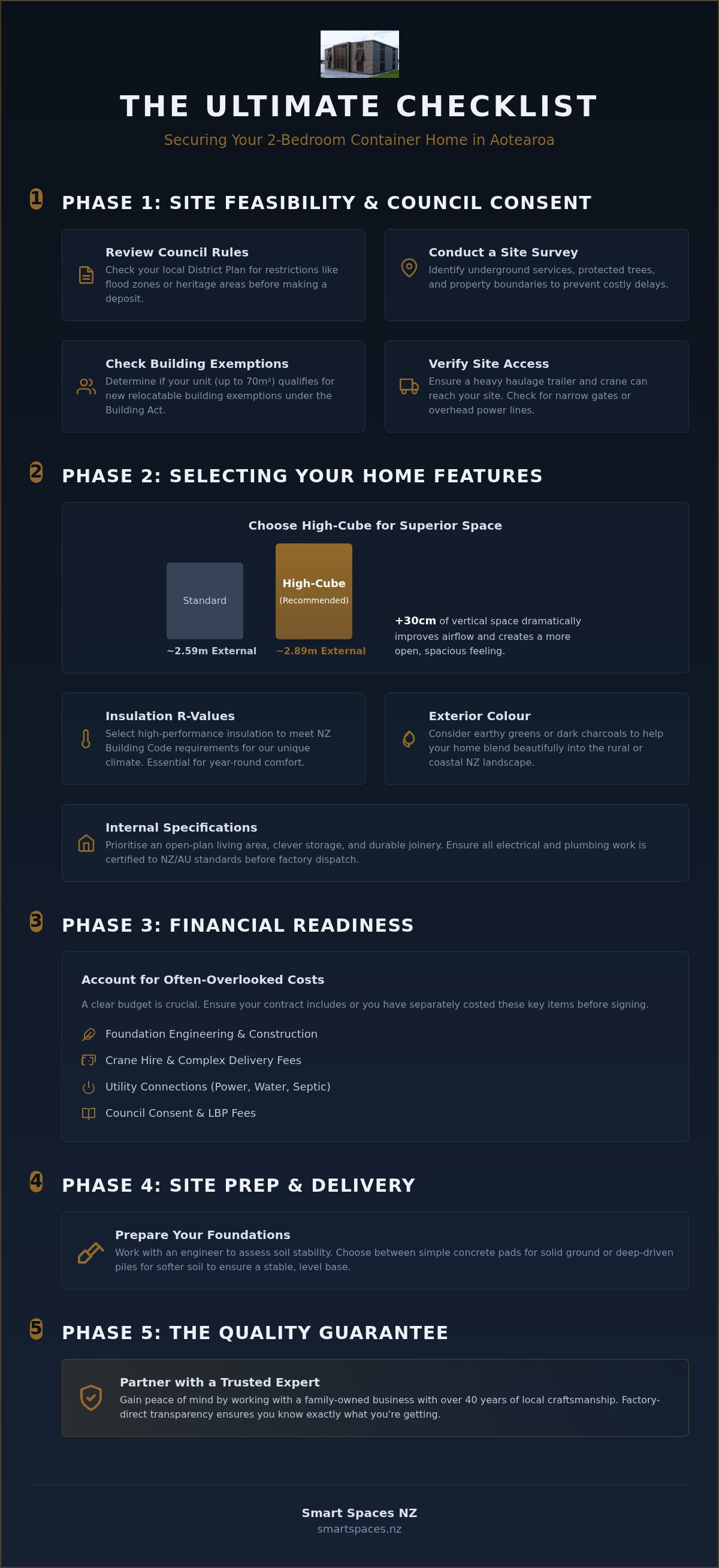
A 2-bedroom container home is a heavy piece of kit. You need to evaluate your soil stability to decide between simple concrete pads or deep driven piles. If the ground is soft, you'll need engineered foundations to prevent sinking. Delivery logistics are equally critical. Check for narrow gateways, low-hanging branches, or overhead power lines. If a heavy haulage trailer can't get within reach of a crane, your delivery costs will skyrocket. We recommend walking the path from the road to the final site to spot any obstacles before the big day arrives. When you buy container home New Zealand models, planning the final ten metres of the journey is just as important as the factory build itself.
Phase 2: Selecting Your 2 Bedroom Container Home Features
Once you've sorted the legalities from Phase 1, it's time to focus on the structure itself. When you buy container home New Zealand models, you aren't stuck with a one-size-fits-all solution. You have a choice between standard containers and high-cube units. We always suggest opting for the high-cube. That extra 30 centimetres of vertical space completely changes the feel of a 2-bedroom home, allowing for better airflow and a sense of openness that a standard height just can't match. It makes the difference between feeling cramped and feeling like you're in a real home.
Performance matters more than aesthetics in our climate. You'll need to scrutinise the insulation R-values carefully. A steel box can act like an oven in the summer and hold the cold in winter if it isn't treated correctly. To meet New Zealand Building Code compliance, your home must have high-performance insulation that keeps the interior dry and warm. For the outside, consider colours that blend into your local landscape. Darker charcoals or earthy greens often work well to settle the building into its surroundings, especially if you buy container home New Zealand units for a rural or coastal setting.
Internal Specifications and Craftsmanship
Inside, every millimetre counts. Maximising a 2-bedroom footprint requires clever storage solutions and an open-plan kitchen and living area. You want joinery that is built to last and flooring that can handle the high traffic of a compact space. It's vital to ensure all electrical and plumbing work is completed to NZ/AU standards before the unit leaves the factory. For a detailed breakdown of what to look for, our affordable container homes New Zealand guide offers a side-by-side comparison of standard features versus premium upgrades. This ensures you get the best value without compromising on the quality of the finish.
Energy Efficiency and Climate Control
Energy efficiency isn't just about saving money; it's about day-to-day comfort. Double-glazed windows and sliding doors are non-negotiable for modern Kiwi living. They reduce external noise and keep the heat in during those frosty southern mornings. You should also look for integrated ventilation systems. These prevent the condensation issues often associated with steel buildings. If you're planning for the future, ask for solar-ready wiring to be installed during the build. It's much cheaper to do it in the factory than to retrofit it later. If you're ready to see how these features come together, you can view our 2-bedroom container home layouts to start planning your space.
Phase 3: Financial Readiness and Contract Checklist
Getting your finances in order is the most critical hurdle once you've settled on a design. When you buy container home New Zealand units, you aren't just paying for the steel and joinery. You've got to be realistic about the "all-in" cost. This includes heavy haulage delivery, professional foundation installation, and utility hook-ups. It's common for first-time buyers to overlook transport insurance, which covers the structure while it's on the back of a truck navigating our winding local roads. Ensure your budget covers these logistics so you don't run out of puff before the keys are in your hand.
A transparent payment schedule is your best protection. Instead of paying a massive sum upfront, look for a contract linked to manufacturing milestones. This usually involve a deposit to secure your production slot, followed by progress payments when the framing is complete and the fit-out begins. A final balance is typically due once the unit passes its factory inspection. This methodical approach ensures your money is working as hard as the builders on the factory floor. We always recommend a clear sales agreement that shows GST is included and lists every basic fitting to avoid any unpleasant surprises.
Securing Container Home Finance in New Zealand
The Factory-Direct Pricing Advantage
Choosing a factory-direct model is a smart way to keep your project affordable. By bypassing expensive retail showrooms and middle-man commissions, you can save thousands of dollars—much like how Kincade International Direct Sales helps Sydney property owners maximise their equity by avoiding traditional agent fees. These savings can then be better spent on high-quality landscaping or off-grid upgrades. We take pride in our 40-year heritage as a family-owned business, which means our pricing is straightforward and honest. We don't hide costs in the fine print. When you buy container home New Zealand designs from a factory-direct source, you're getting the benefit of four decades of craftsmanship without the corporate markup.
Phase 4: Site Preparation and Delivery Logistics
Site preparation is the bridge between your factory build and your new lifestyle. When you buy container home New Zealand units, the manufacturer handles the heavy lifting in a controlled environment, but the "last mile" is your responsibility. You must install your foundation system exactly according to the engineering specifications provided. Whether you are using concrete pads or timber piles, the ground must be perfectly level. If the foundation is even a few millimetres off, doors might stick or windows might not seal properly. This isn't just about aesthetics; it's about the long-term structural integrity of your investment.
Equally important is the pre-work for your utilities. You should have your electrician and plumber pre-wire and pre-plumb the site right up to the point of connection before the truck arrives. This ensures that once the unit is craned into place, the final "hook-up" to mains power, greywater, and sewage can happen in a matter of hours. Coordinating with your transport team for a precise delivery window is essential. Our winding roads and unpredictable weather mean you need a clear plan for the exact moment that truck pulls up to your gate; ensuring the load is secured with professional equipment from CargoCare NZ is a standard part of safe transit. When you buy container home New Zealand designs, being ready for that delivery window saves everyone time and stress.
Foundation and Utility Checklist
Success on delivery day starts with a few practical ground rules. You've got to ensure the site is ready for the weight of a steel structure. We recommend focusing on these three areas:
Ground Levelling: The container must sit perfectly square to prevent the frame from twisting over time.
Stormwater Management: Install robust drainage solutions to keep water away from your piles or pads.
Service Access: Position your power and water inlets so they align easily with the home's service panel.
Taking the time to get these details right means your home will be stable, dry, and comfortable for decades to come. It's about doing the hard work now to enjoy the freedom later. To ensure your final fit-out is perfect, you can find out more about using a professional snagging list to catch any minor defects before the project is signed off.
The Delivery Day Walkthrough
Delivery day is a high-stakes event that requires your full attention. You must clear all debris, low-hanging branches, and loose equipment from the delivery path. We recommend designating a "spotter" to help the driver navigate tight corners or soft ground during the placement process. Once the crane has lowered your 2 bedroom container home NZ into position, perform a thorough final inspection. Check the levelling one last time and ensure no damage occurred during the transit phase. If you're ready to see how we handle these logistics with our factory-direct service, enquire about our delivery process today.
Phase 5: The Smart Spaces NZ Quality Guarantee
Choosing to buy container home New Zealand models is a significant step toward a more flexible lifestyle, but the quality of your experience depends entirely on the people you partner with. We believe in a no-nonsense approach that prioritises honesty and personal service over corporate layers. Our goal is to provide you with a high-value asset that isn't just a temporary fix, but a durable, long-term home designed specifically for our unique Kiwi conditions. When you work with us, you're gaining more than a building; you're gaining the peace of mind that comes from a reliable, local partner who stands firmly behind their work.
Our commitment doesn't end once the crane leaves your site. We provide robust after-sales support to help with any maintenance questions or future upgrade queries you might have. Whether you want to add solar panels later or need advice on landscaping and revitalising your garden's soil using GrowQanz technologies, our team is just a phone call away. This level of accountability is what sets a family-oriented business apart. We value the relationships we build with our customers as much as the structures we manufacture, ensuring that your path to home ownership is as smooth and stress-free as possible.
Why 40 Years of Experience Matters
Four decades of industry experience isn't just a statistic; it's a guarantee of craftsmanship. Over the last 40 years, we've refined our manufacturing processes to ensure superior weather-proofing and structural longevity. We understand how the New Zealand climate can test a building, from the high UV levels in the north to the biting winds of the south. This expertise allows us to select materials that won't just look good on day one, but will stand up to the elements for years to come. Our "straightforward dealings" mean you get a transparent look at our process, with no hidden fees or technical jargon to cloud the conversation.
Your Next Steps to Ownership
The best way to feel confident in your decision to buy container home New Zealand units is to see the quality for yourself. We invite you to take the next step by booking a factory tour or a virtual walkthrough of our current 2-bedroom units; if you are travelling to see us, you can visit Drive NZ Rental Cars to secure a reliable vehicle for your journey. This gives you a chance to inspect the joinery, feel the height of the ceilings, and ask our experts any specific questions about your site. Once you're ready, we can provide a customised quote based on your unique requirements. Join the growing community of Kiwis who are choosing a smarter, more efficient way to live without compromising on quality or integrity.
Your Path to a Smarter Lifestyle Starts Here
Mastering the path to home ownership in 2026 is about making informed choices from the ground up. By understanding the latest council consent updates and focusing on high-performance features like high-cube ceilings and double glazing, you've already laid the groundwork for a successful project. The key to a stress-free experience lies in thorough site preparation and choosing a partner who understands our local landscape. When you decide to buy container home New Zealand units through a factory-direct model, you're choosing value over retail markups and genuine craftsmanship over mass production.
With over 40 years of family-owned heritage, we take pride in building durable structures specifically for New Zealand conditions. We believe in straightforward dealings and honest service, ensuring you feel supported from the first site survey to the final utility hook-up. You don't have to settle for the long delays of traditional building sites when a more efficient, reliable solution is ready for you. Take the next step toward a lifestyle of freedom and quality today. Start your journey and browse our 2-bedroom container homes today and see how easy it is to create your perfect space.
Frequently Asked Questions
Do I need a building consent for a container home in New Zealand?
Most container homes require a building consent, but 2026 regulations allow for second dwellings up to 70 square metres to be built without formal consent if they meet specific criteria. You'll still need to notify your local council and ensure the work is done by a Licensed Building Practitioner. If your unit doesn't meet these specific exemptions, you'll need to go through a standard application process involving professional engineering input.
How much does it cost to transport a container home to my site?
Transport costs depend on the distance from the factory and the complexity of your site access. Factors like narrow rural roads, steep driveways, or the need for a specialised crane will influence the final price. We recommend getting a site-specific quote early in the process. This ensures you account for heavy haulage logistics before you buy container home New Zealand units, preventing any budget blowouts during the final delivery phase.
Are container homes suitable for the New Zealand climate?
Can I get a standard mortgage to buy a container home?
Obtaining a standard mortgage for a transportable home can be challenging as many traditional banks prefer fixed structures as security. However, several specialist lenders in New Zealand offer finance specifically for prefab and container homes. You might consider a personal loan or a chattel mortgage instead. Having a signed contract and a clear site plan ready will significantly improve your chances of securing the funding you need for your project.
What kind of foundations do I need for a 2-bedroom container unit?
You'll typically need either concrete pads or timber piles, depending on your soil stability and the specific engineering requirements of the unit. A 2-bedroom container home is a significant weight, so the ground must be professionally levelled and assessed. We provide detailed engineering specs to ensure your foundation system is strong enough to support the structure and keep it perfectly square for decades to come, regardless of your location.
How long does the manufacturing and delivery process take?
The timeline varies based on current production schedules and the complexity of your chosen features. Generally, once the design is finalised and the deposit is paid, the manufacturing phase takes several weeks in our controlled factory environment. Delivery and site placement usually happen within a single day once the unit is ready to move. We'll provide a clear schedule at the start of your project so you can coordinate your site prep accordingly.
Can I customise the interior layout of my container home?
You can certainly customise the interior layout to better suit your lifestyle and needs. While the external steel shell provides the structural boundary, the internal walls, cabinetry, and fixtures can be arranged to maximise the 2-bedroom footprint. Whether you want an open-plan kitchen or extra storage for outdoor gear, we work with you to ensure the final finish reflects your personal style and practical requirements without compromising on structural integrity.
What utilities do I need to have ready before delivery?
You must have your mains power, water supply, and sewage or septic connections ready at the site before delivery. It's best to have these services pre-wired and pre-plumbed to a specific connection point near where the unit will sit. This allows for a quick "hook-up" on delivery day. When you buy container home New Zealand models, having your local sparky and plumber on standby ensures you can move in almost immediately after placement.



Comments