

Two Bedroom Transportable Homes NZ: Find the Right Fit in 2026

The home that looks most like a conventional house isn’t always the best fit for your site. A search for two bedroom transportable homes nz can bring up very different options, and “transportable” doesn’t tell you how each home is designed or what it needs once it arrives. Comparing expandable and container homes can feel tricky until you know what to look for.
Smart Spaces NZ sells both formats: two-bedroom expandable homes from $44,900 and two-bedroom container homes from $99,500. The right choice depends on how you intend to use the home, the space available and the practicalities of placing it. Smart Spaces NZ is family-owned, with over 40 years of experience, and supports customers from design through delivery, installation and after-sales.
This guide compares the two formats and explains what to consider about site preparation, transport, service connections and council requirements. Use the practical checks to clarify what matters for your project before choosing a home.
Table of Contents
What are two-bedroom transportable homes in NZ, and who are they for?
A transportable home is designed to be delivered to a prepared site, rather than built entirely in place like a conventional fixed-site home. The term describes how the home reaches its location, not one standard design or construction method. Two homes can both be transportable yet have different formats, placement needs and practical considerations.
The wider category includes different kinds of prefabricated homes, made using varied construction approaches. Smart Spaces NZ sells two-bedroom expandable homes and two-bedroom container homes. “Two-bedroom” describes the accommodation layout; it doesn’t tell you how the home is constructed or whether it will suit a particular property.
What does two-bedroom transportable home mean?
In plain terms, it’s a two-bedroom home designed for delivery and placement on a prepared property. The format influences how it is transported and set up, while the site and intended use determine what needs planning. Expandable and container homes are distinct options, not interchangeable names for one type of building.
Who might consider a transportable two-bedroom home?
A second bedroom can provide useful extra space for a household, a family member, visiting whānau or a rental investment, depending on the property and relevant requirements. It can also suit buyers seeking a backyard retreat or an eco-friendly living solution.
Start by deciding what the home needs to do. For extra household space, consider who will use it and how often. For a retreat, think about where it could sit and how you’d use the surrounding area. For rental accommodation, consider the intended use and applicable requirements. A transportable format doesn’t automatically make every use or site suitable.
Then assess the property. Check the available placement area, access for delivery and how the home can connect to the services it needs. These details can influence which format makes sense and what preparation comes first. A home that works well on one property may not suit another.
It also helps to separate the appeal of extra space from the decisions involved in placing a home. Work out whether you need a longer-term household solution, occasional accommodation or a separate retreat. Then compare the expandable and container formats against that plan, rather than assuming every two-bedroom layout offers the same features.
For people exploring two bedroom transportable homes nz, a clear picture of the home’s purpose is a useful starting point. From there, it becomes easier to assess the format, site conditions and next planning steps. Neither option suits every household or property, but understanding the differences helps you make a considered choice.
How do two-bedroom expandable and container homes differ?
Both options provide two-bedroom accommodation, but they use different formats. Compare them against your plans: how the home will be used, what the site can accommodate and which confirmed features matter to your household. The table is a starting point, not a promise that either format will suit every property.
When might an expandable home be the better fit?
An expandable home may appeal if you’re considering that format for a two-bedroom retreat, additional household space or another planned use. Two-bedroom expandable homes from Smart Spaces NZ start at $44,900. Begin with the home’s intended purpose, then consider how its placement could work on your property. Access, available space and site preparation are part of the decision, too. Explore the two-bedroom expandable homes guide for more detail about this option.
When might a container home be the better fit?
A container home is a distinct choice for buyers weighing up transportable accommodation. Two-bedroom container homes from Smart Spaces NZ start at $99,500. They include high-quality insulation, a moisture barrier and double-glazed windows, and are ready for connection to water, sewerage, electricity and other plumbing services. Owners arrange installation of the hot-water system themselves. Properly maintained container homes are expected to last at least 25 years. See the two-bedroom container homes guide for a closer look.
Make your comparison practical. Picture where the home would sit, how people would reach it and how the required connections could be arranged. Weigh those details against your intended use and the features that matter to you. Avoid assuming one format always costs less, needs less preparation or suits more sites.
Placement and building requirements deserve attention as well. The applicable rules depend on the project, so don’t assume a transportable format removes approval considerations. The official New Zealand Building Act and regulations are available through the government legislation website. Include the requirements that apply to your circumstances in your planning.
For a grounded comparison of two bedroom transportable homes nz, Smart Spaces NZ offers both formats, with support from design through delivery, installation and after-sales. Explore Smart Spaces NZ’s two-bedroom home options as you match a format to your site and plans.
Is a two-bedroom transportable home a compromise on comfort or durability?
Transportable doesn’t automatically mean temporary or uncomfortable. It describes a home designed to be moved to a site, not how it will feel to live in or how long it will last. Those questions depend on the specific home, its intended use, site preparation and ongoing maintenance.
Comfort is personal, too. A home used for occasional visits has different day-to-day demands from one intended for regular household living. Think about how the two bedrooms will be used, whether the layout suits your routine and whether the proposed position works for your plans. Practical expectations are more useful than assumptions based on the word “transportable”.
What can shape comfort in a transportable home?
Consider the layout and intended use alongside the site. Placement, preparation and access to services all affect how the home works as part of your property. Smart Spaces NZ container homes include high-quality insulation, a moisture barrier and double-glazed windows. These are confirmed features of the container homes, not claims about expandable homes.
Service planning matters as well. Smart Spaces NZ container homes are ready for connection to water, sewerage, electricity and other plumbing services, but the property still needs to be prepared for those connections. The hot-water system is not pre-installed, so owners arrange its installation themselves. Thinking through these details early helps you assess how the home will function once it’s in place.
What should buyers know about long-term durability?
Smart Spaces NZ container homes are constructed from weather-resistant steel that does not allow surface rust to penetrate the walls. Properly maintained container homes are expected to last at least 25 years. This is an expected lifespan for maintained container homes, not a guarantee or a claim about every transportable-home format.
Maintenance is part of the long-term picture. Consider the care you can provide and how the home will be used. Ongoing attention supports the expected lifespan; the figure isn’t a promise that maintenance can be overlooked or that every home will perform identically in every setting.
Site preparation is another part of a sound plan. The home needs a prepared place to sit, and essential service connections must be considered for the intended use. If the property has constraints around placement or connections, factor them into your format choice and setup plans. A transportable home still needs to work with its surroundings.
Comfort and longevity depend on the home’s format, thoughtful site preparation and ongoing maintenance.
So, is a two-bedroom transportable home a compromise? Not by definition. Buyers comparing two bedroom transportable homes nz can make a more confident decision by checking the actual features, considering the home’s purpose and understanding what caring for it involves. That’s more useful than assuming all transportable homes are temporary or that every format offers the same features.
What should you plan before placing a two-bedroom transportable home?
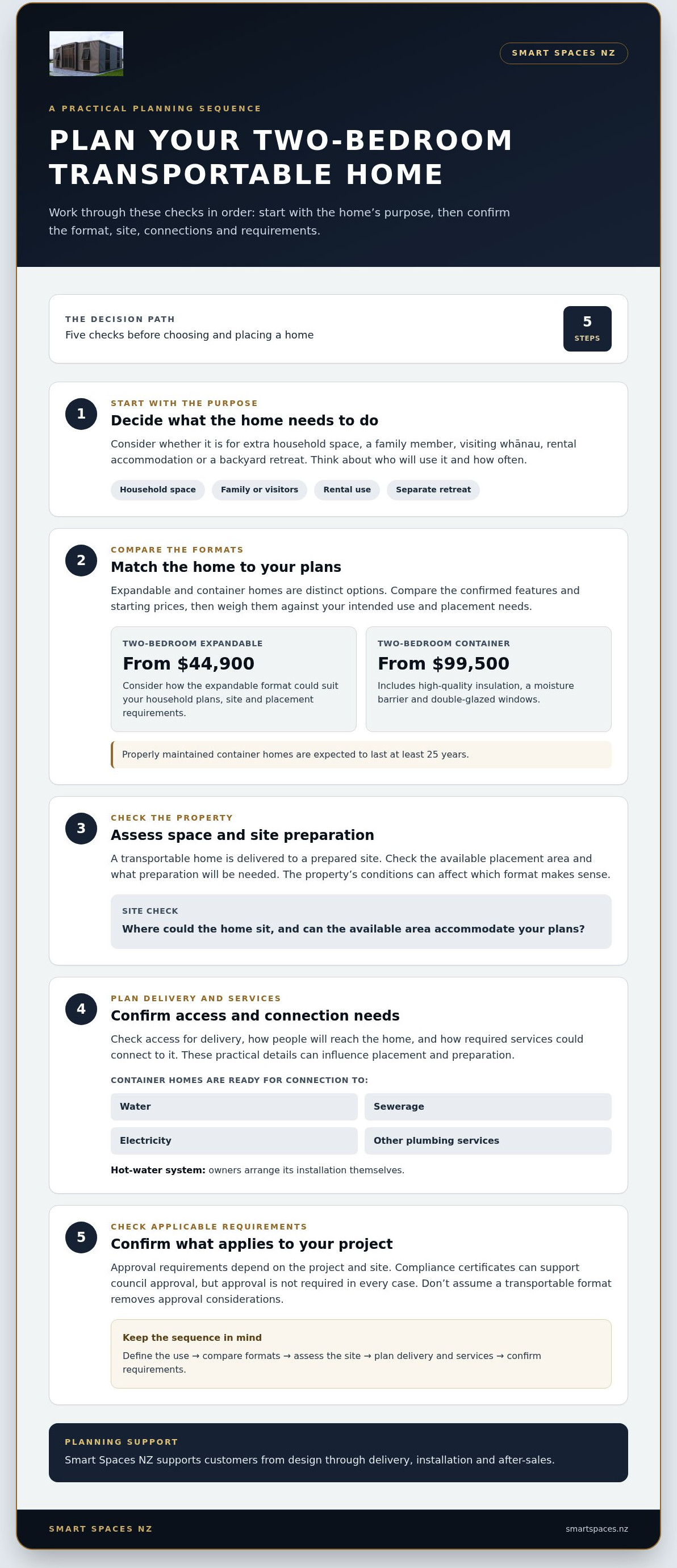
A smooth placement starts with a clear plan, not just a delivery date. Work through the decisions in order so the home, site and services are considered together. For two bedroom transportable homes nz, the format matters, but so does how the property can accommodate and support it.
Decide on the intended use. Be clear about who will use the home and what it needs to provide. This helps guide choices about format, position and service connections.
Assess the site. Consider the access route, available placement area and ground conditions. These details help shape delivery and support planning.
Plan placement and support. Container-home options include certified footing systems, sleepers, concrete blocks, timber or steel posts, and other NZ-Code-approved engineered solutions. Timber or steel posts require 4-6 posts. The right approach depends on the project.
Plan service connections. Smart Spaces NZ container homes are ready for connection to water, sewerage, electricity and other plumbing services. This means they’re prepared for connection, not that services are already installed. Owners arrange installation of the hot-water system themselves.
Consider approval requirements. Requirements depend on the project and site. Smart Spaces NZ provides compliance certificates for council approval, and in some cases approval isn’t required.
How do you prepare a site for delivery and placement?
Before delivery, think through how the home will reach its intended position and where it can sit on the prepared site. Plan the support system at the same time. For container homes, placement options include certified footing systems, sleepers, concrete blocks, timber or steel posts, and other engineered solutions approved under the NZ Building Code. Timber or steel posts require 4-6 posts.
What should you know about transport and connections?
Smart Spaces NZ homes are designed for road or rail transport without special permits or wide-load documentation. Once the home is placed, arrange the relevant service connections for its intended use. “Plug-and-play” describes readiness for those connections; it doesn’t mean water, sewerage, electricity or plumbing are already connected at your property. Container homes do not come with a pre-installed hot-water system, so owners arrange its installation themselves.
Paperwork also needs a measured approach. Compliance certificates support council approval, but they don’t mean approval is unnecessary for every site or project. In some cases, approval isn’t required. Don’t assume that applies to your circumstances simply because a home is transportable. Factor approval requirements into your planning before placement.
Smart Spaces NZ supports customers from design through delivery, installation and after-sales. If you’re weighing up site preparation, placement and connections, explore Smart Spaces NZ’s two-bedroom home options as you plan the next steps.
How can Smart Spaces NZ help you choose a two-bedroom transportable home?
You’ve seen why the home’s format, intended use and site plans all matter. Smart Spaces NZ sells two distinct options: two-bedroom expandable homes and two-bedroom container homes. The family-owned business has over 40 years of experience across the canvas trade, hire industry and container-home construction, and supports customers from design through to after-sales.
Factory-direct supply means customers buy without middle-man fees. Smart Spaces NZ also provides design, delivery and installation, helping you consider the home alongside the practical steps involved in getting it to your property and planning for its use.
What does Smart Spaces NZ offer for two-bedroom living?
The two-bedroom expandable home and two-bedroom container home are different formats, so compare them against your plans rather than assuming one is the standard choice. Two-bedroom expandable homes start at $44,900, while two-bedroom container homes start at $99,500. Container homes include high-quality insulation, a moisture barrier and double-glazed windows. They’re ready for connection to water, sewerage, electricity and other plumbing services; owners arrange installation of the hot-water system themselves.
This is an expected lifespan for maintained container homes, not a guarantee or a claim about every home format. For either option, your intended use and site conditions remain central to the decision.
What are the next steps if you are comparing options?
Start by writing down what the home needs to do, whether that’s providing extra household space, a retreat or accommodation for another purpose. Then consider how your site can accommodate the home, including placement, support and the service connections you’ll need. This makes it easier to compare expandable and container formats on relevant factors, not just their names.
Keep approval considerations in view, too. Smart Spaces NZ provides compliance certificates for council approval, and in some cases approval isn’t required. Requirements depend on the project and site, so documentation shouldn’t be taken as a blanket indication that approval is unnecessary. Work through these practical questions alongside your choice of home.
Finance assistance is available through Better Finance, subject to eligibility and credit approval. Include it in your overall decision alongside the home format and site requirements. Taking these steps in a considered order can help you compare two bedroom transportable homes nz with greater confidence and keep the details that shape a successful fit in view.
Explore two-bedroom homes from Smart Spaces NZ and compare the expandable and container options for your plans.
Take the next step towards a home that fits
Before making a decision, write a brief for the home you’re picturing. Note what it needs to do, what matters most to the people who’ll use it and which questions still need answering. Separate essentials from preferences. This can turn a broad search for two bedroom transportable homes nz into a more focused comparison and help you recognise an option that suits your plans.
You don’t need every detail settled before exploring. Start with the priorities you know, then use them to guide your comparison of the available two-bedroom options. A clear starting point makes the process more manageable and keeps practical decisions connected to the outcome you want.
Explore two-bedroom homes from Smart Spaces NZ and take the next step towards finding a format that fits your plans. Your next chapter can start with a clear, considered choice.
Frequently Asked Questions
Are two-bedroom transportable homes available across New Zealand?
Yes. Smart Spaces NZ sells two-bedroom expandable homes and container homes across New Zealand. The practical question is whether your property can accommodate the home and its delivery, placement and service needs. Before choosing a format, note your intended use and any site constraints. That gives you a useful starting point for narrowing down two bedroom transportable homes nz.
Can a transportable home be moved again after it has been placed?
It may be possible, but a second move isn’t automatic. The home’s placement, support system, service connections and access all affect what moving it again would involve. For example, a home connected to water, sewerage and electricity would need those connections addressed as part of relocation planning. Treat future mobility as a project-specific consideration rather than assuming the home can be shifted without preparation.
Do two-bedroom container homes come with a hot-water system?
No. Smart Spaces NZ container homes don’t come with a pre-installed hot-water system, and owners arrange its installation themselves. Include this in your service planning alongside the home’s other plumbing connections. Thinking about how hot water fits your intended use can help you account for this part of preparing the home for everyday living.
Are council approvals always required for a transportable home in NZ?
No. Council approval isn’t always required, but whether it applies depends on the project and site. Smart Spaces NZ provides compliance certificates for council approval; receiving documentation doesn’t mean approval is unnecessary in every situation. Treat the certificate as relevant paperwork for your planning, not as a blanket exemption. Include the approval question in your project planning before deciding when the home can be placed or used.
Can a container home be connected to water, sewerage and electricity?
Yes. Smart Spaces NZ container homes are ready for connection to water, sewerage, electricity and other plumbing services. “Ready to connect” doesn’t mean those services are already connected at your property. Consider which connections your intended use calls for and how they’ll reach the home’s position. This helps you plan the practical setup around the building.
How long can a properly maintained container home last?
Properly maintained Smart Spaces NZ container homes are expected to last at least 25 years. This is an expected lifespan, not a guarantee, and it applies to container homes rather than every transportable-home format. Ongoing care matters, so include maintenance in your thinking about long-term ownership.
Is finance available for a two-bedroom transportable home?
Finance assistance is available through Better Finance, subject to eligibility and credit approval. If you’re considering finance, include the lender’s assessment in your planning and understand the terms offered for your circumstances. Keep the home choice and financing decision connected: your intended use, site plans and overall purchase arrangements all help shape a practical next step.


Comments