

Preventing Condensation in Container Homes: A Practical NZ Guide

Three-quarters of New Zealand households reported condensation during winter, according to BRANZ’s Household Energy End-use Project 2. In a container home, damp windows, cold walls or a musty smell can leave you wondering whether everyday moisture, poor airflow or a building issue is to blame. Preventing condensation in container homes means considering all three: moisture sources, cold surfaces and airflow.
If you’ve been wiping down wet surfaces or worrying about mould and damage to your belongings, look beyond a single quick fix. Opening windows, adding insulation and using a dehumidifier can each help in the right circumstances, but the best approach depends on what’s causing the moisture.
This guide explains common condensation patterns and what they may indicate, then covers practical habits and home improvements to reduce dampness. You’ll also learn when persistent moisture may point to water ingress or another issue that needs a closer building assessment, so you can protect your living space with confidence.
Table of Contents
Preventing condensation in container homes starts with recognising the signs
Condensation is usually caused by moisture and temperature, and it can often be managed once you understand what’s happening. It forms when water vapour in the air cools and turns into liquid on a cooler surface, such as a window or wall.
In brief: “Cold surfaces collect moisture when warm indoor air containing water vapour touches them and cools enough for that vapour to become liquid.” This basic process, explained in Understanding Condensation, helps explain why signs may appear in particular spots rather than evenly across a room. Visible moisture is a useful clue, but it doesn’t confirm the cause.
What condensation looks and feels like indoors
Look for droplets or a foggy film on windows, surfaces that feel damp to the touch, a musty odour, or wet patches that return after being wiped away. In a container home, recurring moisture on a cooler wall or around a window may point towards condensation, particularly if it appears in similar conditions. A single damp surface, however, can’t tell you exactly what’s causing it.
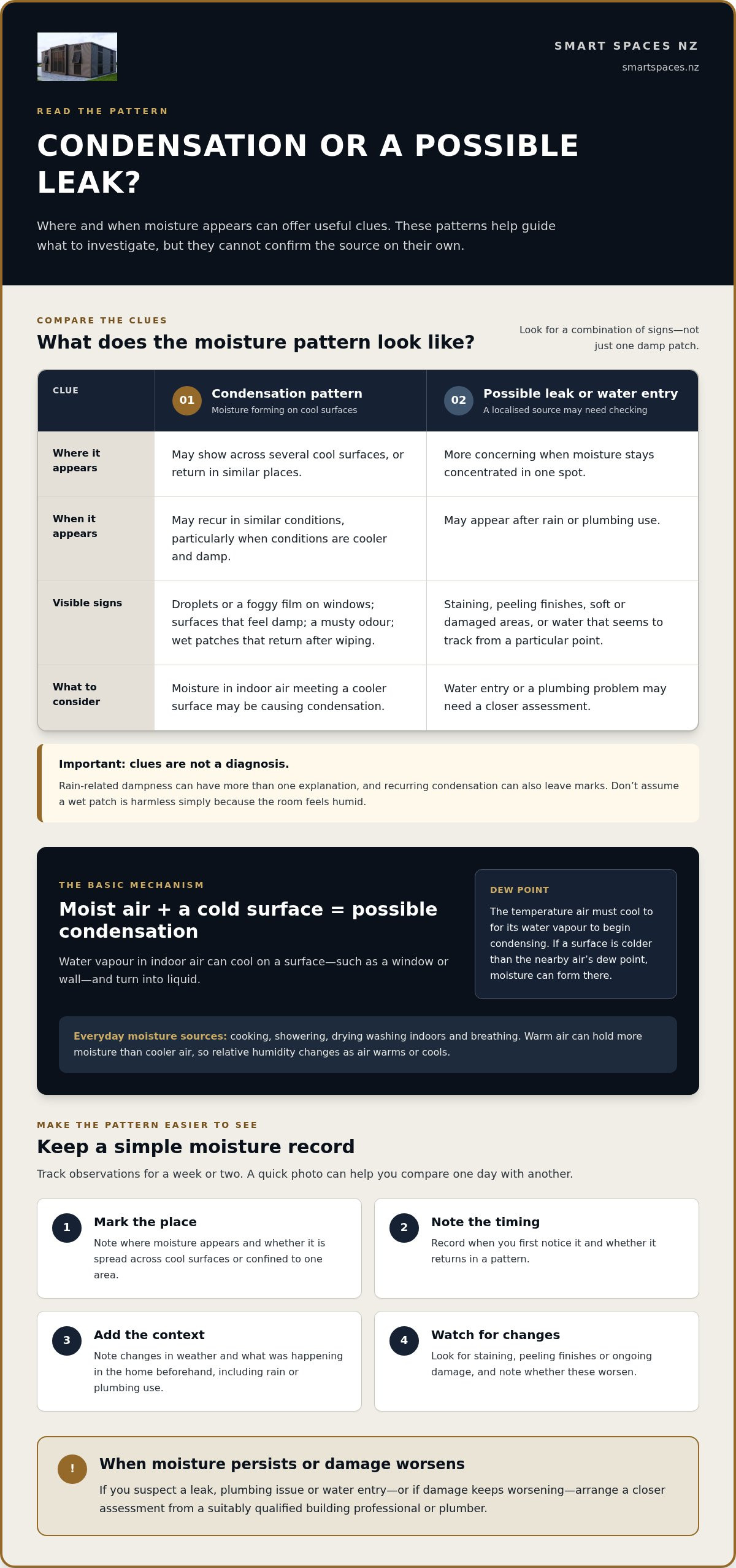
Keep a simple record for a week or two. Note where moisture appears, when you first notice it, whether it follows a change in weather, and what was happening in the home beforehand. A quick photo can help you compare one day with another. These observations can reveal a pattern and make it easier to describe the issue if you need an assessment.
Condensation or a leak: what clues can help?
Condensation may appear across several cool surfaces, or return in similar places during cooler, damp conditions. A leak or water entry is more likely to raise concern when moisture stays concentrated in one spot, appears after rain, or comes with staining, soft or damaged finishes, or water that seems to track from a particular point. Plumbing problems can also create a persistent localised wet area.
These clues can help you decide what to investigate, but they can’t confirm the source on their own. Rain-related dampness, for example, could have more than one explanation, and recurring condensation can also leave marks. Don’t assume that a wet patch is harmless simply because the room feels humid.
Notice whether moisture is spread over multiple cool surfaces or confined to one area.
Record whether it returns in a pattern or appears after rain or plumbing use.
Look for changes such as staining, peeling finishes or ongoing damage.
If you suspect a leak, plumbing issue or water entry, or if damage keeps worsening, arrange a closer assessment from a suitably qualified building professional or plumber. Recognising the pattern is a practical first step in preventing condensation in container homes, while persistent or unexplained moisture deserves proper attention.
Why moisture, cold surfaces and airflow combine to create condensation
Everyday living adds water vapour to indoor air. Cooking releases steam, a shower fills the bathroom with moisture, drying washing indoors adds dampness over time, and people contribute moisture simply by breathing. If moisture builds up faster than it can leave the home, indoor air becomes more humid and condensation is more likely.
Everyday moisture sources inside a container home
Think about a typical evening: you boil the kettle, cook dinner, shower, then hang washing inside because the weather is wet. These activities release moisture into the air, especially if lids are left off pots or the bathroom door is open. That’s normal household use, not proof of a building defect. The important question is whether the home can manage the moisture generated by its occupants and activities.
Two terms help explain what happens next:
Relative humidity is how much water vapour the air currently holds compared with the maximum it could hold at that temperature. Warm air can hold more moisture than cooler air, so relative humidity changes as air warms or cools.
Dew point is the temperature at which air must cool for its water vapour to begin condensing. If a surface is colder than the dew point of the nearby air, moisture can form there.
In brief: “When indoor air carries excess moisture and a surface cools below the air’s dew point, water vapour can settle on that surface as liquid.” This is why moisture and temperature need to be considered together, rather than treating damp air or a cold wall as the sole cause. The US Environmental Protection Agency also explains the connection between indoor condensation and mould in its advice on Preventing Condensation and Mold.
Why temperature differences and airflow matter
A wall, window or ceiling area can be cooler than the room air, particularly during cold weather. In a container home, steel can transfer heat readily. Where the design or insulation allows parts of an assembly to become cold, those areas may be more prone to condensation. A thermal bridge is a part of a building assembly where heat moves through more readily than through the surrounding areas. It can create a colder patch even when the rest of the room feels comfortable.
Air movement helps only if it removes moisture-laden air or replaces it with drier outdoor air. A fan that simply circulates room air may spread warmth and moisture around, but it doesn’t necessarily remove either. Fresh-air exchange is different: it carries indoor air out and brings outdoor air in. The right balance depends on outdoor conditions and the home’s ventilation, so consider airflow alongside moisture sources and cold surfaces.
Understanding how these factors interact is an important part of preventing condensation in container homes. If you’re considering a container home for everyday living, explore container homes from Smart Spaces NZ as part of planning how the space will be used and managed.
Compare condensation-control options: is ventilation enough?
Ventilation can help, but it may not solve every moisture source or cold surface. If dampness continues after you improve airflow, another part of the problem may need attention. Match your response to what’s causing the moisture rather than expecting one product or habit to fix everything.
Ventilation, insulation and vapour control have different roles
Ventilation manages air; insulation helps manage temperature. In a container home, a colder area may remain vulnerable even if the air is regularly exchanged. A vapour-control layer is part of an assembly intended to limit moisture movement through it. Its placement and the other layers around it matter, so adding a membrane or changing a wall build-up isn’t a universal do-it-yourself fix. Poorly planned changes can alter where moisture travels and accumulates.
Think of these measures as working together, not competing. Source control can reduce the moisture load, ventilation can carry moist air away, and a suitable insulated assembly can help keep interior surfaces warmer. Which measure matters most depends on the pattern you’ve observed and how the home is designed.
When a dehumidifier helps, and when it is not enough
A dehumidifier can be useful when indoor humidity is high, such as during periods of indoor clothes drying. Its effect depends on room conditions, how it’s used and whether moisture is continually being added. It can reduce moisture in the air, but it won’t stop water entering through a leak or resolve building damage.
Desiccant products sold for shipping containers can absorb moisture in a confined space, but that doesn’t make them a complete moisture-management plan for an occupied home. A household creates moisture continuously, and a small absorber may not address room-wide humidity, cold surfaces or inadequate fresh-air exchange.
Key point: “Effective condensation control depends on matching the response to the moisture source, the temperature of the surface and how air moves through the home.” If dampness persists despite proportionate changes, or you see damaged finishes, arrange an appropriate building assessment. That’s a sound next step in preventing condensation in container homes, especially when the cause isn’t clear.
A practical routine for preventing condensation in a container home
Small, repeatable habits make moisture easier to manage. Start by reducing what you add to indoor air, then help any remaining moisture escape. A simple routine also shows whether your steps are working or whether a recurring damp patch needs closer attention.
Daily habits that limit moisture build-up
Use this routine as a starting point and adapt it to your home. For extractor fans, follow the manufacturer’s operating guidance. Ventilate in a way that lets damp air leave without allowing moisture to spread through the rest of the home.
Reduce avoidable moisture. Use pan lids while cooking, avoid drying washing indoors where practical, and keep bathroom doors closed during showers so moist air is less likely to drift into cooler rooms.
Extract moisture as it’s produced. Switch on kitchen or bathroom extraction where available during cooking or showering, and keep it operating afterwards in line with its guidance. If there’s no extractor, use suitable ventilation to let damp air escape outdoors.
Clear visible condensation. Wipe water from windows and other affected surfaces rather than leaving it to collect. Dry the cloth or dispose of collected water, and avoid pushing furniture or belongings tightly against a surface where moisture repeatedly appears.
Keep airflow paths clear. Don’t block vents or cover areas where air needs to circulate. If a window or wall regularly feels damp, make a note of it rather than assuming that wiping it will address the cause.
Review the pattern each week. Record where and when moisture appears, what activities took place, and whether the weather was colder or wetter. If you use a humidity meter, note its readings alongside the location and time, rather than treating one number as a diagnosis.
A seasonal check for recurring dampness
As the weather cools, revisit your notes and look for changes. Does moisture appear more often after showers, cooking or indoor clothes drying? Is it limited to a surface that feels particularly cold, or does one area stay wet regardless of household activity? A short log can help distinguish occasional condensation from a persistent problem.
Check for musty smells, recurring damp patches, staining or changes to paint and other finishes. If moisture persists despite your routine, spreads, or appears consistent with water entering from outside or a plumbing issue, arrange an assessment from an appropriately qualified building professional or plumber. Don’t rely on ventilation habits alone if the signs point to a leak or ongoing damage.
Good moisture management is also worth considering when planning a home for everyday use. If you’re weighing up your options, explore Smart Spaces NZ container homes as part of thinking through how your household will use and care for the space. A steady routine is a practical first step in preventing condensation in container homes, while a clear record helps you recognise when a closer assessment is needed.
Plan a container home with condensation prevention in mind
Daily habits help once you’re living in a home, but moisture management is easier to consider before the layout and building approach are settled. A room’s purpose affects how much moisture it may produce, while the position of kitchens, bathrooms, windows and ventilation can influence how moist air moves through the space. Insulation and the rest of the building assembly also affect whether interior surfaces stay warm enough to reduce condensation risk.
Questions to consider when planning a container home
Start with the way you expect to use the home. A kitchen used for regular cooking, a bathroom used by several occupants and a laundry area where clothes may be dried indoors each create different moisture demands. Their location and relationship to sleeping and living areas can influence how easily moist air is managed.
Where will cooking, bathing, sleeping and laundry take place, and how might air move between those areas?
How will ventilation suit the home’s intended use and the moisture-generating activities that happen there?
What layers make up the proposed building assembly, and how are insulation and moisture movement considered together?
Could later changes, such as adding storage or altering a lining, affect airflow or how moisture moves through the assembly?
These are planning prompts, not a one-size-fits-all design prescription. Understanding the proposed assembly before making alterations can help avoid changes that unintentionally create colder surfaces or restrict moisture movement. For more layout and living-space context, see this guide to 2 bedroom container homes.
Bring moisture management into the wider home decision
Insulation and weatherproofing belong in the same conversation as ventilation. Insulation can influence interior surface temperatures, while weatherproofing helps keep external water out. Neither is a stand-alone answer to indoor moisture, and the performance of one part of a home depends on how the whole assembly is designed. Avoid assuming a particular material or retrofit will suit every container home. For example, while trade contractors frequently source architectural films and fitting equipment from wholesale distributors such as solcontrol.com to improve glazing performance, any envelope modification must be considered as part of the broader assembly.
Think about everyday comfort alongside the building details: how rooms will be used, where moisture is generated, and how air will be exchanged. That broader view can make it easier to understand the proposed design and how future changes might affect the home. For a wider look at factory-built housing, the prefabricated homes guide offers additional planning context.
Smart Spaces NZ is a family-owned business with more than 40 years of industry experience, designing, manufacturing and delivering container homes across New Zealand. Its 2 bedroom container homes are one option to explore as you consider how moisture management fits into a home planned for everyday living. Good planning won’t remove the need for sensible household habits, but it can help bring ventilation, insulation, room use and weatherproofing into the same discussion from the outset.
Make moisture management part of your next home decision
A comfortable container home starts with choices that suit the way you’ll actually live. Before settling on a layout or making later changes, consider how everyday use will interact with ventilation, insulation and the building assembly. If you’ve noticed persistent dampness, get the cause assessed rather than relying on a single quick fix. That gives you a clearer basis for deciding what to address and what to plan for next.
For anyone considering a container home, preventing condensation in container homes is a practical part of planning for long-term everyday comfort. Explore the available options and consider how each could fit your needs and intended use.
Explore Smart Spaces NZ container homes and take a considered next step towards a living space that works for you.
Frequently Asked Questions
Is condensation common in container homes?
Condensation can occur in many types of homes when moisture in the air meets a cooler surface, but a container home isn’t automatically damp. A little moisture on a window on a cold morning doesn’t, by itself, show that something is wrong. To prevent condensation in container homes, notice whether it’s limited to particular conditions or keeps returning in the same place. Persistent dampness, musty odours or deteriorating finishes deserve closer assessment.
Can opening windows prevent condensation in a container home?
Opening windows can help clear moist indoor air, but it isn’t a guaranteed fix. Its usefulness depends on outdoor conditions, the home’s layout and where moisture is being produced. Briefly airing the room after a shower or cooking may help direct damp air outdoors; simply opening a window far from the moisture source may be less effective. Use extraction where available, and pay attention to whether the same surfaces stay wet.
How do I tell condensation from a leak in a container home?
You can look for clues, but appearance alone can’t confirm the cause. Condensation may follow a pattern linked to cooler weather or indoor activity, while a leak may leave one area persistently wet, stained or damaged. Note whether the patch changes after rain, plumbing use or a change in household routines. If water entry seems possible, or the affected area grows or the finish deteriorates, arrange a suitable building assessment.
Does a dehumidifier stop condensation in a container home?
A dehumidifier can reduce moisture in indoor air and may help in some situations, but it won’t fix every cause of condensation. It won’t repair a roof or plumbing leak, for example, and it may not resolve a particularly cold surface. Results also depend on the room and how the device is used. If moisture keeps appearing despite reducing indoor humidity, investigate the underlying cause rather than relying on the appliance alone.
Can drying clothes indoors cause condensation in a container home?
Yes. As clothes dry, their moisture enters the room air, which can contribute to condensation if it accumulates. The effect depends on how much washing is drying, the room’s conditions and how well moisture can escape. If outdoor drying isn’t practical, choose a space with suitable ventilation and keep the laundry contained there. Avoid drying clothes in a closed bedroom, where moisture can build up unnoticed.
What should I do if condensation keeps returning in the same place?
Keep a short record of the location, timing and conditions, including whether the patch appears after rain, showers, cooking or colder nights. That pattern can help identify what needs attention. Dry the visible moisture and use suitable ventilation, but don’t assume repeated wetness is harmless. Look for staining, lifting paint or other changes to the surface. If the cause remains unclear or damage develops, arrange a building assessment.



Comments