

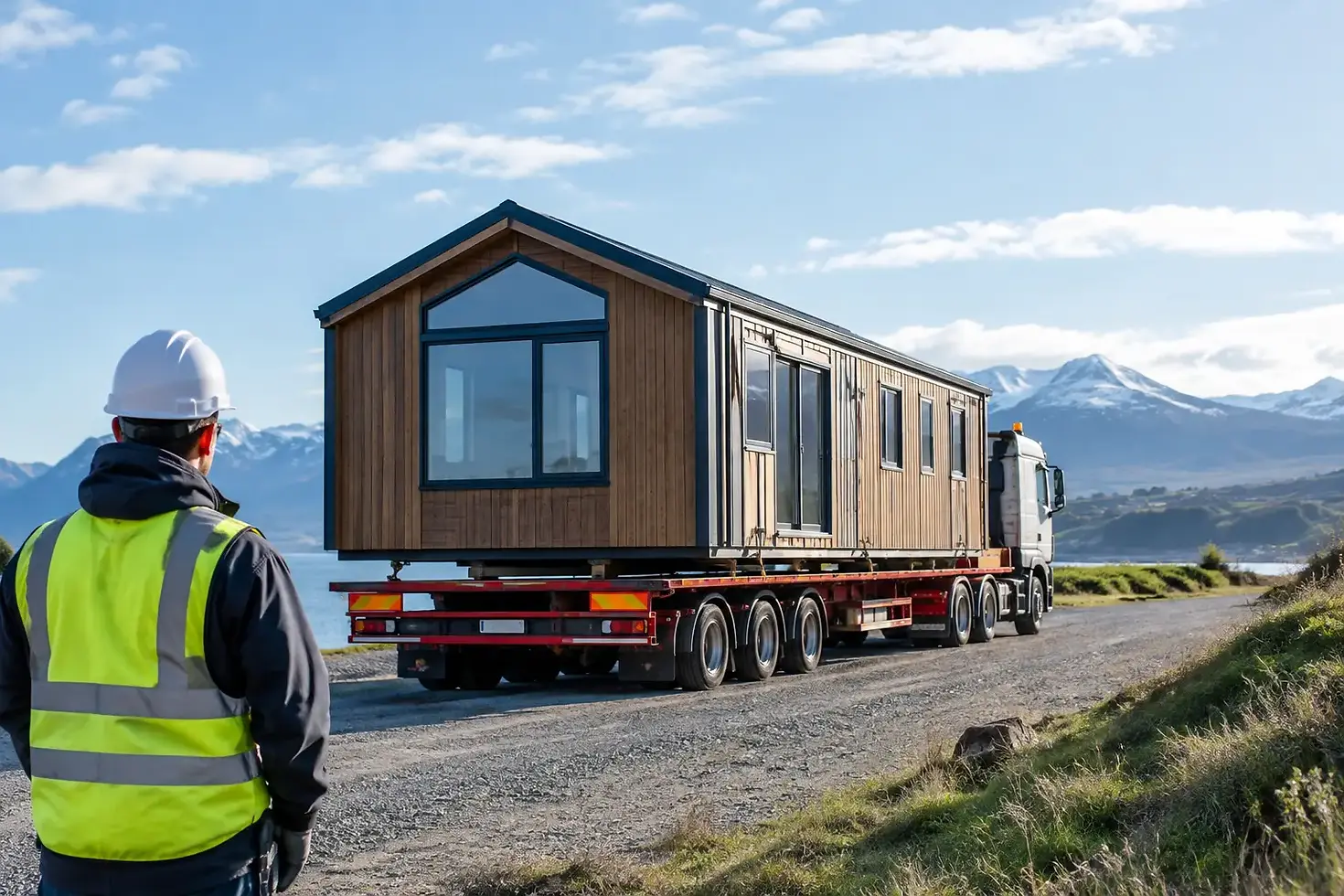
Portable Dwelling Delivery Guide for NZ Sites

A portable home can arrive far faster than a conventional build, but delivery day is not the time to discover a tight gate, a soft paddock or a power line sitting across the only access route. This portable dwelling delivery guide covers the practical checks that help your new home arrive safely, sit level and be ready for connection.
For a backyard granny flat, a coastal holiday unit or accommodation on a rural block, the best results come from planning the site well before transport is booked. Every section is different, and a few early measurements can prevent expensive delays on the day.
Start with the home and delivery method
The first question is not simply, "Can a truck get to my property?" It is how your chosen dwelling will travel and how it will be positioned once it arrives. An expandable home may be transported compact and opened on site, while a container home arrives at its full transport dimensions and generally needs lifting into position.
That difference affects the size of the truck, the turning space required and whether a hiab, crane or other lifting equipment is needed. It also affects where delivery vehicles can stand while the home is unloaded. On a sloping, narrow or exposed site, the transport team may need a more detailed plan.
Before confirming your order, provide clear photos or video of the route from the road to the intended location. Include the entrance, driveway, corners, gates, overhead lines, trees, culverts and any steep sections. A simple site sketch with approximate measurements is useful too. Honest information upfront gives your supplier the best chance to recommend a practical delivery solution.
Check access from the road to the pad
A home may fit through the front gate but still be stopped by a sharp bend near the garage or low branches at the back of the section. Measure the narrowest points, not just the obvious open areas. Gates, fence posts, letterboxes, retaining walls and parked vehicles all reduce usable width.
Height matters just as much. Check for tree limbs, roof overhangs, cables and farm infrastructure. Do not cut or interfere with power or telecommunications lines yourself. If overhead services affect the route, speak with the relevant network provider and delivery team early.
Driveway strength is another common consideration. A loaded truck and lifting equipment put far more weight on a surface than a family car. Gravel can be perfectly suitable when it is well compacted and supported, but loose metal, wet ground, old culverts and newly laid grass can create problems. Rural properties may also need a check of bridge load limits or stock-grid access.
If access is restricted, there may still be a solution. A crane lift over a fence or building can work on some sites, provided there is safe ground for the crane and enough reach. It adds cost and coordination, so it is worth comparing against alternatives such as moving a fence panel, widening a gateway or selecting a dwelling designed for compact transport.
Give yourself room to work
Delivery day needs more than a route for the truck. There must be space for stabilisers, lifting gear, installers and the home itself while it is manoeuvred. Keep children, pets, vehicles and stored materials clear of the work area. If your site is shared, let neighbours know when larger vehicles are expected, especially where a narrow road or shared driveway is involved.
Prepare a sound, level foundation
Portable does not mean a home can be placed on any patch of ground. A level, stable foundation protects the structure, helps doors and windows operate correctly and supports the long-term performance of plumbing and drainage connections.
The right footing option depends on the dwelling, soil conditions, wind zone, slope and local council requirements. Common options include a compacted gravel pad, concrete pads, piles or a full concrete slab. A qualified local contractor can assess ground conditions and advise on drainage, retaining work and the most suitable foundation layout.
Good drainage is especially valuable in New Zealand's wet conditions. Water should run away from the dwelling rather than pool beneath it. If a site is low-lying, clay-heavy or exposed to runoff from a bank or neighbouring property, deal with that water before delivery. It is much easier to shape drainage and install suitable base material before the home is in place.
Leave enough working space around the home for opening sections, connecting services and carrying out future maintenance. Think about where steps, decks, ramps, heat pump units, gas bottles and clotheslines will sit. Planning these details early helps the finished space feel intentional rather than squeezed into a corner.
Confirm approvals before delivery is locked in
Rules for secondary dwellings and relocatable homes can vary by council, zoning, site coverage, wastewater arrangements and the work being carried out on site. Some projects may be simpler than a conventional new build, but that does not mean every portable dwelling is consent-free.
Check with your local council before committing to a placement date. Ask specifically about building consent, resource consent, setbacks, stormwater, wastewater, vehicle access and any restrictions relevant to your area. If you are adding a kitchen, bathroom, deck, foundations or permanent utility connections, those details may affect the approval pathway.
It also pays to check your land title, covenants and any body corporate or shared-access conditions. A well-chosen dwelling should make life easier, not create an avoidable dispute after it arrives.
Plan power, water and wastewater early
Services are where a portable home becomes a comfortable everyday dwelling. The home may be designed to connect efficiently, but licensed tradespeople and a clear services plan are still essential.
For power, confirm the location and capacity of the existing supply. A sparky can advise whether the main house switchboard has enough capacity, whether a new meter is needed and where cables should run. Plan the cable route before foundations and landscaping are complete, as trenching through a finished garden is nobody's favourite job.
Water supply may connect to town water, a tank or a rural scheme. Consider water pressure, filtration and frost protection where relevant. Wastewater needs equal care. Urban sites may connect to the public network, while rural properties often require a septic or other approved onsite system sized for the additional use.
Arrange trades early enough that connections can happen promptly after placement. Depending on the setup, there may be a short period between delivery and final commissioning. Knowing this in advance helps you plan move-in dates realistically.
Prepare for weather, ground conditions and timing
A dry, calm day gives any delivery crew more options, but New Zealand weather has its own timetable. Heavy rain can soften access tracks quickly, and high winds may delay lifting operations for safety reasons. If your property is exposed, build some flexibility into the schedule.
Avoid major landscaping immediately before delivery. Freshly planted lawns, loose bark, decorative edging and unfinished paving do not cope well with heavy equipment. Complete the structural groundwork first, then save final planting, paths and cosmetic touches until the home is in position.
For lifestyle blocks, consider seasonal access too. A driveway that is easy in January may be difficult in winter. If delivery must happen during a wetter period, ask whether temporary track protection or extra base preparation would be sensible.
Delivery-day checklist for a portable dwelling
A practical portable dwelling delivery guide should end with the details that make the day run smoothly. In the week before arrival, confirm the delivery time, contact person, access route and any lifting plan. Make sure gates are unlocked, vehicles are moved and the prepared foundation is clear.
Have your site plan and service locations available, particularly if there are underground pipes or cables. Walk the crew through any hazards that may not be obvious from photos, such as septic lids, irrigation lines, soft ground or neighbour access rights. Then let the experienced operators do their job without unnecessary people in the work zone.
Once the home is placed, check that it is level and inspect it with the delivery team before they leave. Record any questions, confirm the next steps for opening, anchoring and connections, and keep all product and installation information together for future reference.
Smart Spaces NZ supports customers through product selection, delivery coordination and the practical questions that come with getting a new space onto a real New Zealand site. The goal is straightforward: clear planning, strong preparation and a home that is ready to serve your family, guests or tenants for years to come.
A little effort before the truck arrives can turn delivery day from a stressful unknown into the moment your new space finally starts feeling like home.



Comments