

Passive Income: NZ Minor Dwellings - What to Know in 2026

What if the rent from a second dwelling looks promising, but leaves less in your pocket than expected? The idea of passive income with a minor dwelling nz can be appealing, especially if you already own a suitable section. But rental income isn’t truly hands-off, and the headline rent is only part of the picture.
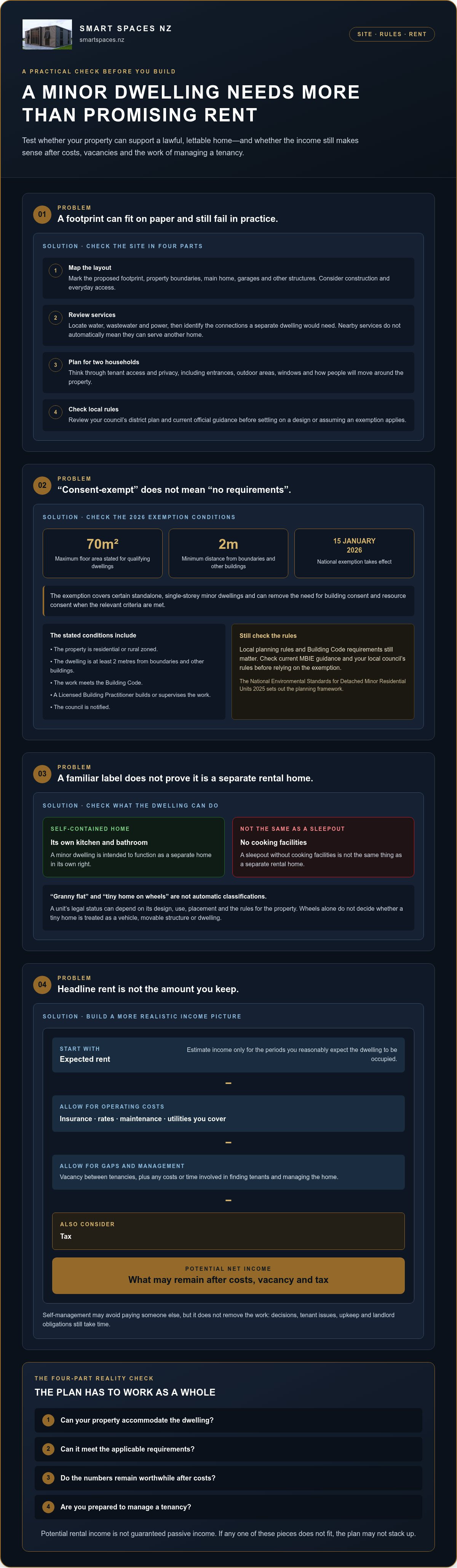
A minor dwelling can support an income plan when your property can accommodate it, the relevant rules are met, and the numbers still stack up after vacancies and ongoing costs. It also needs to be a self-contained home, not simply a sleepout, if you plan to rent it as a separate tenancy. A national consent exemption for some small dwellings took effect on 15 January 2026, but local planning rules and Building Code requirements still matter.
This guide will help you assess site suitability, understand consent and landlord responsibilities, and compare gross rent with a more realistic estimate of net income. You’ll also learn what to consider before choosing a dwelling, including factory-made two-bedroom expandable and container homes, without assuming a particular option will suit every property.
Table of Contents
Could a minor dwelling provide passive income in NZ?
A second dwelling can turn unused space on your property into a potential rental, but rent alone doesn’t make it a sound income plan. First consider whether the property can accommodate a lawful, lettable home, then whether the income after costs and owner time makes the commitment worthwhile. If any one of those pieces doesn’t fit, the plan may not stack up.
Potential rental income is money a minor dwelling may earn after it’s lawfully let; it isn’t guaranteed passive income. A tenant may not be in place continuously, expenses can arise, and managing the property takes time. Treat rent as a possibility to assess, not a return to rely on.
What makes a dwelling a minor dwelling?
In everyday terms, a minor dwelling is a smaller, separate home associated with a main home on the same property. It’s intended to function as a dwelling in its own right, rather than simply provide extra sleeping space. In New Zealand, the relevant planning and building rules help determine how a particular unit is classified, so its informal name doesn’t settle its legal status.
“Granny flat” is a familiar label, but it doesn’t automatically mean a unit meets the rules for a minor dwelling or can be rented as a separate tenancy. The distinction matters: a self-contained dwelling has its own kitchen and bathroom, while a sleepout without cooking facilities isn’t the same thing as a separate rental home.
Tiny homes on wheels also need careful consideration. Their wheels don’t, by themselves, decide whether they’re treated as a vehicle, movable structure or dwelling for relevant purposes. Classification can depend on the unit’s design, how it’s used and where it’s placed, as well as the rules that apply to the property. Don’t assume a tiny home can be installed or rented simply because it’s mobile.
What does passive income mean in practice?
Separate the rent a tenant pays from the amount you might actually keep. Rent received is gross income. Potential net income is what remains after relevant costs, periods without a tenant and tax are considered. Use a basic working calculation:
Expected rent: estimate income only for the periods you reasonably expect the dwelling to be occupied.
Less operating costs: allow for expenses such as insurance, rates, maintenance and any utilities you cover.
Less vacancy and management: account for gaps between tenancies and any costs, or time, involved in finding tenants and managing the home.
Self-management can avoid paying someone else to handle tasks, but it doesn’t remove the work. You’ll still need to make decisions, respond to issues, organise upkeep and meet landlord obligations. The income may feel less hands-on once systems are in place, but it isn’t guaranteed or entirely passive.
Before committing, test the plan against four practical questions: does your property fit, can the dwelling meet applicable requirements, do the numbers remain worthwhile after costs, and are you prepared to manage a tenancy? Start by examining your site and the rules that apply to it.
Check your NZ property and minor dwelling requirements first
Before comparing dwelling options, check whether your section can support a separate home and whether the rules allow your intended use. A unit that fits on paper may still be impractical if access is awkward, services are costly to connect or its position conflicts with local planning controls. Work through the checks in order and keep notes you can use when assessing a design.
Map the site. Mark the proposed footprint against property boundaries, the main home, garages and other structures. Check access for people and construction, and consider whether the layout leaves enough room for everyday use of the existing property.
Review services. Identify where water, wastewater and power are located, then list the connections a separate dwelling would need. Requirements and costs depend on the site, so an existing connection nearby doesn’t automatically mean it can serve an additional home.
Plan for rental use. Consider safe, practical access for a tenant and privacy for both households. Think about entrances, outdoor areas, windows and how people will move around the property. These details affect whether the arrangement works day to day.
Check the rules that apply. Review your council’s district plan and current official guidance before settling on a design or assuming an exemption applies.
These checks are especially useful if you’re weighing up passive income with a minor dwelling nz. Site fit, planning requirements and building obligations are separate considerations. Meeting one doesn’t automatically satisfy the others.
Understand the 2026 minor dwelling exemption carefully
From 15 January 2026, a national exemption allows certain standalone, single-storey minor dwellings of up to 70m² to proceed without building consent and resource consent, provided the relevant criteria are met. Check current Ministry of Business, Innovation and Employment (MBIE) guidance and local council rules before relying on it. The National Environmental Standards for Detached Minor Residential Units 2025 also explains the planning framework.
The exemption has conditions. The property must be residential or rural zoned, the dwelling must be at least two metres from boundaries and other buildings, and the work must meet the Building Code. A Licensed Building Practitioner must build or supervise the work, and the council must be notified before and after construction. Local district plan rules may still affect what can be built on a particular site, so a consent exemption isn’t a blanket approval.
Building consent, resource consent, council notification and Building Code compliance are distinct matters. Confirm which requirements apply to your intended design and property before making a purchase commitment. A tiny home on wheels may be assessed differently depending on its circumstances; the NZ tiny home regulations guide offers further context on that distinction.
Once you understand the site and its requirements, you can compare dwelling approaches with fewer assumptions. Exploring prefabricated home options can help you consider how a factory-made dwelling might fit into your property plan. The product choice doesn’t replace site-specific compliance checks.
Estimate net rental income, not just the rent
A rental estimate is only useful if it reflects what you may actually receive and spend. Gross rent is the amount collected from tenants; net income is what remains after relevant costs and vacancy are accounted for. The gap between the two can change your view of whether a dwelling is worth pursuing. Build your estimate from researched assumptions for your property, not a headline rent figure.
Build a transparent income-and-expense worksheet
Choose a period, such as a year, and record each assumption separately. Start with the rent you believe you could charge, based on current rental evidence for comparable self-contained homes. Then allow for the time the dwelling may be empty, including gaps between tenancies or time needed to prepare it for a new tenant.
Use a simple framework:
Expected rental receipts: estimated rent during the periods you expect the home to be occupied.
Less recurring costs: insurance, maintenance, any additional or apportioned rates, utilities you cover, and property management fees if you use a manager.
Less other relevant costs: finance costs, accounting, and compliance or tenancy-related expenses where they apply.
Estimated operating result: receipts minus the costs above, before considering your personal tax position.
Not every expense applies to every property. Utility arrangements, for example, may depend on whether the dwelling has separate metering and which services you include in the rent. Write down your assumptions rather than hiding them in a single broad “expenses” figure.
Keep one-off costs separate from recurring costs. Site preparation, connections, the dwelling purchase and other setup expenses affect the overall investment decision, but they aren’t the same as annual running costs. This lets you compare the operating result with the upfront commitment without making either figure look smaller than it is.
Stress-test the assumptions before deciding
Run at least two versions of your worksheet: one using your expected occupancy and costs, and another with longer vacancy periods or higher maintenance. If the plan only appears workable under the most optimistic assumptions, treat that as a warning. Consider how insurance, rates, utility bills or finance costs could change over time, and whether your household budget could absorb an unexpected repair.
Separate property cash flow from taxable profit. Loan repayments affect the cash you have available, but tax calculations may treat interest and other expenses differently. Rental income and deductions depend on your circumstances and current rules, so use the latest Inland Revenue guidance and get tax advice for your situation rather than relying on a rough online calculation.
Time has a cost, too. If you manage the tenancy yourself, include the effort of arranging maintenance, handling tenant communication and keeping records when weighing the return. A realistic worksheet won’t promise passive income with a minor dwelling nz, but it can show which assumptions matter most. If a factory-made option is part of your comparison, explore prefabricated dwelling options alongside the site and operating costs that shape your plan.
Prepare to rent and manage a minor dwelling responsibly
A completed dwelling isn’t automatically ready to rent. Rental readiness means the home is safe, fit for tenants and supported by a plan to meet your ongoing landlord responsibilities. Before advertising, check the current requirements through Tenancy Services and other official guidance. Rules can change, so confirm they still apply when you’re preparing to let the property.
Make the dwelling ready for tenants
Check that the home can be kept warm and dry, has suitable ventilation and works for everyday living. Private rental properties must meet the Healthy Homes Standards, which cover heating, insulation, ventilation, moisture and drainage, and draught stopping. Full compliance has been mandatory since 1 July 2025. Check the current Tenancy Services guidance and understand what evidence and records you need to retain.
Look beyond the interior, too. Consider how tenants will enter and leave, manage waste, and use shared paths or outdoor areas. Make the boundaries between private and shared spaces clear. A simple arrangement for bins, access and maintenance can prevent avoidable friction between households.
Set up the tenancy clearly
Use a written tenancy agreement that reflects the arrangement and current legal requirements. Keep reliable records of communications, inspections, repairs, rent and bond transactions. Tenancy Services guidance states that bond transactions must be completed online through Bond Hub from 29 June 2026. Check the current process before taking a bond or lodging a transaction.
Choose tenants using consistent, relevant criteria, and keep the process fair and well documented. Understand the current rules before setting conditions: for example, landlords need a reasonable basis to refuse a tenant’s request to keep a pet, and may charge a separate pet bond of up to two weeks’ rent. Check the applicable requirements before responding to a request.
Learn the notice rules before you need them. As at 2026, different notice periods apply depending on whether a landlord or tenant is ending a periodic tenancy and the reason for ending it. Check Tenancy Services for the current rules rather than relying on a remembered timeframe.
Plan for the work behind rental income
Renting involves a steady list of tasks: advertising the home, communicating with tenants, carrying out inspections in line with the rules, arranging repairs and keeping records up to date. A maintenance plan can help you track routine checks and respond to problems before they grow. Allow time for these jobs as well as money for the work itself.
Self-management gives you direct control, but puts coordination and tenant communication on your plate. Paid management may reduce some of that workload, while adding a cost to include in your income planning. Either way, you remain responsible for understanding your legal duties as a landlord. That hands-on reality matters when weighing up passive income with a minor dwelling nz.
If you’re considering a factory-made dwelling as part of your plan, explore Smart Spaces NZ homes and consider how your choice fits the practical needs of a future tenancy.
Choose a dwelling approach that fits your income plan
Once you’ve checked the property, rules and likely operating costs, compare dwelling approaches against your site and future tenants’ needs. A suitable choice depends on more than floor area: consider layout, transport and placement, service connections, intended use, and the overall project budget. No building method can guarantee approval, occupancy or a particular rental return.
Compare expandable and container home approaches
A site-built dwelling and a factory-made home involve different planning considerations. With a site-built approach, the design and work are planned around the property. With a prefabricated dwelling, the home is made off-site, so transport, access and placement need consideration alongside site preparation and connections. The details depend on the project, so compare like with like rather than assuming one approach is automatically simpler or more cost-effective.
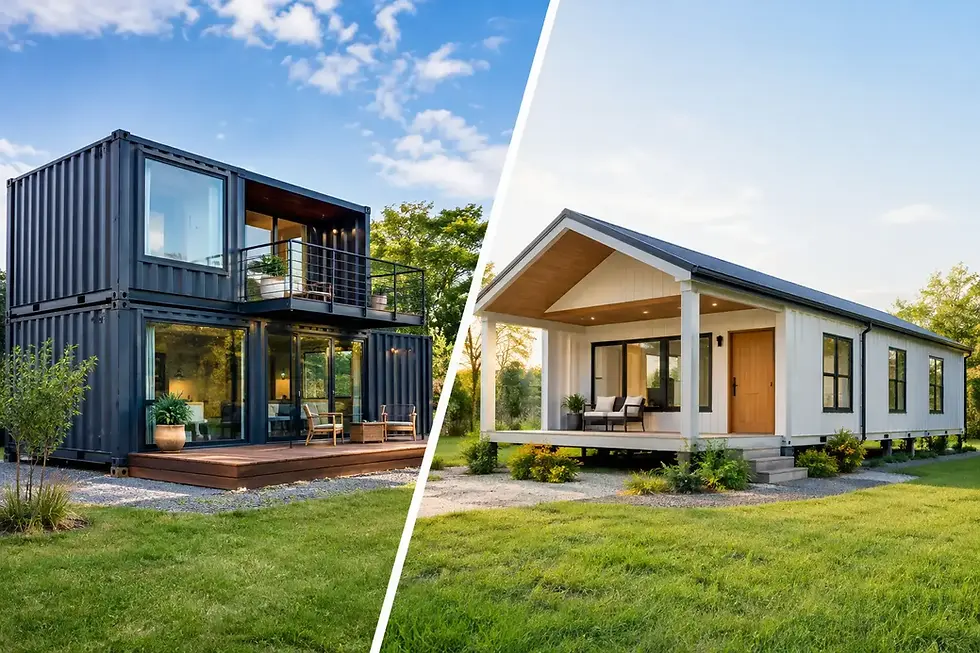
Smart Spaces NZ offers two-bedroom expandable homes and two-bedroom container homes as factory-direct prefabricated housing options. Treat each as a category to investigate, not as a ready-made promise of rental suitability. Compare the proposed layout with the needs you expect from a tenancy, then consider how the dwelling can be transported to and positioned on your property. Check the footprint against your site plan and include access and service requirements in your project assessment.
If you’re weighing up an expandable option, the 2 Bedroom Expandable Homes guide can help you understand that dwelling category as you build your comparison. Apply the same care to any option: choosing a product doesn’t replace checks on planning, building requirements or rental readiness.
Factory-direct purchasing is one part of the decision. Smart Spaces NZ is family-owned and operated, with over 40 years of industry experience, and finance solutions are available. Consider those details alongside the total project plan, including site-related work and ongoing ownership costs, rather than judging an option on its purchase alone.
Turn the research into a practical next step
Keep the decision sequence straightforward:
Check your property’s layout, access and services.
Verify current planning, building and notification requirements.
Model potential rental income after vacancy, expenses and management time.
Compare dwelling approaches against your site, intended use and budget.
This order helps you avoid choosing a home before you know what the property can accommodate or what the numbers need to support. It also gives you a clearer basis for comparing factory-made options with a site-built approach. If the site, compliance requirements, income assumptions and management plan align, you’ll be in a stronger position to decide whether to proceed. If they don’t, adjusting the plan before committing may be the sounder move.
For a closer look at factory-direct options, explore Smart Spaces NZ homes. A well-informed choice won’t guarantee passive income, but it can help you make a practical decision with your eyes open.
Make your next move with confidence
Before committing, turn your research into a short decision brief: what the property needs, what you still need to verify, and how much ongoing work you’re comfortable taking on. That gives you a clear way to compare options without letting an appealing rent estimate rush the decision.
The potential for passive income with a minor dwelling nz depends on the fit between your property, the dwelling and your plans as a landlord. If the numbers only work with uninterrupted occupancy or minimal upkeep, pause and revisit your assumptions. A careful decision now can help you avoid taking on a project that doesn’t suit your circumstances.
When you’re ready to consider factory-direct prefabricated homes as part of your planning, explore Smart Spaces NZ homes. Take the next step by exploring Smart Spaces NZ’s two-bedroom expandable and container home options, then compare them with your site requirements and income plan.
Frequently Asked Questions
Can I rent a minor dwelling to a family member in New Zealand?
Yes, you can generally rent a minor dwelling to a family member, provided the dwelling can lawfully be rented and the arrangement meets applicable requirements. A family relationship doesn’t automatically make the rental informal or remove your responsibilities as a landlord. Agree in writing on rent, bills, maintenance and how either party can end the arrangement. Clear terms can help protect both the relationship and each person’s expectations.
Can a minor dwelling be used for short-term accommodation in NZ?
Possibly, but permission to rent a dwelling doesn’t automatically mean every short-stay use is allowed. Short-term accommodation may be affected by local planning rules, building and safety requirements, insurance terms and tax treatment. Before advertising stays, clarify how the property’s location and intended use are treated under current rules. Also consider the practical workload: frequent guest changeovers, cleaning, bookings and communication can make this very different from a standard tenancy.
Can I build a minor dwelling on a property that already has a mortgage?
Possibly, but having a mortgage adds a financing step. Your loan agreement may restrict alterations, additional structures or changes to the property, and the lender may have an interest in the land as security. Review the loan terms and discuss the proposed project with your lender before committing funds or arranging work. Also check how borrowing for the dwelling could affect your repayments and the household’s ability to manage costs.
Does a minor dwelling need its own street address in New Zealand?
Not necessarily. Addressing needs can depend on the property, council processes and practical requirements for postal delivery, emergency response or utility connections. A separate dwelling may need a clearly identifiable location even if it shares a street address with the main home. If you’re planning separate services or expect tenants to receive deliveries, ask the relevant council how the site should be addressed and make access details clear for visitors and emergency services.
Can a minor dwelling be built on a property I rent?
Only with the property owner’s permission, and the lease may not give you the right to add a dwelling or make major changes. Get the owner’s written agreement before spending money, and agree who owns the structure, pays for connections and maintenance, and what happens when the tenancy ends. You’ll also need to consider whether the proposal can meet the applicable planning and building requirements for that property.
Is rental income from a minor dwelling considered passive income?
Rental income can be described as passive, but owning and letting a dwelling still involves decisions and work. You may need to handle tenant communication, maintenance, records and tenancy obligations, or pay for management support. For tax purposes, rental income and deductible expenses need to be treated according to current Inland Revenue guidance and your circumstances. So, passive income with a minor dwelling nz is a potential income stream, not guaranteed hands-off earnings.


Comments