

Expandable Home Durability: What Helps a Home Last in New Zealand?

What determines whether an expandable home will stand up to years of use in New Zealand: its design, the site it sits on, or the care it receives? Expandable home durability depends on all three. Weather exposure, moisture, site preparation and ongoing upkeep each matter, so it’s worth comparing a specific home’s information with your plans and site conditions rather than relying on a general claim.
A practical assessment starts with clear questions: what is the home designed for, what conditions will it face, and what care does it need? This guide explains the main factors that influence long-term durability, how to assess a site and plan routine care, and how New Zealand Building Code durability provisions fit into the picture. It also shows how to distinguish useful product information from broad assurances, without assuming a particular lifespan or rating.
You’ll find out what to look for in expandable home information, which site and maintenance considerations deserve attention, and what to weigh before choosing a home. Smart Spaces NZ sells factory-direct prefabricated homes, including expandable homes, and brings more than 40 years of family-owned industry experience. Assess any home’s durability against its own details and intended setting.
Table of Contents
What Does Expandable Home Durability Actually Mean?
Durability isn’t a single feature, and it doesn’t mean a home will remain unchanged. It describes how well the home continues to do its job under its intended use, the conditions around it and the maintenance it receives. Expandable home durability is a home’s ability to remain functional and suitable for its intended use as it faces exposure and ongoing upkeep.
That definition covers several distinct aspects. Structural durability concerns whether the main structure and its connections continue to perform as intended. Weather resistance relates to how the building deals with rain, wind and sun. Finishes may show wear before the structure is affected, while comfort and ease of upkeep influence whether the home remains practical to live in. These qualities are connected but not interchangeable: an intact finish doesn’t prove structural performance, and a durable structure still needs maintenance.
Expandable homes are part of the wider prefabricated and modular building category, but the category alone doesn’t establish how an individual home will perform. The general overview of Modular Building explains the broader approach. For a purchase decision, compare information about the specific home rather than assuming all modular designs share the same construction or durability.
Which parts of an expandable home affect durability?
Think of the home as a set of connected parts. The structure carries loads, connections join components, and openings such as doors and windows are places where weather can meet the building envelope. Finishes and exposed surfaces face everyday wear and environmental conditions. Because the performance of one part can affect another, assess the whole home rather than focusing on a single material or feature.
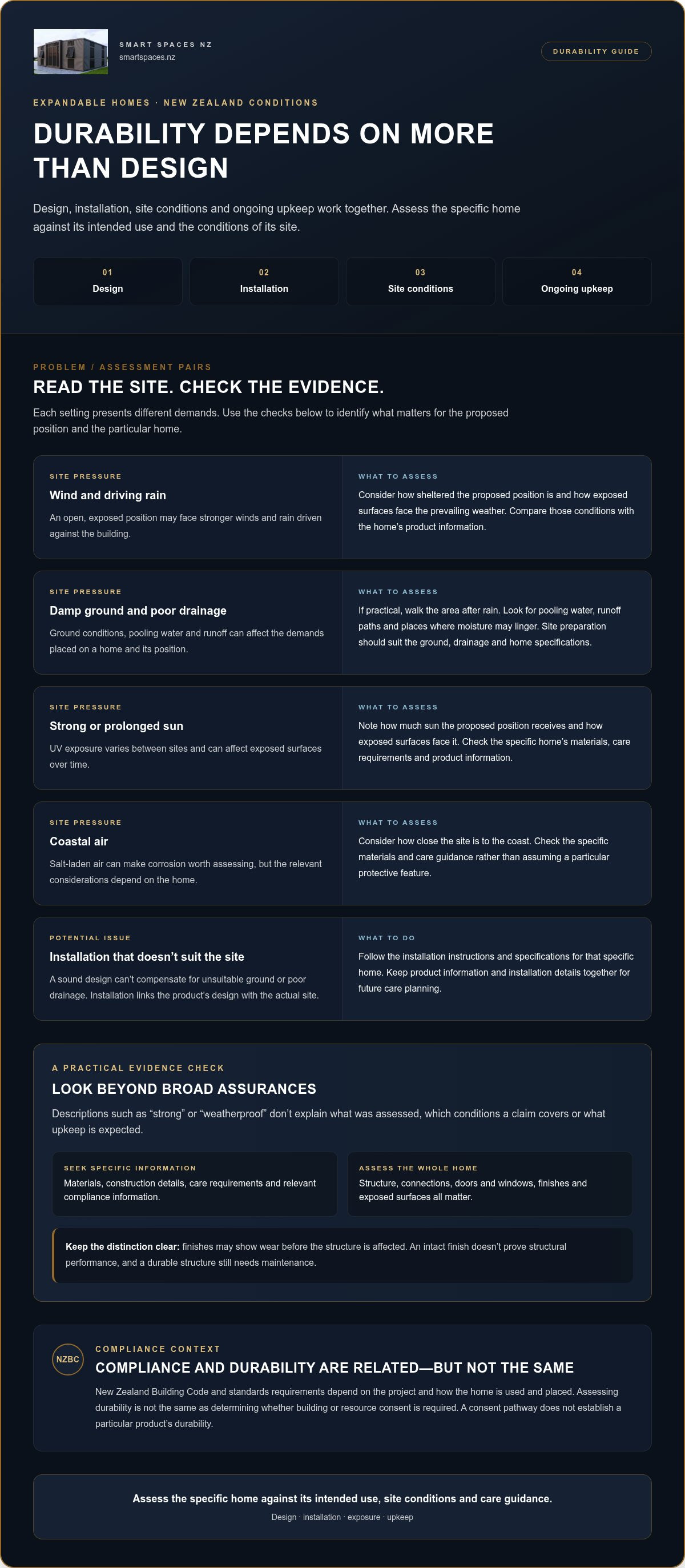
For any expandable home, look for product-specific information about materials, construction details and care requirements. Broad descriptions such as “strong” or “weatherproof” don’t explain what was assessed, which conditions a claim covers, or what upkeep is expected. Specific, relevant evidence gives you a more useful basis for comparison.
Why do site and intended use matter?
A home’s setting changes what it encounters. One site may be exposed to strong winds and driving rain, while another has greater UV exposure or coastal air. Ground conditions and drainage also vary, so the same home can face different demands depending on where it’s placed. No single set of site conditions represents the whole country.
Intended use matters too. A home occupied every day may need different attention from one used occasionally, because wear and the frequency of checks can differ. Before assessing durability, consider who’ll use the home, how often, and what weather and ground conditions are typical on the site. This context helps you identify which product information and maintenance guidance are relevant.
How Design, Installation, and New Zealand Conditions Shape Durability
A home’s performance depends on more than its design on paper. Site preparation and installation in line with the home’s specifications help it function as intended, while exposure and upkeep influence how it holds up over time. A sound design can’t compensate for unsuitable ground or poor drainage, and careful placement won’t remove the effects of weather. Expandable home durability depends on the interaction of design, installation, site conditions and ongoing upkeep.
Assess the proposed site rather than relying on general assumptions. Wind exposure, driving rain, damp ground, strong UV and coastal air can all affect what needs attention, but their effects vary from property to property. Consider how sheltered the proposed position is, where rainwater may collect or flow, and how exposed surfaces face the sun and prevailing weather. These checks help you understand the setting; they don’t establish that a particular home has a specific protective feature.
What should you consider about the site and weather?
If practical, walk the proposed area after rain. Look for pooling water, runoff paths and places where moisture may linger. Note whether the site is open to strong winds, receives prolonged sun, or is close enough to the coast for salt-laden air to be a consideration. Coastal conditions can make corrosion worth assessing, but the relevant materials and care depend on the specific home and its product information.
Site preparation matters because the home needs a suitable, stable place to perform as intended. Ground conditions, drainage and the home’s position all inform that preparation. Follow the installation instructions and specifications for the specific home; assumptions based on another model or a general description may not apply. Keep product information and installation details together so you can refer to them when planning care.
New Zealand Building Code and standards requirements depend on the project and how the home is used and placed. Assessing durability is not the same as determining whether building or resource consent is required. For consent-focused information, see the New Zealand tiny home regulations guide, and use relevant council and government guidance for your situation. A consent pathway does not establish a particular product’s durability.
How do installation and compliance relate to durability?
Installation connects the product’s design with the actual site. A home may be designed for particular conditions, but placement and assembly still need to follow its instructions. Compliance information can help clarify project requirements, but it doesn’t replace product-specific information about materials, care or performance. Assess these as separate questions.
For a practical comparison, bring together your intended use, site observations and the home’s documented specifications and maintenance guidance. Smart Spaces NZ sells factory-direct expandable homes with customisable options, so you can compare the range with your needs and site. Explore expandable home options as part of your assessment.
Are Expandable Homes Durable Enough for Long-Term Use?
Expandable homes can be suitable for long-term use, but it depends on the specific home and how it’s designed, installed, used and maintained in its setting. An expandable home shouldn’t be labelled inherently stronger, weaker or equivalent to conventional housing. Those comparisons are useful only when you compare evidence for homes intended for similar use and conditions.
To assess expandable home durability, focus on information that explains what the home is designed for and what it needs over time. A general assurance doesn’t tell you how a claim was assessed, which conditions it applies to, or whether it relates to structure, weather resistance or another aspect of performance.
What evidence is more useful than a broad durability claim?
Start with product-specific specifications, intended-use information and maintenance guidance. Look for details explaining what the home includes and how it should be cared for. If a page mentions a technical rating, standard or compliance status, identify the source and scope of the claim before treating it as evidence of durability. A compliance statement and a performance claim aren’t automatically interchangeable.
Use a simple evidence check:
How should you compare an expandable home with other housing?
Keep the comparison like for like. Compare homes intended for similar use, then consider the conditions each will face, their installation requirements and the upkeep described in their documentation. A conventional home and an expandable home may differ in design, but the format alone doesn’t establish how either will perform. Evidence about the specific home matters more than assumptions about its category.
For layout and range context, the two-bedroom expandable homes guide can help you understand the options before comparing product information. Smart Spaces NZ sells factory-direct expandable homes with customisable options and brings more than 40 years of family-owned industry experience. Weigh that business context alongside the product information, site needs and care guidance relevant to your intended use.
How to Maintain an Expandable Home for the Long Term
Good upkeep starts with the guidance for the specific home. There’s no single maintenance schedule that suits every expandable home or site: inspection frequency should reflect the home’s instructions, how often it’s used and the conditions it faces. A home exposed to wind-driven rain or coastal air may need different attention from one in a more sheltered setting. Regular checks help you notice changes early without guessing at repairs.
For expandable home durability, keep the routine straightforward: follow product instructions, inspect visible areas, record changes and respond promptly if something needs attention. Avoid generic advice that could conflict with the home’s care requirements.
What should a regular visual check cover?
Look for changes around openings, visible connections, finishes and areas exposed to rain or moisture. Check the surrounding area too: blocked drainage or water collecting nearby is worth noting. A visual check is not a technical diagnosis. A mark or change in a photograph can’t confirm whether a structural issue is present.
Follow the supplied care instructions. Use them as your reference for cleaning and routine upkeep, rather than making assumptions about materials or finishes.
Look for changes. Note what you see around doors and windows, connections, finishes and weather-exposed surfaces.
Keep notes. Record the date, location and a brief description, and take photographs to track visible changes over time.
Respond to concerns. Follow the product guidance for ordinary care, and arrange a qualified assessment if a concern may affect safety or structural performance.
Choose a checking rhythm that suits the setting and use, then adjust it if conditions change. Follow any inspection frequency specified in the home’s instructions; a schedule intended for a different product may not apply.
How can everyday use support longer service?
Use the home as intended and follow its care guidance. This helps avoid preventable wear from unsuitable use or cleaning. Keep exterior surfaces reasonably clear of dirt and debris, using only the methods recommended for the home. If the instructions don’t cover a particular task, avoid improvising a treatment that could affect a finish or component.
Moisture management is another useful home-care habit. Pay attention to ventilation during everyday use, and record any persistent condensation or dampness. Where it’s safe to do so, keep drainage paths around the home clear and observe whether water collects nearby after rain. These general checks don’t replace product-specific instructions or an assessment of the site.
If you notice a change that could affect safety or structural performance, don’t diagnose it from a photo or attempt an improvised repair. Seek a qualified assessment and refer to the home’s information. To explore Smart Spaces NZ’s factory-direct expandable home options as you plan for care and intended use, view expandable homes.
Choosing an Expandable Home with Durability in Mind
A sound choice starts with your plans, not a broad claim about how long a home should last. Use this sequence to connect intended use, site conditions, product information and future care. It gives you a clear basis for judging whether an option fits your needs, without assuming every expandable home will perform the same way.
What should you clarify before selecting a home?
Start by picturing everyday life in the home. Who will use it, how often and for what purpose? A home occupied year-round may face different patterns of wear and care from one used occasionally. Then consider the site's exposure and practical conditions, including wind, rain, sun, drainage and any coastal air. These details make durability questions specific to your situation.
Define intended use. Note expected occupancy, day-to-day activities and how regularly the home will be used.
Understand the site. Record relevant exposure and ground or drainage considerations rather than relying on a general description of local weather.
Review product information. Compare the documented specifications, intended use and care instructions for the home you are considering. Assess performance statements against their supporting information.
Plan for upkeep. Consider the routine checks and care in the instructions, and whether they fit the time you can set aside.
Finally, consider whether the layout and available customisable options suit the way you will use the home. Think about how people will move through the space and which areas will see the most frequent use. Use product information to assess performance rather than drawing conclusions from the layout alone.
How can Smart Spaces NZ help you explore expandable homes?
Smart Spaces NZ sells prefabricated expandable homes factory-direct to customers across New Zealand, with customisable options in its range. The company's more than 40 years of family-owned industry experience provides useful business context, but it isn't proof of a particular home's durability rating or lifespan. Base those judgements on relevant product information and your site and use requirements.
Compare the details with your plans. Explore expandable homes from Smart Spaces NZ to see the range and consider which options suit your intended use.
Make your next step a well-informed one
Before you choose, write down your priorities. A short list of how you plan to use the home, what matters most on your site and what ongoing care you can manage will help ground the decision in your needs. Use that list to guide your review of product information instead of relying on a single broad promise.
This approach makes expandable home durability easier to assess for your circumstances. You don’t need to predict every future condition; you need a clear basis for weighing the home’s documented details against your plans and setting.
Ready to take the next step? Explore expandable homes from Smart Spaces and compare the options with the way you want to live.
Frequently Asked Questions
Are expandable homes durable in New Zealand weather?
They can be, but performance depends on the particular home and the conditions it’s intended to face. New Zealand sites differ in exposure, so don’t assume a home suited to a sheltered position will also suit a more exposed one. To assess expandable home durability, compare product-specific information with your site and intended use, and note any stated limits or care requirements before deciding.
What affects the lifespan of an expandable home?
There’s no single lifespan that applies to every expandable home. Design, installation, site exposure, use and maintenance all contribute. Persistent dampness or neglected damage may create additional upkeep, while exposure to sun and salt-laden air can affect surfaces differently. Treat any lifespan figure as specific to the home and its supporting documentation, not as a guarantee for every site or owner.
Can an expandable home handle strong wind and heavy rain?
That depends on the specific home, its intended conditions, installation and position on the site. Don’t assume a general description means the home is suitable for every level of wind or rain exposure. Look for product information that clearly states relevant performance details and installation requirements. If those details don’t address your site’s conditions, don’t make a safety judgement from photos or broad marketing language alone.
How often should you inspect an expandable home?
Follow the inspection guidance for the home, as there isn’t one reliable schedule for every product and setting. Use and site exposure can affect how often checks make sense. It’s also sensible to look for visible changes after severe weather, but only from a safe position. Record what you notice, and seek a qualified assessment if you’re concerned about safety or structural performance.
Does an expandable home need special maintenance?
Not necessarily, but care should follow the instructions for that particular home. Don’t assume cleaning products or treatments used on another building are suitable for its surfaces. Keep a record of routine care and any work carried out, including the date and area involved. This history can help you spot recurring issues and give a qualified assessor useful context if a concern develops.
Can an expandable home be used as a permanent residence?
That depends on the home’s intended use and the requirements for the specific project and site. Before treating an expandable home as a permanent residence, review its product information and establish which building and planning requirements apply to your situation. Consent exemptions, where relevant, don’t remove the need to meet applicable Building Code requirements. Check current guidance with the relevant council and government sources.
What documents should you review when assessing an expandable home?
Start with the home’s product specifications and intended-use information, then read its care and maintenance instructions. Review any installation guidance and documentation relevant to the project’s building or planning requirements. If a technical rating, compliance statement or lifespan claim appears, look for its source, scope and connection to the specific home. Keep these records together so you can refer to them during upkeep or when discussing a concern with a qualified professional.


Comments